
SUMMARY
- Elon Musk slams Trump’s budget plan as a “disgusting abomination” that endangers U.S. fiscal stability.
- The bill proposes massive tax cuts, slashes green subsidies, and adds up to $5 trillion in projected debt.
- A rare GOP split emerges as even some Republican senators align with Musk against Trump’s economic agenda.
A Tax Revolution or a Fiscal Catastrophe?
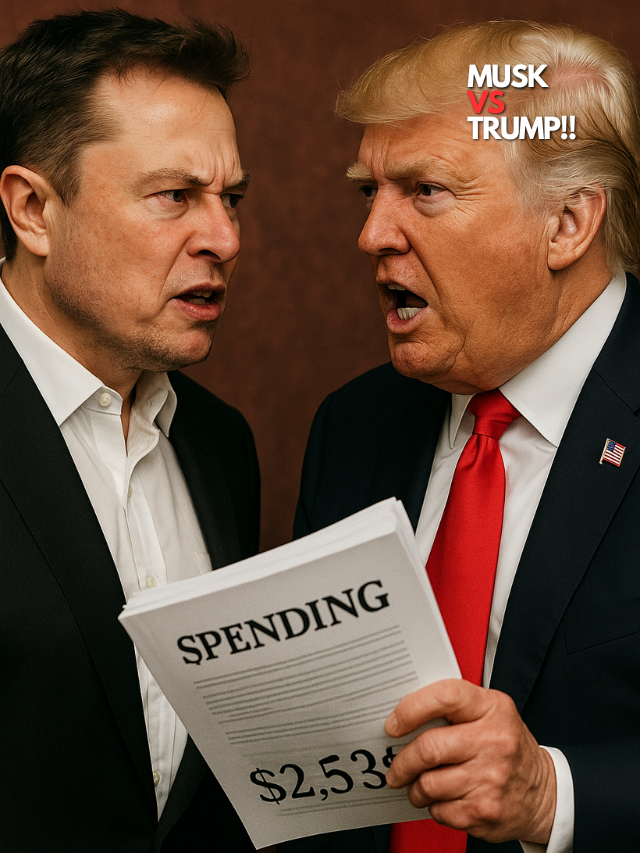
A new political rift is shaking the Republican establishment—one that pits the world’s richest tech tycoon against the GOP’s presidential figurehead. Elon Musk, who until recently was a vocal supporter of Donald Trump, has publicly denounced the former president’s latest spending proposal, branding it a “disgusting abomination.” The bill in question—Trump’s so-called “big, beautiful bill”—extends 2017-era tax cuts while slashing funding for green initiatives, food stamps, and healthcare subsidies. But what sets this clash apart is the sheer scale of its projected damage: between $2.3 trillion and $5 trillion added to the national deficit, according to the Congressional Budget Office and independent analysts.
Musk’s sharp pivot is as much about economics as it is about ideology. His X (formerly Twitter) posts call out lawmakers for “betraying the American people,” accusing them of mortgaging the nation’s future for political optics. For Musk, whose electric vehicle empire is directly threatened by subsidy rollbacks in the bill, the stakes are both personal and systemic. The entrepreneur has vowed to campaign against Republicans who vote in favor, signaling a profound break in the MAGA-tech alliance that once seemed unshakeable.
Elon Musk criticizes Trump’s ‘One Big Beautiful Bill Act’ calling it a “disgusting abomination”:
— Pop Base (@PopBase) June 3, 2025
“Shame on those who voted for it: you know you did wrong. You know it.” pic.twitter.com/qqsLH1c8kY
EV Subsidies Gutted, National Debt Soars
- The bill eliminates key incentives for electric vehicles, green R&D, and renewable infrastructure.
- In exchange, it proposes $350 billion in border and deportation funding—MAGA priorities.
- Medicaid and SNAP (food stamps) face cuts to balance the bill’s spending spikes.
The legislative package passed in the House and now awaiting Senate approval is a study in contrasts. Trump’s proposal combines populist rhetoric with fiscal extremism, offering tax relief to working-class Americans while dismantling pillars of progressive policy. For Tesla and other clean-tech firms, the implications are dire. The bill guts subsidies that have driven EV adoption in the U.S.—a move Musk says will “undermine the work the DOGE team is doing” and burden citizens with “crushingly unsustainable debt.”
White House press secretary Karoline Leavitt has dismissed Musk’s criticisms as political theatre. “This is one big, beautiful bill, and the president is sticking to it,” she said. But dissent is growing. Republican Senator Rand Paul sided with Musk, warning that the debt load is “a huge mistake.” Trump responded with characteristic venom, branding Paul’s proposals “crazy” and calling him a “loser.”
A Party Torn Between Billionaires and Base
- Musk warns he will campaign to unseat Republicans who support the bill.
- Conservative lawmakers face pressure from fiscal hawks and corporate donors alike.
- Trump’s populist branding masks internal contradictions in the GOP’s fiscal philosophy.
Musk’s frontal assault exposes deeper fractures within the GOP. For years, the party has struggled to reconcile tax-cut orthodoxy with rising national debt and demands for infrastructure and welfare reforms. Trump’s bill attempts to fuse these opposing poles—but in doing so, may have alienated both. On one end, MAGA loyalists cheer expanded border security and aggressive deportation funding; on the other, technocrats and fiscal conservatives balk at the bill’s ballooning deficit.
In his CBS interview, Musk cut through the noise: “A bill can be big or it can be beautiful. I don’t know if it can be both.” His remarks reflect more than disappointment—they’re a declaration of ideological divorce. With Musk turning against MAGA economics and Republican senators openly dissenting, the GOP’s unity is fraying. What once looked like a billionaire-driven alliance may now turn into a high-stakes war for the future of the party—and the country’s fiscal health.
Between Growth and Ruin
Trump’s “big, beautiful bill” is more than just a spending proposal—it’s a battleground. Elon Musk’s revolt underscores a deeper reckoning within the Republican Party, one where corporate interests, fiscal responsibility, and populist promises collide. The bill’s true test will not just be in the Senate vote but in the political realignments it may catalyze in the months to come. Whether this legislation ushers in prosperity or financial peril will depend not only on economic modeling but on how America’s power players choose to wield their influence. If Musk’s rebellion gains traction, it might just redefine the GOP’s economic identity for years to come.