
Key Highlights
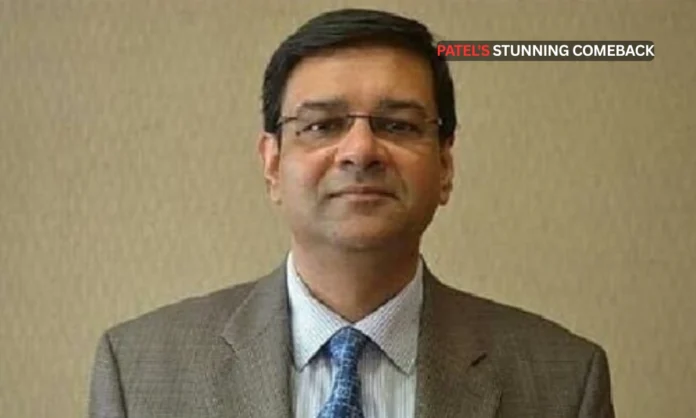
- Urjit Patel IMF Executive Director appointment approved by the Appointments Committee of Cabinet for a three-year term
- The former 24th Governor of RBI served from September 4, 2016, to December 10, 2018, before resigning citing personal reasons
- Patel’s appointment comes nearly seven years after his surprise resignation and four months after the government terminated his predecessor’s services
Background Context of Strategic Appointment
The appointment of Urjit Patel IMF Executive Director marks a significant development in India’s representation at the Washington-based international financial institution. The Cabinet’s Appointments Committee approved Patel’s nomination on August 28, 2025, signaling a strategic choice for the crucial three-year role. The former Reserve Bank of India Governor brings extensive experience in monetary policy and international finance to this position, having previously served at the IMF from 1990 to 1995.
This appointment follows the controversial termination of Krishnamurthy V. Subramanian, whose services were ended in April 2025, six months before his three-year tenure was scheduled to conclude. Sources indicate Subramanian’s termination was linked to alleged impropriety regarding the use of his position for promotion and publicity of his book “India@100”. The Urjit Patel IMF Executive Director appointment thus fills a critical vacancy that had persisted for nearly four months.
Former RBI Governor Dr. Urjit Patel to be India's key man at the IMF. Announcement: pic.twitter.com/u4ghGI9tGR
— Sidhant Sibal (@sidhant) August 29, 2025
The timing of this appointment is particularly noteworthy, given that Patel’s relationship with the current government had been strained during his tenure as RBI Governor. His 2018 resignation came amid significant policy disagreements, including his stance on maintaining higher interest rates despite falling inflation rates. The decision to appoint him to this prestigious international role suggests a pragmatic approach to leveraging his expertise for India’s representation at the IMF.
Urjit Patel’s Distinguished Career Journey and RBI Leadership
Urjit Patel IMF Executive Director brings remarkable credentials to his new role, with a career spanning academic excellence, international finance, and central banking. Born in 1963, Patel completed his Bachelor’s in Economics from the London School of Economics, obtained an MPhil degree from Oxford University in 1986, and completed his PhD in Economics from Yale University in 1990. His academic foundation provided the intellectual rigor that would characterize his later policy positions.
Following his doctoral studies, Patel joined the IMF in 1990, where he served for five years covering the US, India, the Bahamas, and Myanmar desks. This early international experience at the very institution where he now returns as Urjit Patel IMF Executive Director gave him deep insights into global monetary policy and multilateral financial cooperation. After his IMF stint, he worked as a consultant to the Ministry of Finance from 1998 to 2001, further cementing his understanding of India’s fiscal and monetary landscape.
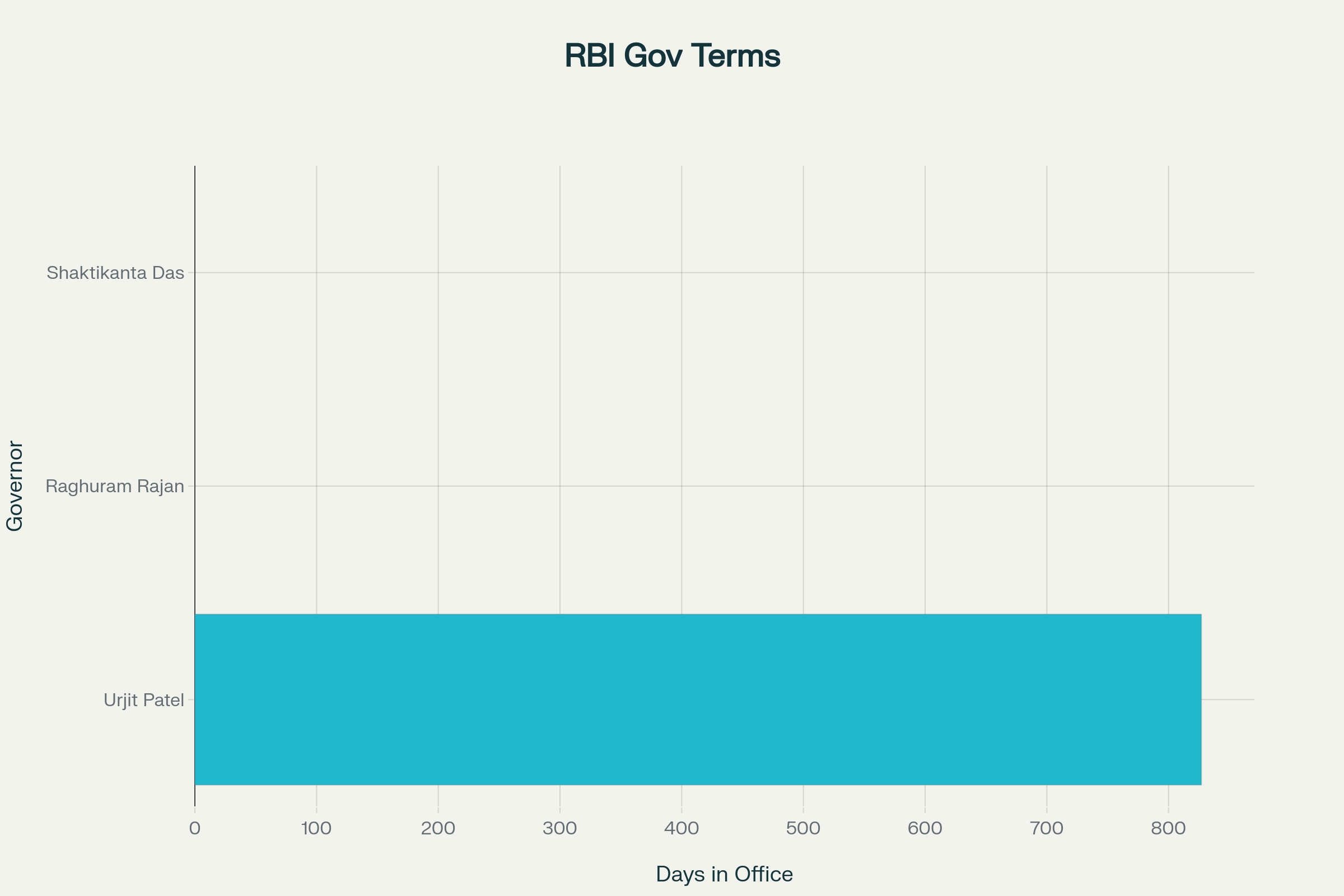
Patel’s ascension to the RBI governorship represented the culmination of his central banking career. He served as Deputy Governor of RBI from 2013 to 2016, handling crucial portfolios including monetary policy, economic policy research, statistics and information management, deposit insurance, communication, and Right to Information. When he became the 24th Governor on September 4, 2016, he succeeded Raghuram Rajan at a time when India’s economy was navigating complex challenges including demonetization and banking sector stress.
However, his tenure as RBI Governor proved to be one of the shortest in decades. Urjit Patel IMF Executive Director resigned on December 10, 2018, citing personal reasons, making him the first central bank governor since 1992 to step down before completing his term. His departure came amid escalating tensions with the government over various policy issues, including his hawkish monetary policy stance and differences over banking sector regulation.
Recent Reserve Bank of India Governors and Their Tenures
Policy Challenges and Government Relations During RBI Tenure
The period leading to Urjit Patel IMF Executive Director‘s resignation from RBI was marked by significant policy disagreements that strained the relationship between the central bank and the government. During his tenure, Patel maintained a relatively hawkish stance on interest rates, keeping them elevated even as inflation fell dramatically, reaching as low as 1.5 percent. This position put him at odds with government expectations for more accommodative monetary policy to support economic growth.
The tensions intensified in the months preceding his resignation, with the government and RBI disagreeing over several critical issues. These included the central bank’s approach to liquidity management, credit flow to small and medium enterprises, and regulatory controls governing weak banks. The disagreements became particularly acute following Deputy Governor Viral Acharya’s speech in October 2018, which sought to defend the autonomy of the RBI and was widely interpreted as a response to government pressure.
Despite these challenges, Urjit Patel IMF Executive Director achieved significant milestones during his RBI tenure. He was the first RBI Governor to decide on monetary policy and interest rates as part of a committee, following the formation of the Monetary Policy Committee in October 2016. This was part of the reformed monetary policy framework that saw the central bank adopt a flexible inflation targeting framework recommended in January 2014 by a committee led by Patel himself while he was Deputy Governor.
Under Patel’s leadership, the RBI successfully met its medium-term inflation target of 4 percent, reducing average Consumer Price Index inflation to 3.3 percent in 2017 and 4 percent in 2018, down from 6.7 percent in 2014. This achievement in inflation management will likely serve Urjit Patel IMF Executive Director well in his new role, where price stability and monetary policy coordination are central concerns for the global economy.
IMF Executive Board Role and India’s Strategic Representation
The appointment of Urjit Patel IMF Executive Director places him at the center of global economic policy discussions as part of the IMF’s 25-member Executive Board. This board is responsible for conducting the day-to-day business of the International Monetary Fund, including discussions on national, regional, and global economic policies, approval of IMF financing for member countries, and oversight of the institution’s capacity development efforts. The Executive Board meets several times each week and operates largely on papers prepared by IMF management and staff.
India’s representation on the IMF Executive Board is particularly significant given the country’s position as part of a four-country constituency that includes Bangladesh, Sri Lanka, and Bhutan. This constituency structure means that Urjit Patel IMF Executive Director will represent not just India’s interests but also those of the broader South Asian region. His decisions and advocacy will influence IMF policies affecting nearly 1.5 billion people across these countries, making the role both prestigious and consequential.
The Executive Director position requires deep understanding of global economic trends, multilateral negotiations, and policy coordination among diverse member countries. Urjit Patel IMF Executive Director‘s experience spans both the operational aspects of central banking and the theoretical foundations of monetary economics, positioning him well to contribute to the IMF’s policy deliberations. His previous experience at the IMF from 1990 to 1995 provides institutional knowledge and professional relationships that could prove valuable in his new role.
The three-year term structure allows Urjit Patel IMF Executive Director sufficient time to establish influence within the institution and advance India’s strategic priorities. These priorities likely include ensuring adequate representation of emerging market perspectives in global policy discussions, advocating for flexible approaches to economic development challenges, and supporting initiatives that promote sustainable and inclusive growth. His appointment comes at a time when the global economy faces significant challenges, including post-pandemic recovery, inflation management, and climate change adaptation, all areas where his expertise will be relevant.
Strategic Implications and Future Outlook
The selection of Urjit Patel IMF Executive Director represents a pragmatic decision by the Indian government to leverage his extensive international finance experience despite past policy disagreements. This appointment signals a mature approach to talent utilization, recognizing that expertise and competence should take precedence over previous political differences when representing national interests on the global stage. His return to a prominent policy role nearly seven years after his RBI resignation demonstrates the cyclical nature of public service careers and the value of institutional memory.
For India’s economic diplomacy, Urjit Patel IMF Executive Director‘s appointment could enhance the country’s influence within international financial institutions. His academic credentials, practical central banking experience, and previous IMF service provide multiple avenues for building credibility and advancing policy positions. At a time when emerging markets seek greater voice in global economic governance, having an experienced economist representing the constituency could prove strategically valuable.
The appointment also reflects broader trends in international economic institutions, where technical expertise and professional competence increasingly trump political considerations. Urjit Patel IMF Executive Director‘s career trajectory from Yale-trained economist to central bank governor to IMF Executive Director exemplifies the growing importance of technocratic leadership in managing complex global economic challenges.
Looking ahead, his tenure will likely focus on navigating the IMF’s role in post-pandemic economic recovery, addressing climate-related financial risks, and managing the challenges of technological disruption in financial systems. The success of Urjit Patel IMF Executive Director in these areas could influence not only India’s standing within international financial institutions but also contribute to the broader evolution of global economic governance frameworks. His appointment marks not just a personal comeback but also an opportunity for India to assert its voice in shaping the international economic order.