
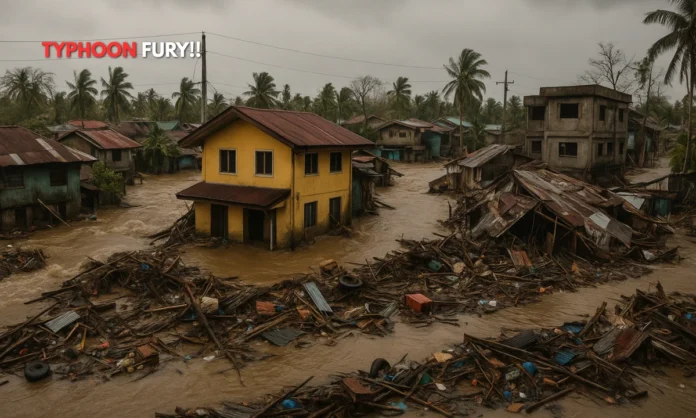
Key Highlights:
- Typhoon Kalmaegi left 114 people dead and 127 missing across central Philippines, with Cebu Province recording the highest casualties at 71 fatalities
- President Ferdinand Marcos Jr. declared a state of emergency on November 6, 2025, enabling faster disbursement of disaster funds and price control measures
- Nearly 2 million people were affected and over 560,000 villagers displaced, including 450,000 evacuated to emergency shelters across the archipelago
Opening Overview
Typhoon Kalmaegi has emerged as the deadliest natural disaster to strike the Philippines in 2025, leaving a trail of unprecedented destruction across central provinces and exposing critical vulnerabilities in the nation’s flood control infrastructure. Philippine President Ferdinand Marcos Jr. declared a state of emergency on Thursday, November 6, 2025, after Typhoon Kalmaegi claimed at least 114 lives and left 127 people missing, primarily in the hard-hit province of Cebu.
The tropical cyclone, locally known as Typhoon Tino, brought catastrophic flash floods that submerged entire communities, displaced more than 560,000 villagers, and affected nearly 2 million people before moving westward toward Vietnam. The devastation from Typhoon Kalmaegi has reignited public anger over a corruption scandal involving substandard flood control projects, with residents and officials pointing to years of inadequate infrastructure development and illegal quarrying activities that exacerbated the disaster’s impact.
According to the Office of Civil Defense, most casualties resulted from drowning as flash floods transformed streets into raging rivers within minutes, catching residents off guard despite advance warnings and evacuation orders. The Philippine Atmospheric, Geophysical and Astronomical Services Administration (PAGASA) reported that Typhoon Kalmaegi released over a month’s worth of rainfall within just 24 hours in certain areas, overwhelming drainage systems and causing multiple waterways to overflow simultaneously. The Asian Development Bank had approved a $500 million disaster resilience loan to the Philippines in January 2025, recognizing the country as the highest-risk economy among 193 nations for natural disasters, yet the scale of destruction from Typhoon Kalmaegi has demonstrated the urgent need for accelerated infrastructure improvements.
HOW CORRUPTION MAY HAVE COST LIVES.
— Karen Davila (@iamkarendavila) November 7, 2025
188 dead and rising. The worst flash flood in the history of the province. Cebu has 414 flood control projects worth to P26.7 billion from 2022 to 2025 – meant to protect our people, homes and livestock. What happened?!
At hindi lang ito sa… pic.twitter.com/uGHv1BTwm9
Catastrophic Impact in Cebu Province
Key devastation points:
- Cebu Province recorded 71 deaths, 65 missing persons, and 69 injured, representing the highest provincial casualty count
- Flash floods submerged residential communities within minutes, forcing residents to seek refuge on rooftops while awaiting rescue
- The province was still recovering from a magnitude 6.9 earthquake on September 30, 2025, that killed 79 people before Typhoon Kalmaegi struck
The central province of Cebu bore the brunt of Typhoon Kalmaegi’s fury, with the Office of Civil Defense reporting at least 71 fatalities, primarily from drowning incidents, along with 65 people missing and 69 injured as of November 6, 2025. Cebu Governor Pamela Baricuatro described the flash flooding as unprecedented, noting that the province had implemented all standard typhoon preparation protocols but was overwhelmed by the sudden deluge that transformed urban streets into torrential rivers. Bernardo Rafaelito Alejandro IV, deputy administrator of the Office of Civil Defense, confirmed that Typhoon Kalmaegi triggered catastrophic flash floods and caused the Mananga River and other waterways to overflow simultaneously, engulfing residential communities and commercial districts.
Cebu city and surrounding municipalities experienced some of the most dramatic rescue operations, with the Philippine Red Cross receiving hundreds of emergency calls from residents trapped on rooftops as floodwaters continued rising. Volunteer rescuer Caloy Ramirez described navigating waist-deep waters through an upscale riverside residential community where SUVs were tumbled like toys and houses were reduced to skeletal frames, calling the scene “the worst” he had witnessed in years of disaster response work.
Residents in areas like Talisay city, where numerous homes were completely destroyed, reported that floodwaters engulfed the first floors of their houses within minutes, leaving no time to salvage belongings or adequately prepare for evacuation. The bustling province of more than 2.4 million people was still recovering from a magnitude 6.9 earthquake on September 30, 2025, that killed at least 79 people and displaced thousands when Typhoon Kalmaegi made landfall on November 4.
Governor Baricuatro acknowledged that the flooding severity may have been exacerbated by years of illegal quarrying activities that caused clogging of nearby rivers, combined with substandard flood control projects throughout Cebu province. Thousands of northern Cebu residents who had been displaced by the September earthquake and were living in temporary shelters were relocated to sturdier evacuation facilities before Typhoon Kalmaegi struck, preventing additional casualties among this already vulnerable population. The provincial government declared a state of calamity to enable authorities to disburse emergency funds more rapidly and coordinate relief operations across the devastated region.
Widespread Displacement and Emergency Response
Disaster response statistics:
- Nearly 2 million people affected across central Philippines, with over 560,000 villagers displaced from their homes
- Approximately 450,000 people evacuated to emergency shelters before and during the typhoon’s passage
- At least 69 roads and eight bridges rendered impassable, while two airports were forced to close operations
Typhoon Kalmaegi’s destructive path across the central Philippines affected nearly 2 million people and displaced more than 560,000 villagers, including approximately 450,000 individuals who were evacuated to emergency shelters as the storm approached and made landfall. The Office of Civil Defense coordinated large-scale pre-emptive evacuations, with more than 387,000 people moved to safer ground in eastern and central Philippine provinces before Typhoon Kalmaegi made its initial landfall on November 4, 2025.
The Philippine Coast Guard prohibited ferries and fishing boats from venturing into increasingly rough seas, stranding more than 3,500 passengers and cargo truck drivers in nearly 100 seaports across the affected regions. At least 186 domestic flights were cancelled as airports in the typhoon’s projected path suspended operations, disrupting travel plans and emergency supply deliveries.
President Ferdinand Marcos Jr.’s emergency declaration, formally announced during a meeting with disaster-response officials on November 6, 2025, authorized the government to disburse emergency funds more rapidly and implement price controls to prevent food hoarding and price gouging during the recovery period. The declaration enables the Philippine government to access contingency funds and streamline procurement processes for relief supplies, temporary housing materials, and infrastructure repair equipment without the usual bureaucratic delays. Around 1.4 million households lost electricity as Typhoon Kalmaegi downed power lines and damaged electrical infrastructure across multiple provinces, further complicating rescue and relief operations. Agricultural damage estimates reached at least ₱13.26 million (approximately $269,238.58) as flooding destroyed crops, inundated farmlands, and killed livestock across affected provinces.
The disaster’s human toll extended beyond the immediate casualties, with 62 people reported missing in the central provinces of Negros Occidental and Negros Oriental, which are located near Cebu and experienced similar flash flooding conditions. Among the fatalities were six crew members of a Philippine Air Force helicopter that crashed in the southern province of Agusan del Sur on November 4 while en route to deliver humanitarian assistance to typhoon-battered communities, though military officials did not specify the cause of the crash.
The Philippine Red Cross mobilized emergency response teams and established medical stations in evacuation centers, while Secretary-General Gwendolyn Pang reported receiving numerous desperate calls for rescue from people trapped on rooftops in Cebu. At least 76 schools were damaged across the affected regions, mostly in Eastern Visayas, disrupting education for thousands of students and requiring extensive repairs before classes can resume.
Infrastructure Failures and Corruption Concerns
Critical infrastructure issues:
- Years of illegal quarrying caused river clogging that contributed to catastrophic overflow during Typhoon Kalmaegi
- Substandard flood control projects linked to ongoing corruption scandal sparked public outrage and street protests
- At least 69 roads and eight bridges rendered impassable, hampering rescue operations and relief supply delivery
The devastating impact of Typhoon Kalmaegi has thrust the Philippines’ ongoing flood control corruption scandal back into the national spotlight, with residents and officials identifying substandard or nonexistent infrastructure projects as contributing factors to the catastrophic flooding. Cebu Governor Pamela Baricuatro directly acknowledged that years of illegal quarrying activities caused significant clogging of rivers throughout the province, reducing their capacity to handle heavy rainfall and contributing to the simultaneous overflow of multiple waterways during Typhoon Kalmaegi. The governor also pointed to inadequate flood control projects in Cebu province as exacerbating the disaster, echoing concerns that have fueled public anger and street protests in recent months over a nationwide corruption scandal involving substandard disaster mitigation infrastructure.
Political analysts suggest that the persistent natural disasters affecting the Philippines, combined with revelations about infrastructure corruption, could sustain public frustrations and fuel anti-government protests in the coming months. The corruption scandal involving flood control projects has sparked particular outrage because Filipino taxpayers funded infrastructure that was either never built, constructed below acceptable standards, or failed to function during critical moments like Typhoon Kalmaegi. The Asian Development Bank’s approval of a $500 million disaster resilience loan in January 2025 specifically aimed to “strengthen DRRM policies and frameworks” and “integrate DRRM in national public financial management reforms,” recognizing systemic issues in how the Philippines manages disaster risk reduction investments.
The World Risk Report 2024 ranked the Philippines as the highest-risk economy among 193 countries, noting that 60 percent of the nation’s land area is exposed to multiple hazards and three-fourths of its population is susceptible to these hazards. The country experiences up to 150 earthquakes of at least magnitude 4 and at least 20 typhoons annually, making robust disaster infrastructure essential for protecting lives and livelihoods.
At least 69 roads and eight bridges were rendered impassable by Typhoon Kalmaegi, severely hampering rescue operations and the delivery of relief supplies to isolated communities. Senior civil defense official Raffy Alejandro emphasized that debris clearing operations are critical not only for finding the 127 missing people but also for enabling relief supplies to reach communities cut off by damaged infrastructure.
The World Bank has been supporting the Philippine government’s disaster risk management reforms through development policy financing, investment operations, and technical assistance, recognizing the country’s gradual shift from reactive disaster response to proactive risk management. However, the scale of destruction from Typhoon Kalmaegi, particularly in areas that should have been protected by modern flood control infrastructure, demonstrates that implementation gaps and corruption continue to undermine these reform efforts.
Regional Impact and Climate Context
Broader disaster context:
- Typhoon Kalmaegi was the 20th named storm to affect the Philippines in 2025, with forecasters tracking another potential typhoon development
- The storm regained strength over the South China Sea and made landfall in Vietnam on November 7, 2025
- Philippines experiences approximately 20 typhoons annually, with PAGASA forecasting 21-25 tropical cyclones for 2025
Typhoon Kalmaegi moved away from western Palawan province into the South China Sea before noon on November 5, 2025, and was barreling toward Vietnam with winds of up to 149 kilometers per hour (93 miles per hour) according to meteorological forecasters. Central Vietnam, which had been reeling from days of record rainfall that triggered flash floods and landslides, braced for additional pounding rain as Typhoon Kalmaegi approached its coastline.
Vietnamese authorities initiated mass evacuations in several provinces and warned of heavy rains and flooding in low-lying areas and coffee-growing regions as the storm regained strength over the South China Sea. The Vietnam Disaster Management Authority reported 47 deaths, 8 missing, and 130 injured due to the combined impacts of Typhoon Kalmaegi and another weather system as of November 5, 2025.
Typhoon Kalmaegi represents the 20th named storm to affect the Philippines in 2025, according to local officials tracking what has become a busier-than-expected typhoon season. The Philippine Atmospheric, Geophysical and Astronomical Services Administration (PAGASA) initially predicted 16 to 19 tropical cyclones entering the Philippine Area of Responsibility in 2025, but that forecast has been exceeded with forecasters anticipating 2 to 4 additional weather systems in the remaining months.
While not classified as the most powerful storm to hit the Philippines in 2025, Typhoon Kalmaegi’s slow movement pattern resulted in prolonged heavy rainfall over densely populated areas, with authorities noting that most casualties resulted from drowning rather than wind damage. The accumulated cyclone energy index for 2025 stands at 120.2 units, indicating moderate overall intensity despite the high volume of tropical cyclone activity.
The Philippines is battered by approximately 20 typhoons and storms each year, with the peak season occurring from July through October when nearly 70 percent of all typhoons develop. The country is also frequently hit by earthquakes and has more than a dozen active volcanoes, making it one of the world’s most disaster-prone nations.
Forecasters were tracking another developing storm east of Mindanao that could strengthen into a typhoon in early November 2025, potentially bringing additional rainfall and flooding to regions still recovering from Typhoon Kalmaegi. The World Bank estimates that climate change has compounded the impacts of natural disasters in the Philippines over the past decade, with changing weather patterns increasing both the frequency and intensity of extreme events.
The Asian Development Bank emphasized that “the Philippines is one of the fastest growing economies in Southeast Asia but is at high risk for earthquakes, volcanic eruptions, typhoons, rising sea levels, and flooding,” highlighting the tension between economic development and disaster vulnerability. The $500 million disaster resilience loan approved in January 2025 aims to “help boost the country’s capacity for disaster risk reduction and management nationally and locally, including state-owned and controlled corporations”. The loan includes provisions for a voluntary city parametric disaster insurance scheme that offers faster payouts for earthquake, typhoon, and other disaster damages, recognizing that traditional insurance mechanisms are often too slow to meet immediate post-disaster needs.
Closing Assessment
Typhoon Kalmaegi has exposed critical vulnerabilities in the Philippines’ disaster preparedness infrastructure, demonstrating that despite significant international financial support and government reform initiatives, implementation gaps and corruption continue to leave communities dangerously exposed to natural hazards. The concentration of casualties in Cebu Province, where substandard flood control projects and years of illegal quarrying activities created conditions for catastrophic flooding, illustrates how governance failures can amplify the human cost of natural disasters. As recovery operations continue and forecasters track additional storm development, the disaster has renewed calls for accountability in infrastructure spending and accelerated implementation of the disaster risk management reforms that international development institutions have been supporting.
President Marcos’ emergency declaration provides the legal framework for rapid fund disbursement and price controls, yet the effectiveness of the recovery effort will ultimately depend on addressing the systemic corruption and oversight failures that have undermined flood control infrastructure across the Philippines. With 127 people still missing and thousands of families displaced from destroyed homes, Typhoon Kalmaegi serves as a stark reminder that the Philippines’ ranking as the world’s highest-risk economy for disasters reflects not only geographic vulnerability but also governance challenges that must be confronted to protect Filipino lives and livelihoods.
The international community’s provision of $500 million in disaster resilience financing represents a significant investment in the Philippines’ capacity to withstand future shocks, but translating financial resources into functional infrastructure remains the critical challenge for a nation facing approximately 20 typhoons annually.
Data Summary
| Impact Category | Statistics | Source |
|---|---|---|
| Deaths | 114 confirmed | Office of Civil Defense |
| Missing | 127 people | Office of Civil Defense |
| Total Affected | Nearly 2 million people | Office of Civil Defense |
| Displaced | 560,000+ villagers | Office of Civil Defense |
| Evacuated to Shelters | 450,000 people | Office of Civil Defense |
| Cebu Province Deaths | 71 fatalities | Office of Civil Defense |
| Households Without Power | 1.4 million | Official Reports |
| Agricultural Damage | ₱13.26 million ($269,238.58) | Government Data |
| Damaged Schools | 76 schools | Education Department |
| Impassable Roads/Bridges | 69 roads, 8 bridges | Infrastructure Reports |
| Disaster Risk Context | Data | Source |
|---|---|---|
| Philippines Global Disaster Risk Ranking | #1 highest-risk among 193 economies | World Risk Report 2024 |
| Land Area Exposed to Hazards | 60% | ADB, World Risk Report |
| Population Susceptible to Hazards | 75% (three-fourths) | Asian Development Bank |
| Annual Typhoons Affecting Philippines | Approximately 20 | PAGASA |
| Annual Earthquakes (Magnitude 4+) | Up to 150 | Asian Development Bank |
| 2025 Named Storms (as of Nov 6) | 20 tropical cyclones | PAGASA |
| PAGASA 2025 Forecast | 21-25 tropical cyclones | PAGASA |