
Key Highlights
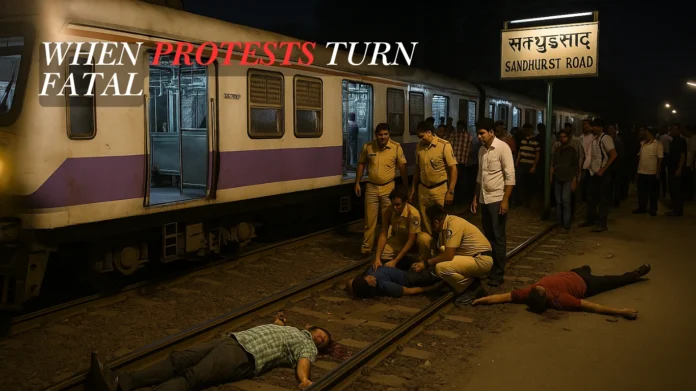
- Two people died and three were injured near Sandhurst Road railway station after being struck by a suburban train on November 6, 2025, during peak evening hours
- The incident occurred shortly after a flash strike by Central Railway employee unions halted Mumbai local train services for nearly an hour at CSMT
- The protest was triggered by an FIR filed against two railway engineers in connection with the June 9 Mumbra accident that claimed five lives
Opening Overview
A tragic incident on Mumbai’s railway network claimed two lives and left three others injured on the evening of November 6, 2025, when commuters were hit by a suburban train near Sandhurst Road railway station in south Mumbai. The Mumbai local train tragedy unfolded around 7:00 pm, just moments after railway services had resumed following a flash strike by employee unions protesting an FIR registered against two Central Railway engineers. The timing of this deadly accident has raised critical questions about commuter safety, railway infrastructure management, and the cascading effects of service disruptions on Mumbai’s lifeline suburban network.
The Mumbai local train tragedy occurred in a particularly complex context where institutional tensions between the Government Railway Police and Central Railway administration had already escalated following the June 9 Mumbra accident. Hospital officials confirmed that two victims were brought dead, while three others sustained injuries, with two taking discharge against medical advice and one remaining under treatment. Initial reports suggested the victims had alighted from the wrong side of the train and were walking on the tracks when they were struck, highlighting persistent safety challenges on Mumbai’s overcrowded suburban railway system.
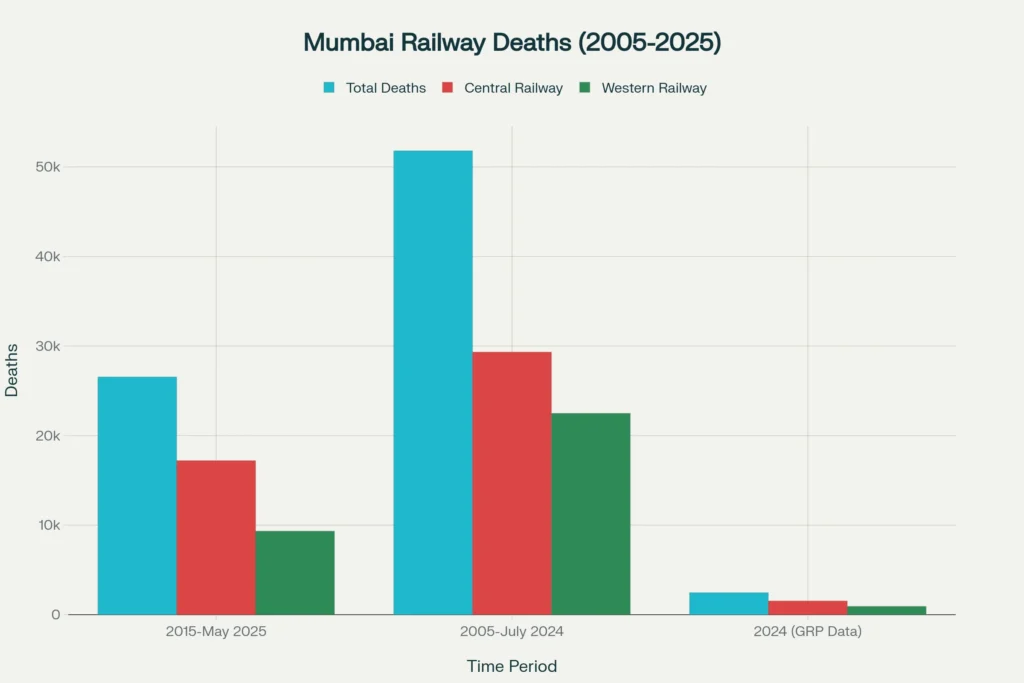
This Mumbai local train tragedy comes against the backdrop of 26,547 deaths recorded on railway tracks in the Mumbai Metropolitan Region between January 2015 and May 2025, underscoring the urgent need for comprehensive safety interventions.
The Flash Strike and Service Disruption
Immediate Trigger and Protest Dynamics
The Mumbai local train tragedy was directly preceded by an unprecedented flash strike that paralyzed Central Railway’s suburban services during peak evening hours on November 6, 2025. Railway employee unions, including the National Railway Mazdoor Union and Central Railway Mazdoor Union, staged a dramatic protest at Chhatrapati Shivaji Maharaj Terminus starting around 4:30 pm, which escalated around 5:30 pm when employees blocked the motormen’s lobby.
The demonstration prevented motormen and train managers from operating trains between 5:50 pm and 6:45 pm, effectively halting services at India’s busiest railway terminal where daily passenger footfall reaches several lakhs. This Mumbai local train tragedy occurred in the immediate aftermath of this disruption, as commuters desperately attempted to navigate the overcrowded platforms and railway tracks following the resumption of services.
- The protest lasted approximately 55 minutes during peak evening rush hour, causing massive overcrowding across the suburban network
- Thousands of passengers were stranded at CSMT, with many rushing to the nearby Metro-3 station seeking alternative transport
- Services resumed only after senior officials, including Divisional Railway Manager Hiresh Mina, counseled the agitators about the inconvenience to commuters
The flash strike was triggered by the November 1 FIR filed by the Government Railway Police against two Central Railway engineers—a senior section engineer and a section engineer—in connection with the June 9 Mumbra train accident. The Mumbai local train tragedy that followed became emblematic of how institutional disputes and labor actions can have devastating consequences for commuter safety. S K Dube, divisional secretary of the Central Railway Mazdoor Sangh, stated the agitation opposed what unions termed an “unjustified FIR” based on a technically flawed VJTI report.
The Mumbai local train tragedy thus unfolded in an environment where normal service patterns had been severely disrupted, platforms were dangerously overcrowded, and passengers were under immense pressure to reach their destinations.
>2 trains to Prayagraj delayed at last moment.
— Gems (@gemsofbabus_) February 15, 2025
>This caused chaos.
>A stampede occurred.
>Railways called it "A Rumor."🤡
>Multiple deaths & injuries reported.
>Situation is under control, Ashwini Vaishnaw.
Indian Railways Is Responsible For This Mess.pic.twitter.com/tEB41m57Kj
The June 9 Mumbra Accident and Its Aftermath
The Original Incident and Casualty Count
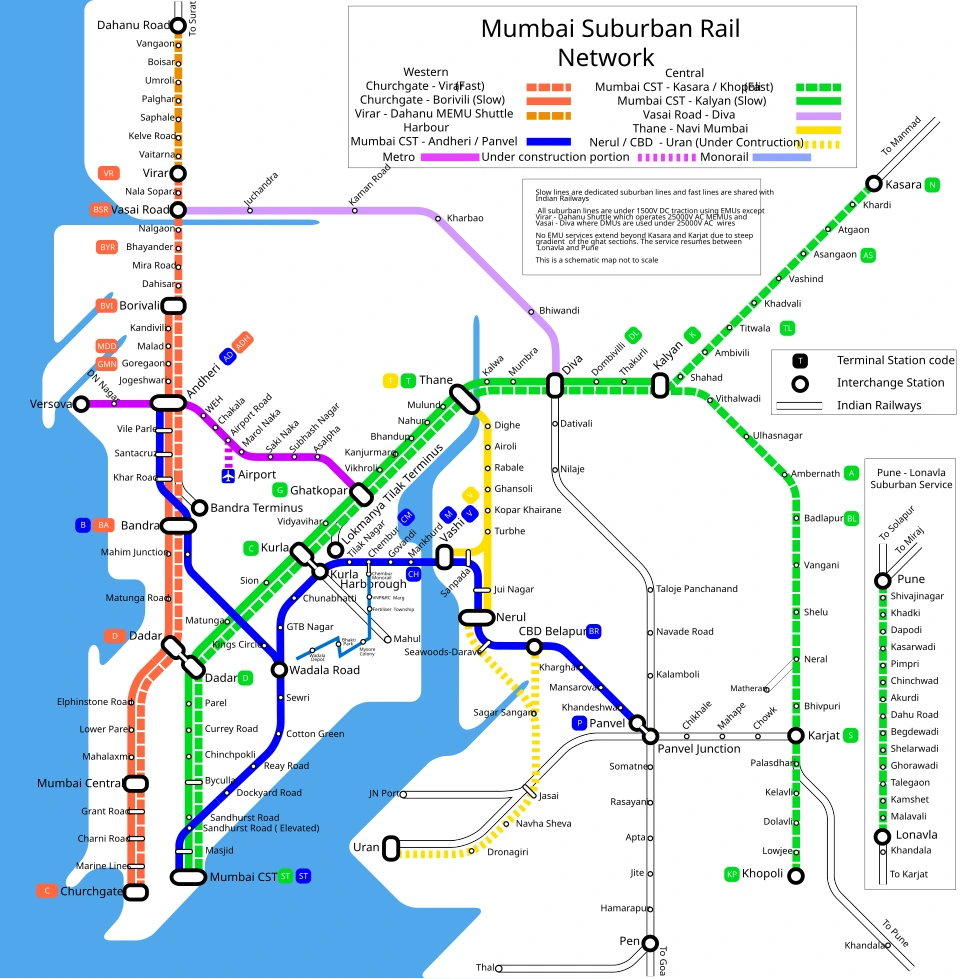
The Mumbai local train tragedy of November 6 cannot be understood without examining the June 9 Mumbra accident that set these events in motion. The Mumbra incident occurred when two trains—one headed to Kasara and the other toward Chhatrapati Shivaji Maharaj Terminus—were passing each other at a sharp curve between Diva and Mumbra railway stations.
Official reports indicate that five passengers died and eight to nine others sustained injuries when commuters standing on the footboards of coaches fell onto the tracks. Central Railway’s internal investigation attributed the Mumbai local train tragedy at Mumbra to overcrowding, with backpacks jutting out nearly 30 cm from commuters on the ninth and tenth coaches of the CSMT-Karjat train brushing against passengers on the second and third coaches of the Kasara-CSMT local.
- CCTV footage from earlier stations showed scratches on the Kasara-CSMT train, possibly caused by contact with protruding bags
- The incident represented a domino effect where multiple passengers collided and fell after the initial contact
- The victims included commuters Yafiza Chogale (62), Helly Mohmaya (19), Kaif Choghale (22), and Khushbu Mohamaya (45)
However, the Government Railway Police investigation painted a different picture of this Mumbai local train tragedy, focusing on alleged engineering negligence and maintenance lapses. The GRP’s case, based on a report by Veermata Jijabai Technological Institute (VJTI), concluded that poor track maintenance and human error were the primary causes. According to the FIR, Mumbra station officials had alerted the Thane engineering section about displaced ballast and a sinking platform stretch due to heavy rain, but no corrective action was taken. The two engineers were booked under Sections 105 and 125 of the Bharatiya Nyaya Sanhita for acts endangering life or personal safety of others, marking a significant precedent in Indian railway accountability.
Institutional Conflict and Technical Disputes
The Mumbai local train tragedy at Sandhurst Road occurred amid an escalating institutional standoff between the Government Railway Police and Central Railway administration over the Mumbra investigation. Central Railway contested both the FIR and the VJTI report, arguing that the institute lacks expertise in railway track geometry and began its audit weeks after the accident when site conditions had changed. CR officials maintained that if tracks were truly displaced as alleged, it would have caused a derailment rather than passengers falling. The Mumbai local train tragedy debate centers on fundamentally different interpretations of the same incident—the GRP emphasizing engineering failures while CR points to overcrowding and commuter behavior.
- A recent dispute emerged over GRP allegedly withholding the VJTI technical report from Central Railway, which GRP denies
- The probe revealed that railway staff had replaced a piece of track four days before the June 9 incident but left it unwelded
- Central Railway’s internal report attempted to attribute responsibility to victim behavior rather than infrastructure deficiencies
The two accused engineers—identified as Vishal Dolas and Samar Yadav in some reports—sought anticipatory bail at the Thane Sessions Court, arguing that the Mumbai local train tragedy at Mumbra resulted from train overcrowding, not engineering lapses. Their legal defense relied on Central Railway’s internal inquiry findings about the domino effect caused by protruding backpacks. This Mumbai local train tragedy has exposed deep rifts between railway police forces and railway administration, with implications for safety accountability across India’s vast rail network. The anticipatory bail hearing was scheduled for November 12, 2025, with both sides preparing technical arguments about track geometry, maintenance protocols, and operational standards.
Mumbai’s rail unions triggered a sudden, illegal flash strike during peak hours, paralysing the city, trapping thousands, and contributing to chaos linked to 5 deaths.
— Prasanna Viswanathan (@prasannavishy) November 8, 2025
Worse, the strike wasn’t about worker safety. It was to brazenly pre-empt action after an earlier rail accident… pic.twitter.com/CbfFlhJfIi
Safety Crisis on Mumbai’s Suburban Railway Network
Alarming Statistical Evidence
The November 6 Mumbai local train tragedy and the June 9 Mumbra incident are part of a larger safety crisis afflicting Mumbai’s suburban railway system. Between January 2015 and May 2025, a staggering 26,547 people lost their lives on railway tracks in the Mumbai Metropolitan Region, with 17,212 deaths reported on the Central Railway network and 9,335 on Western Railway. Data reveals that track trespassing accounted for the highest number of deaths at 14,175, followed by falling from trains and pre-existing illnesses, which together caused 24,989 fatalities. This Mumbai local train tragedy underscores how daily commuting in India’s financial capital remains a life-threatening activity for millions.
Looking at the longer-term picture, 51,802 lives were lost on Mumbai’s suburban railway network between 2005 and July 2024—an average of approximately seven deaths per day over two decades. The Central Railway recorded 29,321 deaths while Western Railway reported 22,481 fatalities during this period. Four stations—Kalyan, Thane, Vasai, and Borivli—topped the list for fatalities, with Thane recording 179 line-crossing deaths in 2023 and Kalyan reporting 114 deaths due to falls from trains the same year. The Mumbai local train tragedy statistics reveal that the suburban network carries approximately 7 million passengers daily—3.5 million on Western Railway and 3.7 million on Central Railway—creating an environment where overcrowding is inevitable.
Despite these alarming figures, railway officials point to some positive trends that provide context for the ongoing Mumbai local train tragedy challenge. Death rates on the suburban network declined by nearly 52% on Western Railway and almost 40% on Central Railway over the past 15 years. Central Railway’s Mumbai division recorded 1,782 deaths in 2009 (5.1 deaths per kilometer per year) compared to 1,082 deaths in 2024 (3.1 deaths per kilometer per year). Western Railway saw deaths fall from 1,468 in 2009 (8 deaths per kilometer annually) to 709 in 2024 (3.9 deaths per kilometer), marking a 51.7% reduction.
Infrastructure and Operational Improvements
Railway authorities attribute the gradual decline in the Mumbai local train tragedy frequency to a series of focused safety measures implemented over the past two decades. The number of daily suburban services on Central Railway increased by approximately 50%—from around 1,200 in 2004 to 1,810 in 2024 across all corridors of the Mumbai division. Both Central and Western Railways phased out 9-car services, replacing them with 12-car trains, and began introducing 15-car rakes, though the latter remain limited. These capacity enhancements aim to address the overcrowding that contributes to many Mumbai local train tragedy incidents.
- Construction of boundary walls along vulnerable track sections to prevent trespassing
- Enhanced surveillance systems and upgraded station infrastructure
- Multiple new foot overbridges, escalators, and lifts across the suburban section
- Public awareness initiatives and stricter enforcement against track trespassing
The Railway Protection Force deployed specialized strategies to combat specific threats contributing to the Mumbai local train tragedy pattern. In 2024, RPF detected 1,924 cases and apprehended 1,955 offenders across the Mumbai suburban section, with 424 cases involving “fatka” gangs who exploit slow-moving trains to snatch valuables. These gangs are particularly dangerous because victims often fall from moving trains during theft attempts, adding to the Mumbai local train tragedy toll. However, the sheer density of passenger traffic—with nearly 35 lakh passengers on Western Railway and 37 lakh on Central Railway daily—creates an environment where overcrowded trains and congested platforms remain fertile ground for accidents and crimes.
Broader National Railway Safety Context
India’s Railway Accident Trends
The Mumbai local train tragedy must be understood within the broader context of Indian Railways’ safety record, which has shown significant improvement in recent years. Consequential train accidents across India’s entire railway network declined dramatically from 135 in 2014-15 to just 31 in 2024-25, representing a 77% reduction. During the period 2004-14, India averaged 171 consequential train accidents annually (total 1,711), compared to the much lower figure of 31 accidents in 2024-25. This Mumbai local train tragedy context shows that while national-level safety has improved, urban suburban networks face unique challenges related to passenger density and commuter behavior.
| Accident Type | 2024-25 Total | Casualties (2004-14) | Casualties (2014-24) |
|---|---|---|---|
| Collisions | 3 | Deaths: 904 | Deaths: 748 |
| Derailments | 24 | Injuries: 3,155 | Injuries: 2,087 |
| Level-Crossing Accidents | 1 | Total Accidents: 1,711 | Total Accidents: 678 |
| Others (fire, etc.) | 3 | – | – |
| Total | 31 | Avg: 171/year | Avg: 67.8/year |
The financial cost of the 31 consequential train accidents in 2024-25 was assessed at Rs 157.04 crore (provisional), covering damages to rolling stock, tracks, and other railway property. By 2025-26, the number of consequential train accidents had fallen even further to just 3 by June, suggesting continued improvement. However, these national statistics do not fully capture the Mumbai local train tragedy phenomenon, as most suburban accidents involving commuters falling from trains or trespassing on tracks are categorized differently from “consequential train accidents”. The Mumbai local train tragedy pattern represents a distinct safety challenge requiring targeted interventions beyond conventional accident prevention measures.
Recent incidents elsewhere in India highlight the ongoing challenges facing railway safety. On November 5, 2025, at least 11 people were killed when a passenger train collided with a freight train near Bilaspur in Chhattisgarh state, with one passenger coach ending up atop a freight wagon. This Mumbai local train tragedy context demonstrates that while overall accident rates have declined, the potential for catastrophic incidents remains, requiring continuous vigilance and infrastructure investment.
Closing Assessment
The November 6, 2025 Mumbai local train tragedy near Sandhurst Road railway station—claiming two lives and injuring three others—represents far more than an isolated incident of commuter negligence. This deadly event emerged from a confluence of factors: institutional tensions between railway administration and police authorities, labor unrest over accountability for the June 9 Mumbra accident, service disruptions during peak hours, and the chronic overcrowding that defines Mumbai’s suburban railway experience. The Mumbai local train tragedy exposes fundamental questions about safety governance, infrastructure adequacy, and the human cost of India’s reliance on a century-old suburban railway network carrying 7 million passengers daily.
The escalating conflict between the Government Railway Police’s pursuit of criminal accountability and Central Railway’s defense of its engineering staff creates a dangerous environment where safety concerns become secondary to institutional preservation. The Mumbai local train tragedy pattern—with 26,547 deaths recorded between 2015 and May 2025—demands a comprehensive safety overhaul that goes beyond incremental improvements. While the 52% reduction in death rates on Western Railway and 40% decline on Central Railway over 15 years represent progress, the fact remains that Mumbai’s commuters continue to risk their lives daily on overcrowded trains and platforms.
The immediate Mumbai local train tragedy at Sandhurst Road occurred in conditions created by the flash strike—overcrowded platforms, disrupted service patterns, and desperate commuters attempting to navigate railway tracks to reach their destinations. This incident underscores how labor actions, however justified from an employment rights perspective, can have unintended and fatal consequences for the traveling public. The Mumbai local train tragedy serves as a stark reminder that safety cannot be compartmentalized—it requires coordination among railway administration, police authorities, employee unions, and commuters themselves to create a genuinely secure transportation environment.
As the two Central Railway engineers await their anticipatory bail hearing and the institutional dispute over the Mumbra investigation continues, the larger Mumbai local train tragedy of systemic safety failures demands urgent attention from policymakers, railway officials, and civic society. The introduction of automatic door closers on new suburban rakes, construction of additional foot overbridges, and enhanced surveillance systems represent necessary but insufficient responses to a crisis that claims seven lives daily on average. The Mumbai local train tragedy will continue until fundamental issues of capacity expansion, commuter behavior modification, and institutional accountability are addressed with the seriousness they deserve.