
Key Highlights:
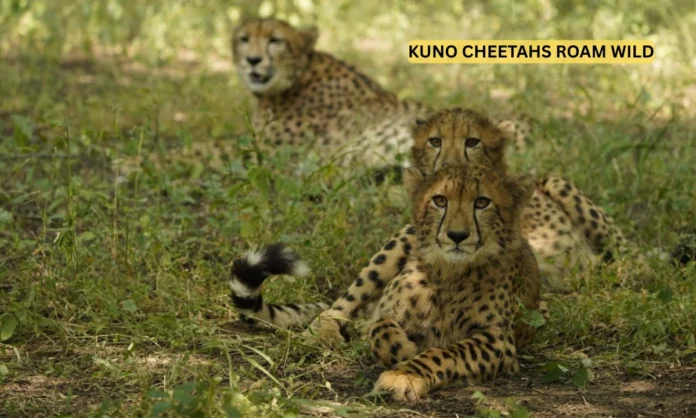
- Madhya Pradesh Chief Minister Dr. Mohan Yadav released female cheetah Veera and her two cubs into the wild at Kuno National Park on December 4, 2025.
- Cheetahs released at Kuno now total 19 free-ranging individuals, with 29 at Kuno and 3 at Gandhi Sagar Sanctuary.
- This event celebrates three years of successful cheetah reintroduction, with 32 cheetahs including 21 India-born cubs thriving in Indian habitats.
Opening Overview
Cheetahs released at Kuno National Park today represent a defining moment in India’s wildlife conservation journey. On International Cheetah Day, Madhya Pradesh Chief Minister Dr. Mohan Yadav personally oversaw the release of female cheetah Veera and her two 10-month-old cubs into the open forests of Kuno, elevating the free-ranging cheetahs released at Kuno from 16 to 19. This step forward builds on Project Cheetah’s achievements since Prime Minister Narendra Modi launched it in September 2022, reintroducing the species extinct in India for nearly 70 years.
On International Cheetah Day, my best wishes to all wildlife lovers and conservationists dedicated to protecting the cheetah, one of our planet’s most remarkable creatures. Three years ago, our Government launched Project Cheetah with the aim of safeguarding this magnificent… pic.twitter.com/FJgfJqoGeA
— Narendra Modi (@narendramodi) December 4, 2025
The cheetahs released at Kuno have adapted exceptionally, evidenced by 32 total individuals across Kuno and Gandhi Sagar Sanctuary, including historic births like Mukhi’s five cubs in November 2025. Advanced radio-tracking and dedicated field teams ensure their seamless integration, while boosting ecotourism in Sheopur district. This release underscores Madhya Pradesh’s leadership in restoring grassland ecosystems and flagship species like cheetahs released at Kuno, drawing global acclaim for scientific conservation.
Project Cheetah: Origins and Strategic Rollout
- Launched September 17, 2022, with eight cheetahs from Namibia at Kuno National Park.
- Coordinated by National Tiger Conservation Authority with international partners from Namibia, South Africa, and Botswana.
- Action plan follows IUCN guidelines for habitat suitability and translocation protocols.
The reintroduction began with cheetahs released at Kuno as the pioneer site after extensive ecological assessments confirmed its viability spanning 748 square kilometers core and 487 square kilometers buffer. Sourced from Namibian populations initially, subsequent batches from South Africa expanded the foundation, reaching over 20 adults by 2023. The National Tiger Conservation Authority’s detailed action plan emphasizes prey availability, territory management, and veterinary support, ensuring cheetahs released at Kuno establish sustainable populations. Madhya Pradesh Forest Department oversees daily operations, including enclosure-to-wild transitions like today’s event with Veera’s family in the Parond forest tourism zone.
This intercontinental effort not only revives cheetahs released at Kuno but enhances biodiversity in semi-arid savannas, protecting associated species and grasslands often overlooked in conservation priorities. Prime Minister Modi’s vision has positioned India as a leader in large carnivore restoration, with cheetahs released at Kuno symbolizing ecological resilience.
Population Surge and Breeding Success
- Total cheetahs in India: 32, with 29 at Kuno National Park post-release.
- 21 India-born cubs from six litters by five females demonstrate robust adaptation.
- Free-ranging cheetahs released at Kuno now number 19, monitored via radio collars.
Cheetahs released at Kuno have multiplied impressively, from the initial eight to 29 residents, complemented by three at Gandhi Sagar. Mukhi’s November 2025 litter of five second-generation cubs marks the first reproduction by an India-born female, 33 months old, validating long-term viability. Five females have produced six litters in three years, with survival rates reflecting effective health protocols outlined in the newly released ‘Field Manual for Clinical Management of Free-Ranging Cheetahs in KNP.’ Post-release, Veera and her cubs join 16 others freely roaming, tracked continuously to study movements and prey interactions.
This growth aligns with NTCA reports projecting Kuno’s landscape capacity for 20-30 adults across 6,500 square kilometers. Cheetahs released at Kuno are reshaping predator-prey dynamics, with ongoing prey censuses ensuring balance. These milestones affirm that cheetahs released at Kuno thrive, fostering hope for self-sustaining populations.
Habitat Management and Monitoring Advances
- Kuno’s 1,235 square kilometers support cheetahs released at Kuno through fenced zones and anti-poaching measures.
- Expansion plans target Nauradehi, Banni Grasslands, and Gandhi Sagar for population dispersal.
- Ecotourism infrastructure, including new souvenir shops, sustains community livelihoods.
Managing cheetahs released at Kuno demands precise habitat interventions, from radio-collar telemetry to veterinary clinics. The Parond zone release site features optimal prey density and water sources, minimizing human-wildlife conflicts via community awareness drives. NTCA’s guidelines mandate quarterly progress reports to the Supreme Court-appointed committee, incorporating spatial ecology data where cheetahs require 100 square kilometers territories each. Chief Minister Yadav inaugurated supporting assets like the 2026 Kuno Calendar and souvenir shop during today’s event, channeling tourism revenue into conservation.
Challenges like initial mortalities have informed protocols, boosting survival through nutrition and stress management. Cheetahs released at Kuno exemplify how technology and policy converge for species recovery, with field teams providing 24/7 vigilance.
| Milestone | Date | Details | Population Impact |
|---|---|---|---|
| Initial Translocation | Sep 2022 | 8 from Namibia to Kuno | 8 total |
| Additional Imports | Feb 2023 | 12 from South Africa | 20+ adults |
| First India-born Cubs | Jan 2024 | 3 cubs | 27 total by late 2024 |
| Mukhi’s Litter | Nov 2025 | 5 second-generation cubs | 32 total (29 Kuno, 3 Gandhi Sagar) |
| Veera & Cubs Release | Dec 4, 2025 | 3 cheetahs released at Kuno | 19 free-ranging at Kuno |
Challenges Overcome and Expansion Horizons
- Early setbacks addressed via improved enclosures and health monitoring.
- International collaborations secure future translocations from Botswana.
- Projected meta-population across multiple sites by 2030.
Cheetahs released at Kuno faced skepticism over adaptation, yet mortalities dropped with refined protocols. Habitat constraints at Kuno prompt diversification to Nauradehi Wildlife Sanctuary and Gujarat’s Banni Grasslands, per NTCA’s multi-site strategy. Today’s release reinforces momentum, with Veera’s family enhancing genetic diversity. Global partners praise India’s model, countering criticisms through data like 66.7% cub survival rates. Community benefits include jobs in tracking and tourism, vital for Sheopur’s economy. Cheetahs released at Kuno herald a blueprint for reviving extinct species, blending science, policy, and stewardship. Future phases aim for 60-70 cheetahs across India by decade’s end.
Closing Assessment
Cheetahs released at Kuno today propel India’s conservation narrative to new heights. Chief Minister Yadav’s oversight of Veera and her cubs’ release cements Madhya Pradesh’s role in Project Cheetah’s triumphs, from 8 pioneers to 32 thriving individuals. This success, rooted in NTCA’s rigorous frameworks and PM Modi’s initiative, proves cheetahs released at Kuno can reclaim their ecological niche. As free-ranging numbers climb to 19, sustained monitoring and habitat expansion promise a self-reliant population. Cheetahs released at Kuno inspire global action against extinction, affirming India’s prowess in biodiversity restoration and harmonious human-wildlife futures.