
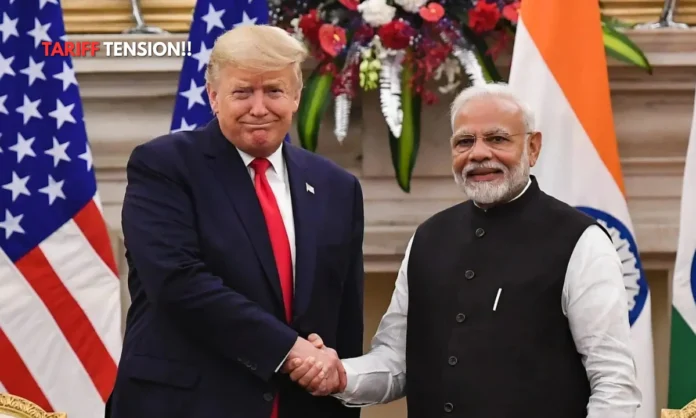
Key Highlights
- Trump tariffs on rice from India loom as trade talks stall, tied to $12B US farm relief.
- Fertilizer tariffs from Canada also warned, aiming to shield domestic agriculture.
- Indian firms dominate US rice market, prompting Trump’s quick-fix tariff strategy.
Opening Overview
Trump tariffs on rice imports from India have surged to the forefront of US trade policy, with President Donald Trump warning of imminent action amid stalled negotiations. At a White House event unveiling a $12 billion farm relief package, Trump declared these tariffs on rice would protect American growers from foreign competition, particularly devastating southern rice producers. “Tariffs, again, solves the problem in two minutes,” he stated, spotlighting India as a key culprit.
This escalation accompanies broader Trump tariffs on rice threats against Canada for fertilizer, framed as essential to stabilizing US agriculture hit by inflation and low prices. Tariff revenues, which Trump claims generate trillions, fund the relief for farmers he calls America’s backbone. India-US agricultural trade has grown robustly, per United States Trade Representative (USTR) data, with US exports to India at $1.64 billion in FY2024 and rice imports from India reaching $647 million overall.
A Louisiana producer highlighted rice import woes, noting Indian dominance in top US retail brands. As a US team eyes India talks next week, tariffs on rice signal aggressive reciprocity, potentially reshaping global supply chains and reigniting WTO disputes over subsidies.
BREAKING NEWS 🚨
— Ravinder Kapur. (@RavinderKapur2) December 9, 2025
Congrats, Narendra Modi 🌟
Even Trump is again lining up to punish India.
After complaints from US farmers about “cheap Indian rice,” President Trump is now considering fresh tariffs on Indian rice
Another masterstroke of Modi’s foreign policy. pic.twitter.com/ZSIaaE6gPB
Trump’s Farm Relief Ties to Trump Tariffs on Rice Strategy
- $12B package funded by tariff revenues supports farmers amid tariffs on rice threats.
- Rice from India and fertilizer from Canada targeted to revive domestic output.
President Trump linked his $12 billion farm relief announcement directly to impending tariffs on rice imports from India, positioning them as a swift defense for US producers. “We’re taking in trillions from tariffs,” he said, redirecting funds to counter what he sees as dumping.
US Department of Agriculture (USDA) data shows 2024 rice production at 172.6 million hundredweight, down 13%, with imports filling voids. Trump tariffs on rice aim to curb India’s 1.2 million tons of basmati shipped to the US last year, per India’s Ministry of Commerce. Southern growers praised the move, describing Indian rice as market-crushing.
Fertilizer threats complement tariffs on rice focus, targeting Canada’s 90% potash supply share. Statistics Canada reports 12.4 million tons imported in 2023, worth $4.2 billion. Trump argued domestic capacity could surge, echoing his first-term tariff successes that yielded $89 billion from US-China levies, per USTR.
While Trump tariffs on rice promise protection, analysts note risks of higher consumer prices, yet the strategy underscores farmer-first priorities in a volatile market.
Devastating Effects of Imports Before Trump Tariffs on Rice
- Southern rice farmers reeling from Indian competition; relief package stabilizes sector.
- Trump tariffs on rice eyed to reverse 20% export drop.
US rice farmers, especially in Louisiana and Arkansas, welcome Trump tariffs on rice as a bulwark against India’s growing market share. A producer at Trump’s event called Indian imports “devastating,” aligning with USDA Economic Research Service (ERS) findings of a 20% US rice export decline to 40 million tons in 2023-24.
Trump tariffs on rice target basmati dominance, where Indian exports hit 1.45 million tons per APEDA. High Indian tariffs, up to 80% on US rice per its Ministry of Commerce, fuel Trump’s reciprocity push. The relief package offers payments and export aid, with USDA forecasting 2024 farm income at $116 billion, down 26% from peaks.
Fertilizer angles amplify Trump tariffs on rice impacts: IFA data shows potash prices up 150% post-Ukraine, with US Geological Survey (USGS) noting untapped reserves. Yet ERS warns Trump tariffs on rice and inputs could hike costs 10-15%, testing farmer gains.
India-US Rice Trade Tensions Amid Trump Tariffs on Rice
- $2.3B bilateral ag trade strained by subsidies, market access fights.
- Trump tariffs on rice respond to India’s retail brand control in US.
Trump tariffs on rice imports from India highlight entrenched bilateral frictions, with USTR reporting $647 million in Indian ag imports versus $1.64 billion US exports in FY2024. Rice anchors disputes, as WTO logs 15 US complaints since 2018 over India’s rice subsidies exceeding limits.
India’s basmati exports boomed 12% to 1.45 million tons, leveraging GI protection, while imposing 80% duties on US rice. Trump tariffs on rice seek balance, mirroring past deals. A US team visit next week could negotiate, but stalled talks risk escalation.
IMF’s 2024 Outlook cautions Trump tariffs on rice could trim global GDP by 0.5%. US pulses and cotton from India add layers, yet rice remains focal.
Fertilizer Threats Complementing Trump Tariffs on Rice Push
- Canada dominates 90% US potash; tariffs spur local mining.
- Global shortages heighten stakes for Trump tariffs on rice strategy.
Trump tariffs on rice pair with fertilizer warnings against Canada, which supplied 11.2 million tons of potash worth $3.8 billion in 2023, per Statistics Canada. USGS identifies 120 million tons in US reserves, ripe for expansion.
IFA’s 2024 report flags 200 million tons global demand amid volatility. Trump tariffs on rice and inputs aim for self-reliance, but USDA estimates 20-30% cost rises. Canada’s $1T bilateral trade invites retaliation, akin to 2018 responses.
Trump tariffs on rice framework tests alliances, prioritizing US agriculture revival.
Closing Assessment
Trump tariffs on rice imports from India represent a bold pivot in US policy, intertwining $12 billion farm aid with protectionism against Canada too. Funded by prior revenues, the package aids growers, but Trump tariffs on rice risk cost spikes and retaliation.
USTR data reveals imbalances, justifying action, yet WTO frictions loom. Trump’s “two minutes” tariff fix challenges free trade norms, potentially reshaping agriculture for years.