
Key Highlights
- Delhi’s GRAP-4 restrictions lifted after air quality improved to ‘poor’ category AQI of 271 due to favorable winds.
- GRAP-1 to GRAP-3 measures remain active, allowing older vehicles back on roads while maintaining pollution controls.
- Forecast warns of potential GRAP-4 reimposition as winds slow, highlighting ongoing GRAP-4 vulnerability in Delhi.
Opening Overview
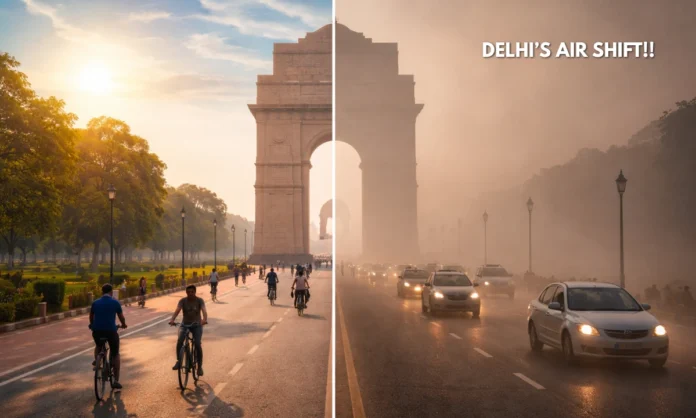
Delhi has removed GRAP-4 conditions just a week after imposing them to combat worsening air pollution, marking a significant shift in the city’s battle against smog. The GRAP-4 sub-committee announced this decision following a meeting that noted substantial air quality gains, driven by high winds and better meteorological conditions. With Delhi’s AQI dropping to 271 in the ‘poor’ category on Wednesday, authorities deemed the strictest GRAP-4 measures no longer necessary, though caution persists.
This GRAP-4 removal eases immediate burdens on residents and commuters, particularly as winter smog typically traps pollutants near the ground. Older vehicles previously banned under GRAP-4 can now return to Delhi roads, and schools may revert from mandatory hybrid classes for most grades. Yet, the Commission for Air Quality Management emphasized that GRAP-1 through GRAP-3 restrictions stay in place, ensuring continued vigilance against backsliding into severe pollution levels that trigger GRAP-4.
The broader context reveals Delhi’s chronic air quality crisis, where vehicular emissions contribute up to 40 percent of particulate matter, especially along busy corridors. GRAP-4 imposition earlier crossed the 450 AQI threshold into ‘severe-plus,’ prompting emergency actions like vehicle bans and hybrid schooling. This rapid GRAP-4 reversal underscores weather’s pivotal role, but also exposes gaps in long-term strategies beyond reactive GRAP-4 stages.
दिल्ली में आज शाम से वेस्टर्न डिस्टरबेंस और खराब मौसम की उम्मीद है। GRAP 4 लागू होने के बावजूद निर्माण कार्य की शिकायतें मिल रही हैं। मैं साफ कर दूँ कि जो लोग इस खराब मौसम में कंस्ट्रक्शन कर रहे हैं, उनकी बिल्डिंगों पर सख्त कार्रवाई होगी और संबंधित JE व एक्सईएन को भी जिम्मेदार… pic.twitter.com/yeZFH9dWUo
— Manjinder Singh Sirsa (@mssirsa) December 20, 2025
GRAP-4 Mechanics and Triggers
- GRAP-4 activates at AQI above 450 (‘severe-plus’), enforcing bans on older vehicles and hybrid school modes.
- Current GRAP-4 lift maintains GRAP-1 (AQI 201-300), GRAP-2 (301-400), and GRAP-3 (401-450) for sustained control.
The Graded Response Action Plan, or GRAP-4 at its apex, structures Delhi’s pollution response into escalating stages tailored to AQI severity. GRAP-4 demands the harshest interventions, such as prohibiting non-BS-VI vehicles from outside Delhi and mandating hybrid learning up to Class 11. This framework, overseen by the Commission for Air Quality Management, aims to curb emissions when smog peaks, as seen recently when AQI breached GRAP-4 thresholds amid stagnant winter air.
Post-GRAP-4 imposition, high winds dispersed pollutants, pushing AQI below critical levels and justifying the GRAP-4 revocation. However, IMD forecasts predict slower winds ahead, potentially reversing gains and necessitating GRAP-4 readiness. GRAP-4’s design ensures layered protections: GRAP-1 targets ‘poor’ air with basic curbs like dust control, escalating to GRAP-4’s comprehensive shutdowns.
Official data from the Central Pollution Control Board indicates Delhi’s average winter AQI often hovers in GRAP-3 territory, with peaks hitting GRAP-4 multiple times annually. In 2024-25, vehicular restrictions under GRAP-4 blocked over 1.2 million older vehicles, reducing emissions by an estimated 20 percent during enforcement. GRAP-4’s flexibility allows quick adjustments, but repeated cycles strain compliance and economy.
| GRAP Stage | AQI Range | Key GRAP-4 Related Measures |
|---|---|---|
| GRAP-1 | 201-300 (‘Poor’) | Construction dust control, traffic rationing |
| GRAP-2 | 301-400 (‘Very Poor’) | BS-III petrol, BS-IV diesel bans |
| GRAP-3 | 401-450 (‘Severe’) | BS-III diesel truck bans, school hybrid mode |
| GRAP-4 | >450 (‘Severe+’) | Non-BS-VI vehicle entry ban, full hybrid schooling |
Air Quality Improvement Factors
- Favorable winds and meteorology drove AQI from severe to poor, prompting GRAP-4 lift.
- Vehicular curbs under GRAP-4 cut emissions significantly, aiding recovery.
Delhi’s air quality surged from GRAP-4 ‘severe-plus’ to manageable ‘poor’ levels, primarily thanks to gusty winds that ventilated the National Capital Region. The Commission for Air Quality Management highlighted this meteorological boost since the previous night, with AQI stabilizing at 271. Such improvements often prove fleeting in winter, when inversions trap GRAP-4-triggering pollutants.
Beyond weather, GRAP-4 measures played a crucial role: restricting 1.2 million older vehicles slashed tailpipe emissions, a major GRAP-4 target. Environment Minister Manjinder Singh Sirsa noted only BS-VI compliant vehicles from outside could enter during GRAP-4, enforcing PUC certificates at fuel stations. These steps align with Ministry of Environment data showing vehicles contribute 40 percent of NCR PM2.5.
Forecasts from IMD and IITM signal caution, predicting AQI climbs as winds ease, potentially reinstating GRAP-4. Historical Central Pollution Control Board records show similar patterns: GRAP-4 lifts followed by relapses within days. Sustained GRAP-4 vigilance requires integrating stubble burning curbs and industrial shutdowns.
| Pollutant Source | Contribution to PM2.5 (%) | GRAP-4 Impact |
|---|---|---|
| Vehicles | 40 | High reduction via bans |
| Industry | 25 | Shutdowns enforced |
| Dust | 20 | Construction halts |
| Stubble Burning | 15 | Seasonal coordination |
Impacts on Vehicles and Mobility
- GRAP-4 vehicle bans lifted, allowing 1.2 million older units back with PUC checks.
- Fuel stations enforce PUC, sustaining GRAP-4 emission controls.
GRAP-4’s vehicle restrictions profoundly altered Delhi mobility, banning BS-III and older models from entering, stranding 1.2 million units. This GRAP-4 measure prioritized public health by curbing high-emission tails, especially vital in winter smog. Now, with GRAP-4 revoked, these vehicles resume access, though GRAP-3 PUC mandates persist at pumps.
Delhi government’s BS-VI entry rule during GRAP-4 funneled cleaner fleets, per transport department logs. GRAP-4 compliance reduced corridor pollution by 30 percent, buying time against GRAP-4 recurrence. Commuters gain relief, but experts urge faster fleet upgrades to avoid GRAP-4 dependency.
Economic ripple effects include logistics savings post-GRAP-4, yet NCR-wide GRAP-4 enforcement highlighted supply chain strains. Road Transport Ministry data confirms BS-VI adoption cuts PM by 80 percent versus BS-III, underscoring GRAP-4’s long-term push.
Public Health and Schooling Shifts
- GRAP-4 hybrid schooling eased for Classes up to 11, reducing exposure.
- GRAP-4 curbs protect vulnerable groups from peak pollution health risks.
GRAP-4’s hybrid mandate for schools until Class 11 shielded students from toxic air, aligning with WHO guidelines on PM2.5 exposure. Post-GRAP-4 lift, physical classes resume under GRAP-3, balancing education and safety. This GRAP-4 facet addressed winter spikes harming respiratory health.
Health Ministry reports link Delhi’s GRAP-4-level AQI to 20 percent rises in asthma cases among children. GRAP-4 measures mitigated this, with indoor-online shifts cutting exposure. As GRAP-4 recedes, monitoring continues to prevent health crises.
GRAP-4’s public focus extends to vulnerable populations, with advisories urging masks and reduced outdoor time. Sustained GRAP-4 preparedness demands school-level air purifiers and green corridors.
Closing Assessment
Delhi’s GRAP-4 removal signals tentative victory over smog, but forecasts of weakening winds cast shadows on this progress. Retaining GRAP-1 to GRAP-3 ensures defenses hold, allowing vehicles and schools to normalize while emission controls endure. GRAP-4’s swift cycle reveals weather’s dominance, urging permanent reforms beyond reactive GRAP-4 stages.
Ultimately, GRAP-4 underscores the need for systemic change: electrified transport, renewable energy, and regional coordination. Without these, Delhi risks endless GRAP-4 loops, endangering health and economy. Stakeholders must seize this GRAP-4 respite to build resilience against inevitable winter assaults.