
Key Highlights
- Nationwide Iran protests in Iran erupted after exiled Crown Prince Reza Pahlavi’s call, drawing thousands to Tehran streets with chants of “Pahlavi Will Return” and “Death to the Dictator.”
- Iranian authorities cut internet and phone lines nationwide, reporting 42 deaths and over 2,270 detentions.
- Economic collapse, with the rial at 1.4 million to $1, fuels demands for regime change under Supreme Leader Khamenei and President Pezeshkian.
Opening Overview
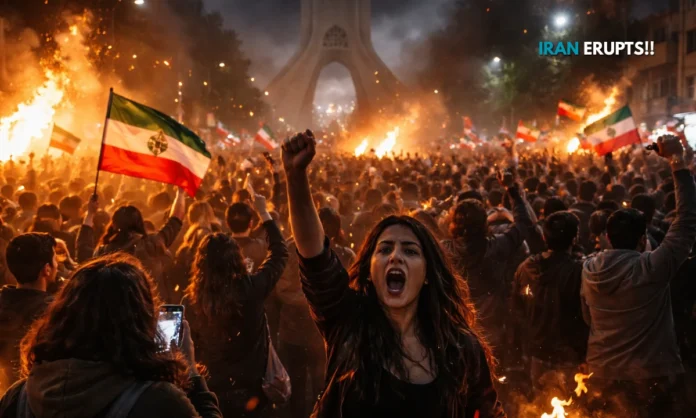
Iran protests have ignited across the nation, marking the most significant challenge to the Islamic regime since 2022. Tehran neighborhoods erupted Thursday evening as crowds heeded Reza Pahlavi’s call for 8 p.m. demonstrations, shouting against Supreme Leader Seyyed Ali Hosseini Khamenei and the theocratic system. These Iran protests stem from a collapsing economy, where soaring living costs and currency devaluation have pushed citizens to the brink.
The demonstrations, initially sparked last month at Tehran’s Grand Bazaar over the rial’s free fall, quickly evolved into broader calls for freedom. Protesters stormed streets, praising the shah and rejecting the 1979 Islamic Revolution’s legacy. Iran’s government responded by severing internet access for 85 million citizens and international phone lines, a tactic echoing past crackdowns. President Masoud Pezeshkian acknowledged “legitimate demands” but warned of limited action amid Western sanctions’ bite.
Exiled Crown Prince Reza Pahlavi, son of the last shah, framed the unrest as a pivotal moment, urging global leaders including US President Donald Trump to amplify Iranian voices. Violence has claimed at least 42 lives, with over 2,270 detained. As these Iran protests spread to over 100 cities, the regime faces its sternest test, blending economic fury with revolutionary zeal. The stakes escalate with judiciary warnings of harsh reprisals and security forces reporting casualties.
This is what it looks like when people stop being afraid of power
— Prayag (@theprayagtiwari) January 9, 2026
An Iranian woman burns Khamenei’s picture in protest and lights her cigarette with it 🔥 pic.twitter.com/2CKrwM9Ccb
Roots of Iran Protests in Economic Collapse
- Iran protests began December 28 at Tehran’s Grand Bazaar over rial depreciation to 1.4 million per $1.
- Inflation hit 52% year-on-year in December, per Iran’s Statistical Centre.
- Western sanctions and mismanagement exacerbate daily hardships for millions.
Iran protests trace back to shopkeepers’ outrage at Tehran’s Grand Bazaar, where the currency’s plunge triggered the initial spark. By late December, the rial had depreciated sharply, costing 1.4 million rials for $1, crippling imports and inflating basics like food and fuel. Official data from Iran’s Statistical Centre of Iran confirms December’s year-on-year inflation at 52 percent, eroding savings and fueling widespread despair.
This economic malaise, compounded by post-war recovery from Israel’s June conflict, has hit rural towns hardest. Bazaars shut nationwide in solidarity, amplifying the Iran protests’ reach to 31 provinces. President Pezeshkian, a reformist, admitted the crisis threatens livelihoods, invoking Islamic duty to resolve it, yet security forces dominate responses.
| Economic Indicator | December 2025 Value | Source |
|---|---|---|
| Inflation Rate (YoY) | 52% | Statistical Centre of Iran |
| Rial to USD Rate | 1.4 million | Iranian government statements |
| Protest-Linked Deaths | 42 | Human Rights Activists News Agency |
| Detentions | 2,270+ | Human Rights Activists News Agency |
Such metrics, drawn from state trackers, underscore why Iran protests transcend bazaars into systemic revolt. Mismanagement and sanctions have ballooned unemployment, particularly among youth, turning economic gripes into regime indictments.
Reza Pahlavi’s Role in Escalating Iran Protests
- Exiled Crown Prince called for 8 p.m. Thursday/Friday protests, testing his influence post-1979 Revolution.
- Chants of “Pahlavi Will Return” echo in Tehran, signaling monarchist revival.
- Pahlavi urges Trump and Europe to restore communications against regime blackout.
Reza Pahlavi, exiled son of Iran’s last shah, catalyzed the latest Iran protests with a direct call to action. His Thursday appeal drew massive street turnout, the first major gauge of his sway since his father’s 1979 flight. Witnesses reported Tehran erupting in chants: “This is the last battle! Pahlavi will return!” and support for the shah, once punishable by death.
Pahlavi, based abroad, condemned the internet cutoff as regime panic, predicting satellite jamming attempts. He thanked President Trump for pledges to hold Tehran accountable and pressed European leaders for technical aid to Iranians. His pro-Israel stance, criticized after June’s war, now bolsters his dissident credentials amid chants blending nostalgia and revolution.
These Iran protests mark a shift: leaderless movements gain a figurehead. Pahlavi promised follow-up plans based on turnout, potentially unifying fractured opposition. Security clashes, including a police colonel’s fatal stabbing near Tehran, highlight risks, yet his visibility pressures Khamenei’s apparatus.
| Protest Slogan | Meaning in Context | Prevalence |
|---|---|---|
| Death to the Dictator | Anti-Khamenei | Widespread |
| Pahlavi Will Return | Pro-monarchy | Tehran-focused |
| Death to Islamic Republic | Regime overthrow | Nationwide |
This table illustrates slogan evolution, fueling Iran protests’ momentum.
Regime Crackdown and Communication Blackout in Iran Protests
- Internet severed Thursday night, confirmed by CloudFlare and NetBlocks.
- Security reports: 2 Revolutionary Guard killed in Kermanshah, others in clashes.
- Judiciary threatens drones; past outages preceded mass arrests.
Iran’s regime swiftly imposed a nationwide blackout as Iran protests peaked, cutting internet and phones to silence coordination. CloudFlare and NetBlocks attributed the outage to government interference, affecting 85 million and isolating demonstrators. State TV ignored it, airing subsidy programs instead.
Security escalated: Mizan agency reported a colonel’s stabbing outside Tehran; Fars noted two guardsmen killed in Lordegan, 30 wounded. Revolutionary Guard confirmed two deaths in Kermanshah; a Khorasan Razavi deputy cited five slain at a Chenaran station. These losses signal fiercer resistance than prior waves.
President Pezeshkian seeks dialogue, but hardliners dominate. Kayhan warned of drone surveillance on participants. Historically, blackouts heralded intensified crackdowns, with HRANA tallying 42 deaths and 2,270 detentions across 100+ cities. IMF data underscores strain: Iran’s 2025 GDP contracted 2.4% under sanctions, per latest outlook, amplifying unrest triggers.
| Casualty Type | Reported Incidents | Locations |
|---|---|---|
| Security Forces | 5+ killed | Chenaran, Kermanshah, Lordegan |
| Protesters | 42 dead | Nationwide |
| Detentions | 2,270+ | 100+ cities |
This data reveals symmetric violence in Iran protests.
Global Reactions and Future Trajectory of Iran Protests
- Trump warns of “hell” if regime kills protesters peacefully.
- Pahlavi seeks Western tech/financial aid; protests hit 31 provinces.
- Analyst notes leaderless past failures; Pahlavi tests viability.
US President Donald Trump issued stark warnings to Iran’s leadership amid the Iran protests, vowing severe repercussions for protester deaths. In talks with Hugh Hewitt, he reiterated support without committing to Pahlavi meetings, letting events unfold. Pahlavi directly appealed to Trump and Europe for communication restoration.
Iran protests span all 31 provinces, per monitors, with universities joining. Critical Threats tracked 70 protests January 2 alone, up from 31 prior. Atlantic Council’s Nate Swanson highlights past failures from lacking alternatives, positioning Pahlavi as potential unifier.
World Bank reports Iran’s poverty rate at 28.1% in 2025, official stats validating grievances. Central Bank of Iran notes 35% liquidity growth fueling inflation. As Iran protests persist, regime cohesion frays, with Pezeshkian’s reforms sidelined by Khamenei’s grip.
| Official Data Point | Value | Source |
|---|---|---|
| Poverty Rate 2025 | 28.1% | World Bank |
| Liquidity Growth | 35% | Central Bank of Iran |
| GDP Contraction | 2.4% | IMF Outlook |
These figures contextualize the Iran protests’ depth.
Closing Assessment
The Iran protests of 2026 represent a watershed, blending economic desperation with bold regime defiance under Reza Pahlavi’s banner. From Tehran’s bazaars to nationwide chants, demands for freedom challenge Khamenei’s four-decade rule. Blackouts and casualties underscore regime resolve, yet protester resilience signals potential tipping point.
Pezeshkian’s overtures clash with hardline reprisals, exposing internal rifts. Trump’s stance adds global pressure, amplifying voices blackout sought to mute. Official metrics like 52% inflation and 1.4 million rial-dollar rate confirm grievances’ validity.
As Pahlavi plans next steps, Iran protests could redefine the Islamic Republic’s future. Whether they forge a leader or fizzle like predecessors remains key. History warns of repression’s toll, but current fury suggests enduring change beckons.