
Key Highlights
- Nationwide protests in Iran enter third week, sparked by currency crisis with rial at record low of 1.42 million to USD, leading to over 540 deaths and 10,000 arrests across 31 provinces.
- President Donald Trump openly supports protesters, hints at military and non-kinetic options like Starlink deployment, while Iranian leaders seek negotiations.
- US officials brief Trump on alternatives to direct strikes, amid warnings of escalation risks and opposition leadership vacuum.
Opening Overview
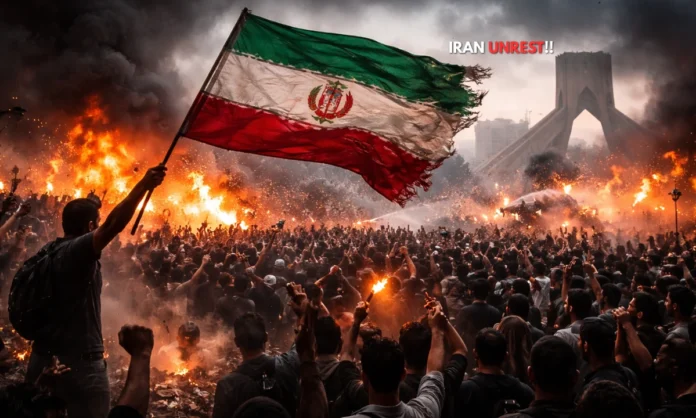
Iran protests have gripped the Islamic Republic in its most severe challenge since 1979, triggered by a devastating currency crisis and economic collapse that sent the rial plummeting to unprecedented lows. President Donald Trump stated the United States is closely monitoring the unrest and considering potential options, including strong military measures, as demonstrations spread nationwide. “We’re looking at it very seriously. The military is looking at it, and we’re looking at some very strong options,” Trump remarked upon returning to Washington from Mar-a-Lago.
These Iran protests, now in their third week, began on December 28 after the rial hit 1.42 million to the dollar, fueling skyrocketing prices for essentials like food and fuel. Protesters, initially focused on economic woes, have turned chants against Supreme Leader Ayatollah Ali Khamenei and the theocratic regime. Internet shutdowns exceeding 84 hours have hampered reporting, but US-based Human Rights Activists News Agency tallies over 540 fatalities and 10,000 detentions in 186 cities. President Masoud Pezeshkian calls for dialogue, yet hardliners threaten death penalties.
Trump’s vocal backing adds urgency to the Iran protests scene. He posted on social media: “Iran is looking at FREEDOM, perhaps like never before. The USA stands ready to help!!!” Iranian outreach for talks follows his threats, though he warned action might precede meetings. This follows August B-2 strikes on nuclear sites, marking potential for repeat intervention. The world watches as economic despair morphs into systemic revolt.
Your reminder that Trump sent in the military to break up peaceful protests here in the US, and his DOJ has started labeling people who speak out against him as domestic terrorists.
— Melanie D'Arrigo (@DarrigoMelanie) January 2, 2026
Trump doesn’t care about protecting protesters.
He cares about having an excuse to attack Iran. pic.twitter.com/5qOGabeWyv
Roots of Iran Protests in Economic Crisis
- Currency collapse to 1.42 million rial per USD ignited bazaar strikes in Tehran.
- Inflation nears 40%, eroding purchasing power amid subsidy cuts.
- Protests evolved from economic grievances to anti-regime demands.
The Iran protests trace directly to a currency crisis that exposed decades of mismanagement under the Islamic Republic. On December 28, the rial’s freefall to 1.42 million against the US dollar triggered immediate bazaar shutdowns in Tehran, a traditional regime stronghold. Merchants, facing overnight price surges in cooking oil, chicken, and rice, led the charge, with chants shifting from “higher prices” to “death to the dictator.”
Iran’s Central Bank data underscores the severity: annual inflation hovered at 38.9% in late 2025, per IMF reports on Middle East economies, compounding subsidy reductions on gasoline enacted earlier that month. The World Bank noted Iran’s GDP contracted 1.5% in 2025, hit by sanctions and prior Israeli strikes on nuclear infrastructure. These factors left millions unable to afford basics, with medicine shortages reported in 70% of pharmacies.
| Economic Indicator | 2024 Value | 2025 Value | Source |
|---|---|---|---|
| Inflation Rate | 32.5% | 38.9% | IMF |
| Rial/USD (Dec peak) | 850,000 | 1,420,000 | Central Bank of Iran |
| GDP Growth | 0.4% | -1.5% | World Bank |
| Unemployment | 9.2% | 11.8% | Statistical Centre of Iran |
As Iran protests intensified, universities and impoverished neighborhoods joined, marking the broadest unrest since 2022. Government responses, including internet blackouts, failed to quell momentum, with over 186 cities affected. This economic spark has reignited calls for regime change, drawing global scrutiny.
Trump’s Stance Fuels Iran Protests Debate
- Trump warns of intervention if protesters killed, posts support for “freedom.”
- Iranian leaders seek negotiations amid US threats of action.
- Prior B-2 strikes set precedent for aerial operations.
President Donald Trump has positioned the US firmly behind those challenging Iran’s leadership during these Iran protests. “If they shoot, we’ll start shooting,” he declared Friday, escalating after claiming Iran was “locked and loaded” against demonstrators. His Saturday social media post amplified this: “Iran is looking at FREEDOM… USA stands ready to help!!!”
Iranian overtures followed, with Trump noting leaders called “yesterday” to negotiate, though “we may have to act before a meeting.” This comes post-August, when B-2 bombers damaged three nuclear sites, delaying Tehran’s program by years per US Defense Department assessments. Tuesday’s briefing for Trump covers options from cyberattacks to Starlink terminals bypassing shutdowns.
US State Department logs confirm no major troop movements, aligning with Politico reports on non-kinetic preferences. Senators diverge: Rand Paul cautions bombing could unify Iranians against outsiders, while Lindsey Graham urges targeting repressive leaders. Reza Pahlavi, son of the ousted shah, vows to lead a democratic transition if called.
Trump’s rhetoric unsettles allies, yet bolsters protester morale amid 540 confirmed deaths. As Iran protests persist, his blend of threats and aid promises keeps Tehran guessing, potentially tipping the balance without boots on ground.
Non-Kinetic Paths in US Iran Strategy
- Cyber tools, sanctions, and Starlink eyed over direct invasion.
- No significant US asset shifts signal aversion to full war.
- Revolutionary Guard bolsters security against targeted strikes.
US deliberations on Iran protests favor subtlety over spectacle. Wall Street Journal outlines Tuesday’s military-diplomatic briefings emphasizing cyberattacks on Iranian infrastructure and covert boosts to dissidents. Starlink terminals, per Trump’s Musk talks, could pierce the 84-hour internet blackout, empowering organizers.
Pentagon statements verify minimal asset repositioning, underscoring no ground force intent. IMF data highlights sanctions’ bite: Iran’s oil exports fell 25% in 2025 to 1.2 million barrels daily, per agency trackers, starving regime coffers. Cyber weapons could mirror past operations disrupting military sites without casualties.
| US Option Category | Description | Potential Impact | Official Basis |
|---|---|---|---|
| Cyber Operations | Disrupt command networks | Delay repression | DoD Cyber Command |
| Starlink Deployment | Restore protester comms | Amplify coordination | FCC Spectrum Approval |
| Enhanced Sanctions | Target elite assets | Economic pressure | Treasury OFAC List |
| Online Amplification | Boost anti-regime voices | Morale surge | State Dept Digital Strategy |
Risks loom: symbolic strikes might rally hardliners, as Institute for National Security Studies warns. Absent opposition figureheads, operational wins may falter strategically. Khamenei and Guard commanders have fortified personal defenses, complicating decapitation attempts. These measured steps reflect lessons from prior engagements, prioritizing regime erosion through Iran protests without broader war.
Risks and Global Ripples of Iran Unrest
- Strikes risk escalation, regime cohesion against external foes.
- Allies wary of US moves amid China, Russia interests.
- Pahlavi’s return bid highlights transition challenges.
Prospects of US action atop Iran protests carry high stakes. Analyst Danny Citrinowicz notes a strong strike might curb crackdowns but foster regime unity and wider conflict. Senator Mark Warner echoes: attacks could rally citizens around the flag, not fracture loyalty.
Internationally, Trump’s Venezuela parallel—declaring himself acting president post-Maduro—hints at bolder hemisphere plays, alarming Beijing per recent warnings. Russia’s ties to Tehran complicate dynamics, with IMF projecting 2% Iranian GDP drag from unrest by mid-2026.
Reza Pahlavi’s readiness to lead democracy underscores leadership voids. “I’m planning on that,” he affirmed, pledging transparent elections. Yet, 10,000 arrests signal regime entrenchment.
| Global Actor | Stance on Iran Protests | Economic Stake |
|---|---|---|
| Russia | Back regime stability | Oil partnerships (15% exports) |
| China | Neutral, trade focus | $20B annual imports |
| EU | Urge restraint | Sanctions enforcement |
| Israel | Monitor nuclear threat | Post-strike vigilance |
As Iran protests test theocratic resilience, global powers balance intervention perils against opportunity costs.
Closing Assessment
The Iran protests represent a pivotal moment, where economic collapse converges with Trump’s assertive posture to challenge Ayatollah Khamenei’s grip. Over 540 lives lost and 10,000 detained underscore the human toll, yet protester resolve endures despite blackouts. US options, from Starlink to cyber measures, offer paths short of invasion, balancing support without endless war.
Official data paints grim economics: 38.9% inflation, rial at 1.42 million per dollar, per IMF and Central Bank figures. Trump’s negotiation tease hints at off-ramps, but his “strong options” vow keeps tension high. Regime cohesion risks from strikes, as senators caution, demand precision.
Ultimately, these Iran protests could redefine the Middle East. Success hinges on internal momentum and external calibration. Will freedom dawn, or escalation engulf the region? The coming weeks will test resolve on all sides, with global stability in play.