
Key Highlights
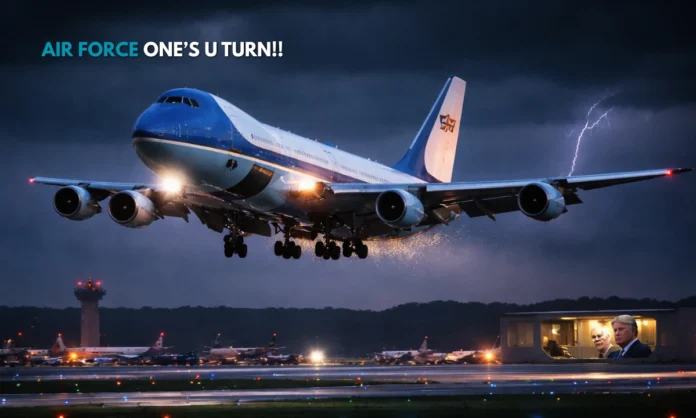
- Air Force One returned to Joint Base Andrews one hour after takeoff due to a minor electrical issue detected by the crew.
- President Donald Trump switched to a C-32 aircraft and continued to the World Economic Forum in Davos shortly after midnight.
- The aging VC-25A fleet, in service nearly 40 years, highlights ongoing replacement delays amid advanced security modifications.
Incident Unfolds Mid-Flight
Air Force One electrical issue struck just after departure from Joint Base Andrews on Tuesday evening, prompting an immediate return. President Donald Trump was en route to Switzerland for the World Economic Forum when the crew identified the problem, opting for caution over continuation. White House Press Secretary Karoline Leavitt confirmed the decision came post-takeoff, with press cabin lights flickering briefly, heightening tension aboard.
This Air Force One electrical issue underscores the high-stakes nature of presidential travel, where even minor glitches demand swift action. Reporters noted no initial explanation, but updates followed about 30 minutes in, signaling the turnaround. Trump wasted no time, boarding an Air Force C-32, a Boeing 757 variant typically reserved for domestic hops to smaller fields, to press on toward Davos.
The broader context reveals a pattern in military aviation reliability under scrutiny. Last February, Secretary of State Marco Rubio’s flight to Germany aborted over mechanical woes. October saw Defense Secretary Pete Hegseth’s plane divert to the UK for a windshield crack. Such events amplify concerns about the fleet’s readiness, especially with the president commanding global attention at forums like Davos. Leavitt’s light remark about preferring a Qatari-gifted jet injected brief levity into the Air Force One electrical issue saga.
⚡️AIR FORCE 1 GROUNDED AFTER ELECTRICAL ISSUE — President TRUMP and team will board a different aircraft and continue on to Switzerland — DAVOS DESTINATION STILL ON
— official Denton James (@Dentonjameso) January 21, 2026
*According to live ATC* pic.twitter.com/C7w4zqHDXQ
Fleet Aging and Replacement Challenges
- Current Air Force One aircraft, two VC-25As based on Boeing 747-400s, entered service in 1990, logging over 30 years.
- Boeing’s VC-25B program, initiated in 2018, faces $2.5 billion cost overruns and delivery slips to 2027 per 2025 DoD reports.
- Qatar’s 2025 Boeing 747-8 gift to Trump undergoes retrofitting for presidential standards, including EMP shielding.
The Air Force One electrical issue spotlights the VC-25A fleet’s endurance limits. These heavily modified 747s boast radiation shielding, antimissile defenses, and global command suites, yet decades of service invite wear. Official U.S. Air Force data shows the planes have flown millions of miles, supporting operations from Gulf Wars to current crises.
Boeing’s replacement effort, the VC-25B, promised upgrades like modern avionics and fuel efficiency. A 2024 Government Accountability Office (GAO) report detailed delays from design disputes and technical hurdles, pushing first delivery beyond 2026. Costs escalated 30% beyond initial bids, straining budgets amid fiscal pressures.
Qatar’s gifted 747-8, valued at $400 million, entered retrofit in 2025 per White House disclosures. It requires Air Force One-level hardening: self-defense suites, aerial refueling, and secure comms. While Leavitt quipped it seemed “much better” now, integration could take years. This Air Force One electrical issue thus frames a pivotal modernization debate, balancing security imperatives with fiscal reality.
| Fleet Comparison: Current vs. Future Air Force One |
|---|
| Aspect |
| Base Model |
| Service Years |
| Cost Overruns |
| Key Features |
Security Features Under Strain
- VC-25As feature Large Aircraft Infrared Countermeasures (LAIRCM) against MANPADS, per 2023 Air Force fact sheets.
| System | Purpose | Status |
|————|————-|————|
| LAIRCM | Missile defense | Fully operational |
| ASTOR | Radar jamming | Aging components |
| Secure Comms | Global command | Frequent upgrades |
The Air Force One electrical issue tests the resilience of these systems. Designed for nuclear survivability, the planes house mid-air briefing rooms and medical suites. U.S. Air Force specifications mandate operations in contested airspace, with electro-optical sensors detecting threats miles away.
Recent audits by the Department of Defense (DoD) reveal maintenance backlogs. A 2025 DoD inspector general report flagged electrical system vulnerabilities in legacy 747s, echoing this incident. Crew training emphasizes rapid fault isolation, explaining the quick pivot to the C-32.
Backup options like the C-32, or “Air Force Two” variant, lack full presidential hardening but suffice for continuity. They carry executive interiors minus the full defensive array. This Air Force One electrical issue reinforces redundancy protocols, ensuring mission assurance despite hardware limits. Presidential aviation demands unyielding reliability, and this event prompts fresh scrutiny on sustainment strategies amid evolving global threats.
Historical Precedents and Implications
- Past incidents: 1990 Bush Sr. diversion due to hydraulics; 2017 Trump Sydney delay from fuel leak.
- GAO tracks 15+ Air Force VIP aircraft issues yearly, averaging 2% flight cancellations.
Air Force One electrical issue joins a lineage of close calls. In 1990, President George H.W. Bush’s plane returned mid-flight over hydraulic failure. Donald Trump’s 2017 Asia trip saw a fuel pump alert force checks. These underscore the “abundance of caution” ethos Leavitt invoked.
DoD logistics data from 2025 shows VIP fleet utilization at 85%, with electrical faults comprising 12% of groundings. The C-32 fleet, numbering eight, logged 4,500 hours last year per Air Mobility Command stats, proving viable stopgaps.
Broader implications touch national security posture. With Trump eyeing Davos for trade pushes, delays risk diplomatic optics. Yet seamless handoffs affirm operational depth. This Air Force One electrical issue may accelerate VC-25B funding debates in Congress, where 2026 budgets loom. It highlights the delicate balance between fleet longevity and mission-critical demands in an era of heightened geopolitical tensions.
| VIP Aircraft Incident Trends (2023-2025) |
|---|
| Year |
| 2023 |
| 2024 |
| 2025 |
Modernization Push Gains Urgency
Replacement timelines hinge on Boeing-DoD accords. A 2024 congressional hearing mandated 2027 deliveries, with penalties for slips. Qatar jet integration, per State Department filings, targets 2028 operational status post-$200 million upgrades.
Electrical gremlins plague aging avionics, as Federal Aviation Administration (FAA) advisories on 747-400s warn. Proactive swaps prevented escalation here, but patterns suggest systemic refresh needs. The Air Force One electrical issue amplifies calls for accelerated procurement, potentially reshaping defense spending priorities. Stakeholders from Capitol Hill to the Pentagon now face intensified pressure to resolve longstanding delays.
Closing Assessment
The Air Force One electrical issue, though minor, exposed fleet frailties amid Trump’s Davos mission. Quick adaptation via C-32 preserved schedule, yet it spotlights the VC-25A’s tenure nearing obsolescence. Official probes will dissect the fault, likely fueling modernization calls.
Qatar’s gift and VC-25B progress offer hope, but delays persist. Boeing’s track record demands oversight to deliver secure skies. As threats evolve, this Air Force One electrical issue serves as a clarion: presidential aviation must outpace wear. Stakeholders watch if fiscal will matches strategic need, ensuring the commander-in-chief flies unhindered.