
Summary
- The DGCA reprimanded Air India Express in March 2025 for failing to replace a critical engine part on time and allegedly falsifying software records to appear compliant.
- The airline admitted to lapses and took action against key staff, but the incident highlights mounting safety concerns within Tata-owned Air India Group.
- The revelations come just weeks after the June Dreamliner crash in Ahmedabad, intensifying scrutiny on India’s national carrier and its regulatory oversight.
Engines, Ethics, and Evasion: The Deepening Crisis at Air India Express
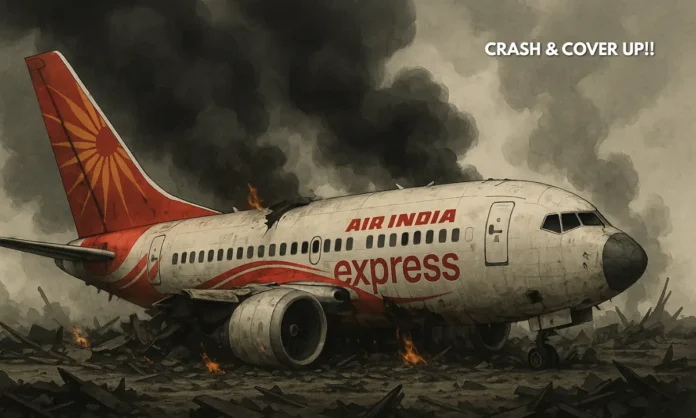
As India mourns the lives lost in the June 2025 Air India Dreamliner crash—the nation’s deadliest aviation disaster in over a decade—a separate, earlier incident has come to light that underscores deeper structural issues. A confidential government memo reviewed by Reuters has revealed that in March 2025, the Directorate General of Civil Aviation (DGCA) reprimanded Air India Express for failing to replace a mandated engine component on time—and then allegedly falsifying maintenance software records to cover up the lapse.
At the heart of the matter lies an Airbus A320 operated by the budget carrier, which continued to fly despite missing a critical engine part replacement ordered by the European Union Aviation Safety Agency (EASA). The memo reveals that records were allegedly altered in AMOS, the airline’s aircraft maintenance tracking software, to give the appearance of timely compliance.
Air India Express has since admitted the lapse and stated that the failure stemmed from a technical oversight during a data migration process. Remedial actions were taken, including the removal and suspension of key personnel. But the damage—reputational, regulatory, and operational—may prove harder to contain than any single safety memo.
Shame on @airindia @AirIndiaX and @TataCompanies for falsifying records and playing with the precious lives of people. @DGCAIndia is just making some noises here and there, without any punitive action. Not doing its job really.
— top blogger (@topblogger1) July 5, 2025
CC: @RamMNK pic.twitter.com/CkTVOTaYqL
The March Memo: What DGCA Found, and Why It Matters
- Surveillance by DGCA found non-compliance with an EASA-mandated engine part change.
- The specific component had known manufacturing deficiencies posing safety risks.
- Maintenance records in AMOS software were allegedly forged to appear compliant.
- Airline removed its quality manager and suspended a senior airworthiness official.
- DGCA flagged multiple safety violations across Air India Group in recent months.
The DGCA’s March findings paint a worrying picture of procedural lapses and data manipulation. The memo specifically noted that the A320’s engine had not been updated within the “prescribed time limit,” and alleged that AMOS software entries had been altered “to show that the work had been carried out within the prescribed limits.”
The implicated aircraft, registered as VT-ATD, typically serves high-density routes like Muscat, Dubai, and major Indian metros—often over water or restricted airspace, where engine reliability becomes non-negotiable. The EU’s advisory had warned of “manufacturing deficiencies” in the engine component, making the lapse not just regulatory, but deeply operational.
The Air India Express statement confirmed that the lapse was due to an “oversight” during record migration and that it had implemented “preventive measures.” But it avoided directly addressing the DGCA’s claim of forgery, a silence that risks undermining the credibility of its internal accountability efforts.
A System Under Strain: Dreamliner Crash and Broader Safety Concerns
- The March violation predates the June 2025 Air India Dreamliner crash in Ahmedabad that killed 241 people.
- DGCA has flagged multiple infractions in recent months, including overdue safety checks and pilot fatigue violations.
- In June, Air India was warned for operating aircraft with expired escape slide certifications.
- Former safety officials have raised concerns over lax procedural adherence in the Tata-owned aviation group.
- Public confidence in Air India’s safety culture is steadily eroding.
The revelations around falsified maintenance records would be alarming in any context. But occurring within months of the Dreamliner crash, they are catastrophic for public trust. While unrelated in cause, the incidents form a narrative thread: a growing perception that India’s flagship carrier is failing to enforce internal safety protocols across its divisions.
DGCA data reveals that of 23 safety warnings or penalties issued in 2023, nearly half involved either Air India or Air India Express. This statistical overrepresentation, combined with reports of pilot duty timing violations and expired emergency gear, suggests systemic lapses rather than isolated mistakes.
Former Aircraft Accident Investigation Bureau official Vibhuti Singh did not mince words. “Delayed engine fixes, especially over water or near airspace borders, dramatically increase operational risk. This isn’t just a lapse—it’s a grave mistake,” he told reporters.
And while the March infraction came months before the Dreamliner disaster, it deepens the case for a forensic audit across the Tata aviation portfolio—a group that is increasingly being viewed not as a steward of safety, but as a case study in corporate overreach and underregulation.
From Maharaja to Mirage? Tata Group’s Turbulent Flight Path
- Tata Group acquired Air India in 2022 with promises of global transformation.
- The airline has since faced mounting customer complaints about service and aircraft upkeep.
- Multiple safety violations and procedural breakdowns have marred the group’s narrative of revival.
- The current crisis threatens to derail both investor confidence and regulator patience.
- Long-term transformation will require not just capital—but cultural change.
When Tata Sons took over Air India in 2022, the promise was clear: restore India’s national carrier to global prestige. That vision included fleet renewal, customer service enhancement, and safety-led operational overhauls. However, three years in, the airline is fighting fires on every front—from cabin complaints to crisis management.
The March memo is not just a red flag for regulators; it’s a flashing alarm bell for Tata’s aviation brand. With employee morale under strain, managerial accountability in question, and a public increasingly suspicious of safety protocols, the group’s credibility hangs in the balance.
Remedial action—like removing a quality manager—may contain a regulatory response. But to restore faith, Tata’s aviation arm needs to move beyond personnel shuffles and commit to deep-rooted structural reforms. This includes modernising maintenance culture, digitising checks with traceable integrity, and creating firewalls between technical compliance and commercial pressures.
Beyond the Memo: Accountability or Autopilot?
The DGCA memo on Air India Express may not have made front-page headlines in March, but in the aftermath of the June tragedy, it demands urgent reconsideration. It exposes a mindset—of shortcuts, software tweaks, and bureaucratic shielding—that no legacy carrier can afford in the modern era of aviation.
The real question isn’t whether parts were delayed or who signed off the AMOS entries. It’s whether the culture of safety is being enforced from the cockpit to the boardroom. In a time when every airline is under the magnifying glass, India’s national carrier must decide: will it lead with transparency and reform, or continue to fly on autopilot through turbulence of its own making?