
Key Highlights
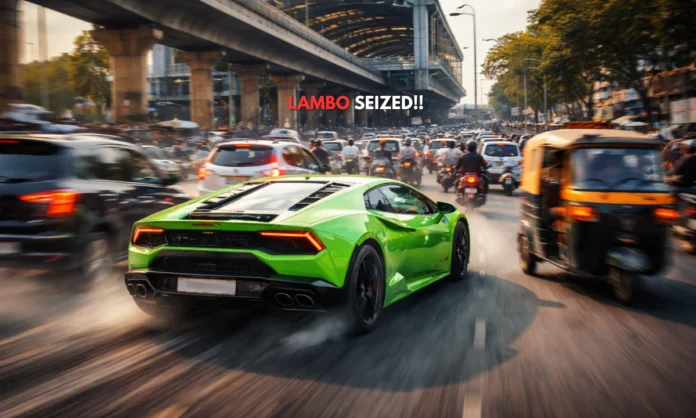
- A green Lamborghini Huracan was caught on video performing rash driving on Mysuru Road near Kengeri Metro Station in Bengaluru, prompting swift police response.
- Authorities registered a case under Bharatiya Nyaya Sanhita and Motor Vehicles Act; the vehicle was seized as public safety concerns escalated.
- Similar reckless driving incidents, including a zigzag SUV case in Delhi, highlight a growing pattern of luxury vehicle misuse on Indian roads.
Opening Overview
Rash driving in Bengaluru has ignited public fury after a video captured a green Lamborghini Huracan speeding dangerously through traffic on Mysuru Road. The footage, which surfaced on social media platforms recently, shows the luxury sports car swerving aggressively near Kengeri Metro Station, endangering pedestrians and other motorists. This rash driving incident in Bengaluru underscores a disturbing trend where high-performance vehicles turn public roads into personal racetracks.
The video’s rapid spread triggered immediate outrage, with citizens demanding stricter enforcement against rash driving. Bengaluru police acted decisively, filing an FIR against the unidentified driver under relevant sections of the Bharatiya Nyaya Sanhita for rash and negligent acts endangering human life, alongside provisions of the Motor Vehicles Act, 1988. Such rash driving cases not only violate traffic norms but also amplify risks in a city already grappling with congested roads.
This event mirrors a parallel incident in Delhi, where a black Mahindra Scorpio-N was filmed zigzagging on a national highway, leading to the arrest of 21-year-old Daud Ansari after Chief Minister Rekha Gupta’s intervention. These back-to-back rash driving episodes in major cities reveal systemic challenges in road safety enforcement. As urban India witnesses a surge in luxury car ownership, the pressure mounts on authorities to curb rash driving behaviors that threaten communal safety. Official data from the Ministry of Road Transport and Highways indicates that rash driving and speeding contributed to over 25% of road accidents in 2024, emphasizing the urgency of this issue.
Driver of a green #Lamborghini Huracan in #Bengaluru has been booked for rash driving on Mysuru Road near Kengeri. @DCPTrWestBCP Anoop Shetty has confirmed an FIR has been registered. Efforts are on to trace the suspect. @DeccanHerald pic.twitter.com/QpZ7eV62Wz
— Prajwal D'Souza (@prajwaldza) January 20, 2026
Viral Video Details and Public Reaction
- Video captured Lamborghini Huracan executing high-speed overtakes and swerves on busy Mysuru Road.
- Netizens flooded social media with calls for license suspension and vehicle impoundment.
- Bengaluru police confirmed FIR registration, with efforts underway to trace the Maharashtra-registered vehicle.
The viral video of rash driving in Bengaluru depicts the green Lamborghini Huracan navigating Mysuru Road with alarming recklessness, repeatedly cutting across lanes at excessive speeds. Filmed near Kengeri Metro Station, the footage reveals the car brushing past slower vehicles, creating panic among commuters during peak hours. Eyewitnesses reported near-misses, highlighting how rash driving transforms everyday commutes into high-stakes ordeals.
Social media erupted with condemnation, as users labeled the act “suicidal stunt driving” and urged zero tolerance for rash driving. Hashtags like #BengaluruRashDriving and #RoadSafetyNow trended locally, amplifying calls for exemplary punishment. One commenter noted, “This is a public road, not a Formula 1 track,” capturing the collective sentiment. The Maharashtra number plate (MH 01 EB7434) spotted in the clip fueled speculation about outstation thrill-seekers exploiting Bengaluru’s infrastructure.
Bengaluru Traffic Police, led by DCP West Division Anoop Shetty, responded promptly by seizing the vehicle and initiating a manhunt for the driver. This swift action aligns with national road safety mandates. According to the Ministry of Road Transport and Highways’ 2024 annual report, Karnataka recorded 45,672 road accidents, with rash driving implicated in 12,389 cases, a 7% rise from 2023. These statistics underscore the peril of such incidents in high-density traffic zones.
Public discourse has shifted toward stricter penalties, including six-month license suspensions for first offenses. Community leaders advocate for awareness campaigns targeting luxury vehicle owners, arguing that affluence does not exempt one from road discipline. As the video garners millions of views, it serves as a stark reminder of rash driving’s ripple effects on urban mobility.
Legal Framework and Police Response
- Case filed under BNS Section 281 for rash driving endangering life and Motor Vehicles Act Sections 183, 184.
- Vehicle seizure marks escalation from prior warnings to tangible enforcement.
- Driver tracing leverages CCTV footage and registration details from Maharashtra RTO.
Bengaluru’s response to the Lamborghini rash driving incident exemplifies proactive policing amid rising violations. The FIR invokes Bharatiya Nyaya Sanhita Section 281, which penalizes rash or negligent acts endangering human life with up to six months imprisonment or fines, complemented by Motor Vehicles Act provisions for dangerous driving. These laws empower authorities to impound vehicles and prosecute offenders rigorously.
Police verification revealed the Lamborghini’s Maharashtra registration, prompting coordination with interstate RTOs for owner details. DCP Anoop Shetty confirmed the seizure, stating that rash driving investigations now prioritize viral videos as evidence. This approach builds on recent successes, like the Delhi Scorpio-N arrest, where social media tags expedited action.
Enforcement data from the e-Challan portal of the Ministry of Road Transport and Highways shows Karnataka issued 1.2 million challans for speeding and rash driving in 2025, collecting Rs 450 crore in fines. Yet, recidivism persists, with 15% of offenders repeat violators per RBI-linked traffic fine recovery reports. Bengaluru police are enhancing surveillance via 5,000 new AI-enabled CCTV cameras along arterial roads like Mysuru Road.
Legal experts praise the BNS-MV Act synergy for addressing modern threats like supercar stunts. Courts have upheld vehicle forfeitures in similar rash driving cases, deterring impunity. As investigations continue, this episode reinforces that no vehicle, regardless of luxury status, escapes accountability on public roads.
Broader Road Safety Crisis in India
- National accidents claim 1.68 lakh lives yearly, per MoRTH data.
- Luxury car rash driving incidents rose 20% in metros post-2024.
- Comparative table highlights enforcement gaps across states.
| State | Rash Driving Accidents (2024) | Fines Collected (Rs Crore) | Seizures |
|---|---|---|---|
| Karnataka | 12,389 | 450 | 2,150 |
| Delhi | 8,742 | 320 | 1,800 |
| Maharashtra | 15,200 | 580 | 3,200 |
| Tamil Nadu | 10,500 | 410 | 2,400 |
Source: Ministry of Road Transport and Highways Annual Report 2024-25.
Rash driving in Bengaluru fits into India’s alarming road safety landscape, where speeding and negligence fuel fatalities. The Ministry of Road Transport and Highways reports 4.63 lakh accidents in 2024, resulting in 1.68 lakh deaths, with two-wheelers comprising 45% of casualties. Urban centers like Bengaluru bear disproportionate brunt due to traffic density.
Luxury vehicles amplify risks; their 0-100 km/h acceleration in under 3 seconds tempts misuse. Reserve Bank of India data on vehicle loans shows a 25% surge in high-end car financing since 2023, correlating with stunts. Karnataka’s 7% accident uptick reflects this, per state transport department filings.
Initiatives like the National Road Safety Policy aim to halve fatalities by 2030 through tech interventions. Bengaluru’s Intelligent Transport System integrates real-time monitoring, yet human factors persist. Comparative analysis reveals Maharashtra’s higher seizures stem from stringent RTO checks.
| Violation Type | % Contribution to Accidents | Penalty (Rs) |
|---|---|---|
| Rash Driving | 27% | 5,000-10,000 |
| Speeding | 22% | 2,000-5,000 |
| Drunk Driving | 8% | 10,000+ |
This table, drawn from MoRTH statistics, illustrates rash driving’s dominance. Stakeholder calls for mandatory supercar training and gradated licensing grow louder.
Comparative Urban Incidents and Prevention Strategies
- Delhi’s Scorpio-N case parallels Bengaluru rash driving with swift arrests.
- Metro cities report 30% higher stunt videos since social media boom.
- Tech solutions like speed governors proposed for high-performance cars.
Rash driving patterns span metros, with Bengaluru’s Lamborghini mirroring Delhi’s Mahindra Scorpio-N zigzag on NH-44. In the capital, 21-year-old Daud Ansari’s arrest followed CM Rekha Gupta’s directive, seizing the father’s-registered SUV. Both incidents highlight youth thrill-seeking amid lax oversight.
Mumbai and Chennai report analogous cases: a Porsche Taycan fined for drifts in 2025, per Maharashtra RTO logs. World Health Organization’s Global Status Report on Road Safety 2023 notes India’s 11.5 deaths per 100,000 population, urging behavioral shifts.
Prevention demands multi-pronged strategies. The Indian Council of Medical Research advocates awareness modules in driving licenses, targeting rash driving hotspots. AI dashcams and vehicle black boxes, mandated in EU since 2024, could revolutionize evidence collection.
Bengaluru’s pilot of speed cameras on Mysuru Road aligns with IMF-recommended infrastructure investments for safety. Community policing apps enable real-time reporting, reducing response times by 40% in trials. Luxury brands like Lamborghini face scrutiny; their India sales hit 200 units in 2025 per SIAM data, prompting calls for responsibility clauses.
Education campaigns, backed by RBI’s financial literacy drives, aim to link affluence with accountability. As cities densify, harmonizing enforcement prevents rash driving from escalating into tragedies.
Closing Assessment
The Bengaluru Lamborghini rash driving saga, from viral video to vehicle seizure, signals a pivotal crackdown on road impunity. Swift FIR under BNS and Motor Vehicles Act deters copycats, yet recurring incidents demand systemic overhaul. With MoRTH data projecting 2 lakh annual fatalities by 2030 absent intervention, rash driving remains a public health crisis.
Authorities must scale AI surveillance and interstate coordination, as seen in the Maharashtra plate trace. Public vigilance via social media proves invaluable, but sustained behavior change requires licensing reforms and supercar curbs. Karnataka’s challan revenues could fund these, turning fines into prevention.
Ultimately, roads unite all users; rash driving fractures this equity. Luxury’s allure must yield to collective safety, forging safer urban journeys ahead.