
Key Highlights:
- Viral videos show alleged ISIS recruiter Juhad Hameed Shakeel Manna and serial rapist Umesh Reddy using mobile phones inside Bengaluru Central Prison
- BJP demands immediate resignation of Karnataka Chief Minister Siddaramaiah and Home Minister G Parameshwara over security lapses
- Home Minister announces high-level probe committee, transfers one senior official and suspends two prison officers following nationwide controversy
Opening Overview
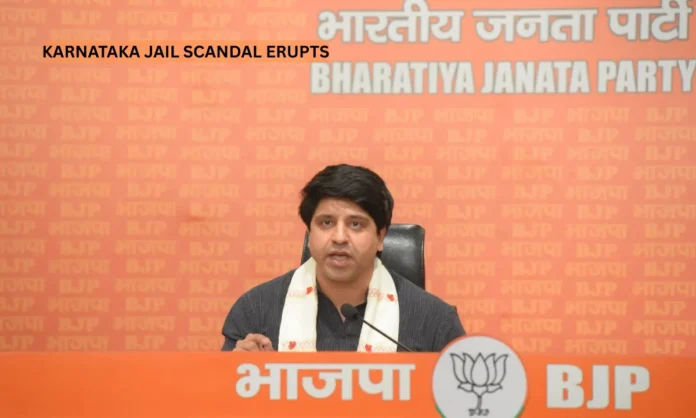
The BJP has launched a fierce political attack against the Congress government in Karnataka following the emergence of shocking videos that allegedly show high-security prisoners enjoying VVIP facilities inside state jails. The controversy erupted after several undated video clips surfaced on social media platforms, purportedly depicting inmates at Bengaluru’s Parappana Agrahara Central Prison using mobile phones, watching television, and even partying within prison premises. BJP national spokesperson Shehzad Poonawalla accused the Congress government of providing “VVIP treatment to terrorists” and demanded the immediate resignation of Chief Minister Siddaramaiah and Home Minister G Parameshwara over what the opposition party termed as a complete breakdown of law and order in Karnataka jail video controversy.
कर्नाटक सरकार की जेल में बंद एक इस्लामिक जिहादी आतंकवादी को VVIP ट्रीटमेंट दिया जा रहा है।
— BJP (@BJP4India) November 10, 2025
एक तरफ जम्मू कश्मीर से लेकर फरीदाबाद तक, आतंकवाद पर हमला किया जा रहा है, और नागरिकों को आतंकवादियों के नापाक मंसूबों से बचाया जा रहा है।
आतंकवाद की घटना से पहले ही आतंकवादी की गर्दन दबोच… pic.twitter.com/2tE1NU2xni
The videos at the center of this Karnataka jail video scandal show alleged ISIS recruiter Juhad Hameed Shakeel Manna using smartphones inside the facility, alongside convicted serial rapist and killer Umesh Reddy who appears to have access to multiple phones and television sets. This Karnataka jail video controversy has reignited debates about prison security protocols, preferential treatment for high-profile inmates, and the effectiveness of correctional oversight mechanisms across India’s overcrowded prison system. According to official data, India housed approximately 530,333 inmates across 1,332 prisons as of December 31, 2023, with undertrial prisoners accounting for nearly three of every four prisoners.
Security Breach at Parappana Agrahara Central Prison
- Multiple Karnataka jail videos show notorious criminals freely using banned items including mobile phones, television sets, and allegedly consuming alcohol
- Alleged ISIS recruiter Juhad Hameed Shakeel Manna appears in footage using smartphones to maintain contact with external terror networks
- Serial rapist Umesh Reddy, accused in over 18 rape and murder cases, seen with two Android phones and one keypad mobile device
The Karnataka jail video controversy centers around Bengaluru’s Parappana Agrahara Central Prison, the state’s largest correctional facility that accommodates 5,016 inmates, of which 3,875 are undertrials and 1,141 are convicts. At least six separate Karnataka jail video clips emerged showing high-security prisoners with unrestricted access to prohibited items, raising serious questions about security protocols and staff complicity. The most damaging footage features Juhad Hameed Shakeel Manna, a Bengaluru resident whom the National Investigation Agency (NIA) accused of using his technical expertise as a computer application specialist to radicalize Muslim youth and recruit them for ISIS operations in Syria.
Investigation reports reveal that Manna allegedly motivated impressionable young Muslims by showing them videos depicting atrocities against Muslims in Syria, raising funds, and facilitating their travel to join the banned terrorist organization. The Karnataka jail video showing Manna sipping tea while scrolling through a smartphone suggests he may have maintained communication channels with external terror networks even while incarcerated. Separately, another Karnataka jail video shows Umesh Reddy, who faces charges in more than 18 rape and murder cases, sitting beside a television in his cell while operating multiple mobile phones, equipment that prison staff allegedly knew about but failed to confiscate.
Karnataka houses 54 prisons across the state, comprising nine Central Prisons, 21 District Prisons, 23 Taluk Prisons, and one Open Prison, with a total inmate population of 14,481 as of July 31, 2025. The Karnataka jail video revelations have exposed fundamental security vulnerabilities in the state’s largest correctional facility, prompting questions about whether similar lapses exist in other institutions. Home Minister G Parameshwara acknowledged that three of the leaked Karnataka jail videos were recorded in 2023, while two others were filmed three or four months ago, indicating that security breaches have persisted over an extended period.
BJP’s Political Offensive and Demand for Accountability
- National spokesperson Shehzad Poonawalla accuses Congress of providing “biryani, mobile phones, and VVIP service” to terrorists in Karnataka jails
- BJP demands immediate resignation of Chief Minister Siddaramaiah and Home Minister Parameshwara to allow independent investigation
- Opposition party stages protests outside Chief Minister’s residence, with Leader of Opposition R Ashok and state president B Y Vijayendra detained
The BJP mounted an aggressive political campaign against the Congress government in Karnataka following the viral Karnataka jail video scandal, with national spokesperson Shehzad Poonawalla conducting a press conference at party headquarters in New Delhi where he showcased the damaging footage. Poonawalla framed the Karnataka jail video controversy as emblematic of the fundamental difference between NDA governance and Congress rule, stating, “We nab terrorists and when they are sent to jail, the Congress provides VVIP facilities so that they can freely execute their terror plans and recruit more people”. The BJP spokesperson characterized the situation as “jungle raj” in Karnataka, directly challenging Congress leader Rahul Gandhi to demand accountability from the state leadership over the Karnataka jail video scandal.
The opposition party organized street protests outside the Chief Minister’s residence, with state BJP president B Y Vijayendra alleging that terror convicts enjoyed amenities better than five-star hotels with the government’s tacit approval. Leader of Opposition R Ashok accused the Congress administration of “appeasing terrorists,” claiming that the Karnataka jail video evidence proved the prison had transformed into a haven for radical elements. Both senior BJP leaders were detained during the protest march, but the party maintained its demand that Siddaramaiah and Parameshwara resign immediately to facilitate an impartial probe into the Karnataka jail video allegations.
Poonawalla emphasized that without active government collusion and support from top leadership, it would be impossible for terrorists, rapists, and criminals to receive such privileged treatment inside correctional facilities. The BJP positioned the Karnataka jail video controversy within a broader narrative about Congress being “soft on terror,” citing the party’s historical positions on national security issues. The opposition accused the state government of systematic corruption and a complete breakdown of law and order, arguing that empty assurances from the Home Minister could not address the deteriorating situation exposed by the Karnataka jail video evidence.
Government Response and Administrative Action
- Home Minister G Parameshwara announces formation of high-level committee headed by ADGP R Hitendra to investigate lapses
- Chief Superintendent K Suresh transferred, while Superintendent Imamsab Myageri and Assistant Superintendent Ashok Bhajantri suspended
- Technical audit ordered for security apparatus across all Karnataka prisons, with CCTV feeds to be directly monitored by senior officials
The Karnataka government responded to the Karnataka jail video controversy by announcing immediate administrative action and launching a comprehensive investigation into security lapses at state correctional facilities. Home Minister G Parameshwara convened a high-level review meeting with senior officials and announced the formation of a specialized committee headed by R Hitendra, Additional Director General of Police (ADGP) for Law and Order, along with IPS officers Sandeep Patil, Amarnath Reddy, and C B Risyhanth. The committee received a mandate to study conditions across all prisons in Karnataka and submit a comprehensive report within one month, addressing systemic vulnerabilities exposed by the Karnataka jail video scandal.
Parameshwara announced the immediate transfer of K Suresh, Chief Superintendent of Parappana Agrahara Central Prison, while suspending Superintendent Imamsab Myageri and Assistant Superintendent Ashok Bhajantri for negligence in their duties. The Home Minister warned that based on the high-power committee’s findings and assessment of individual involvement, additional officials would face either dismissal or suspension. The government also ordered a technical audit of security infrastructure at all correctional facilities, with provisions to relay CCTV camera feeds directly to senior officials in the Prisons and Correctional Services department for real-time monitoring.
Chief Minister Siddaramaiah vowed strict action following the Karnataka jail video revelations, though the government maintained that some footage dated back to 2023 rather than representing current conditions. The Home Department announced plans to separate undertrial prisoners from convicts at Parappana Agrahara jail, which currently houses approximately 5,000 inmates, arguing that this segregation would help curb illegal activities exposed in the Karnataka jail video evidence. Parameshwara stated, “The media has reported illegal activities in the jails of the state. We have taken it very seriously. The government will not tolerate it at any cost,” acknowledging the severity of lapses revealed by the Karnataka jail video controversy.
National Context of Prison Overcrowding and Security Challenges
- India’s prison system houses 530,333 inmates across 1,332 facilities, with 120% average occupancy rate creating security vulnerabilities
- Undertrial prisoners constitute 74.2% of total prison population, with approximately 375,000 individuals awaiting trial as of January 2025
- National Investigation Agency has arrested 103 ISIS sympathizers across 14 states, highlighting ongoing terror recruitment threats
The Karnataka jail video scandal unfolds against the backdrop of India’s severely overcrowded prison system, which creates endemic security challenges and management difficulties. According to the National Crime Records Bureau’s Prison Statistics India 2023 report, the country’s correctional facilities operated at approximately 120% capacity, housing 530,333 inmates in prisons designed for far fewer occupants. As of January 2025, India’s total prisoner population reached 506,660, with nearly 375,000 individuals classified as undertrials, comprising 74.2% of the total incarcerated population.
Regional disparities exacerbate the crisis, with Delhi’s prisons operating at a staggering 200% occupancy rate, while Uttar Pradesh’s facilities hold 98,849 prisoners despite having capacity for only 65,866 inmates. Karnataka’s prison population crossed 14,481 as of July 2025, including 10,787 undertrial prisoners and 3,694 convicts, distributed across 54 facilities statewide. This systemic overcrowding creates operational challenges that can facilitate the security lapses exposed in the Karnataka jail video controversy, as understaffed and overwhelmed facilities struggle to maintain proper oversight and security protocols.
The Karnataka jail video revelations carry particular significance given ongoing concerns about ISIS recruitment activities within India’s correctional system. Government data indicates that the National Investigation Agency and state security forces have arrested 103 individuals accused of being ISIS sympathizers across 14 states, with Uttar Pradesh recording the highest number at 17 arrests, followed by Maharashtra with 16, Telangana with 16, Kerala with 14, and Karnataka with 8 arrests. The NIA achieved a 100% conviction rate in 2024, securing convictions for 68 accused individuals in 25 cases while arresting 210 accused across various crime categories including terrorism, with charges filed against 408 accused throughout the year.
Closing Assessment
The Karnataka jail video controversy has exposed critical vulnerabilities in India’s correctional system that extend far beyond a single facility or state administration. While the immediate political focus centers on questions of governance and accountability in Karnataka, the underlying issues of prison overcrowding, inadequate staffing, compromised security protocols, and potential staff complicity represent systemic challenges requiring comprehensive national reform. The Karnataka jail video evidence suggests that high-security inmates, including alleged terrorists and violent criminals, can maintain external communications and enjoy prohibited amenities when oversight mechanisms fail or when corruption enables such breaches.
The government’s response, including the formation of investigative committees, administrative transfers, and suspension of prison officials, represents initial accountability measures, yet the recurring nature of such scandals across different states indicates deeper structural problems. As India’s prison population continues growing while infrastructure and personnel resources lag behind, the security lapses revealed in the Karnataka jail video controversy may reflect systemic vulnerabilities rather than isolated incidents. The political battle over the Karnataka jail video scandal will likely intensify as investigations proceed, but the fundamental question remains whether administrative action and political accountability will translate into meaningful reforms that prevent similar breaches across India’s overcrowded and understaffed correctional system.