
Key Highlights:
- Brazil becomes first nation to pledge $1 billion to the Global Tropical Forest Fund at UN session in New York
- The initiative targets $125 billion to compensate 73 developing countries for forest conservation efforts
- Program allocates 20% of resources directly to indigenous peoples and local communities protecting tropical ecosystems
Brazil’s President Luiz Inácio Lula da Silva made history on September 23, 2025, by announcing his country’s $1 billion pledge to the Global Tropical Forest Fund during a pivotal United Nations session in New York. This groundbreaking commitment positions Brazil as the first nation to contribute to the Global Tropical Forest Fund, establishing a precedent that could reshape international conservation financing ahead of COP30 in November. The Brazilian pledge represents more than financial commitment—it signals a transformative approach to making forest protection economically viable through this innovative mechanism. With tropical forests covering approximately 1.1 billion hectares across 73 developing countries, the Global Tropical Forest Fund could generate the largest-scale conservation effort in modern history.
No mês passado, em Bogotá, o TFFF obteve o apoio dos países membros da Organização do Tratado de Cooperação Amazônica.
— Lula (@LulaOficial) September 24, 2025
O Brasil vai liderar pelo exemplo e se tornar o primeiro país a se comprometer com investimento no Fundo, com 1 bilhão de dólares. Convido todos os parceiros… pic.twitter.com/lVE0OrCcAK
Comprehensive Conservation Framework
The Global Tropical Forest Fund represents an unprecedented multilateral financing mechanism designed to address the massive global forest funding gap. Current global forest conservation receives only $2.2 billion annually, while experts estimate that $460 billion per year is required to halt deforestation and implement sustainable forest management globally. This initiative aims to bridge the critical gap through an innovative blended finance model combining government contributions with private sector investment.
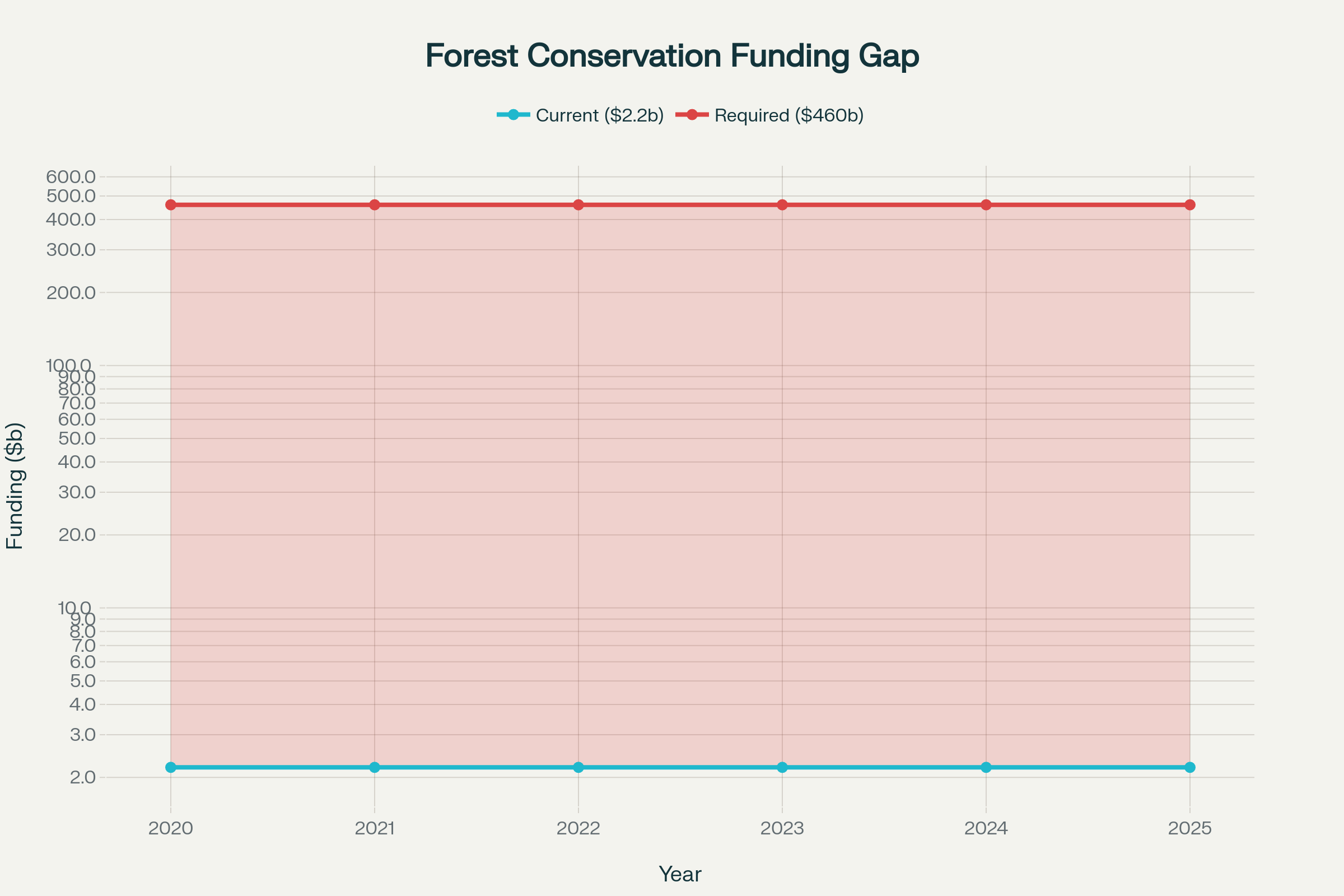
Global Forest Conservation Funding Gap: Current vs Required Annual Investment (Billions USD)
- The facility targets $125 billion in total funding through strategic public-private partnerships
- Countries receive up to $4 per hectare annually for maintaining forest cover below 0.5% deforestation rates
- Satellite monitoring systems ensure transparent verification of conservation commitments
The Global Tropical Forest Fund operates on a results-based payment system where participating nations must demonstrate forest conservation through annual satellite-verified reports. Brazil’s National Institute for Space Research (INPE) monitoring system could serve as a model for other countries implementing similar tracking mechanisms within this framework. This technological approach ensures accountability while providing developing nations with predictable income streams for choosing conservation over exploitation.
Global Forest Crisis and Funding Requirements
The world’s tropical forests face unprecedented threats, with devastating consequences for global climate stability and biodiversity preservation. According to FAO data, forests cover 31% of global land area, totaling 4.06 billion hectares, yet deforestation continues at approximately 10 million hectares annually. Between 2015 and 2020, the global community witnessed forest destruction equivalent to an area larger than South Korea each year, highlighting the urgent need for the Global Tropical Forest Fund.
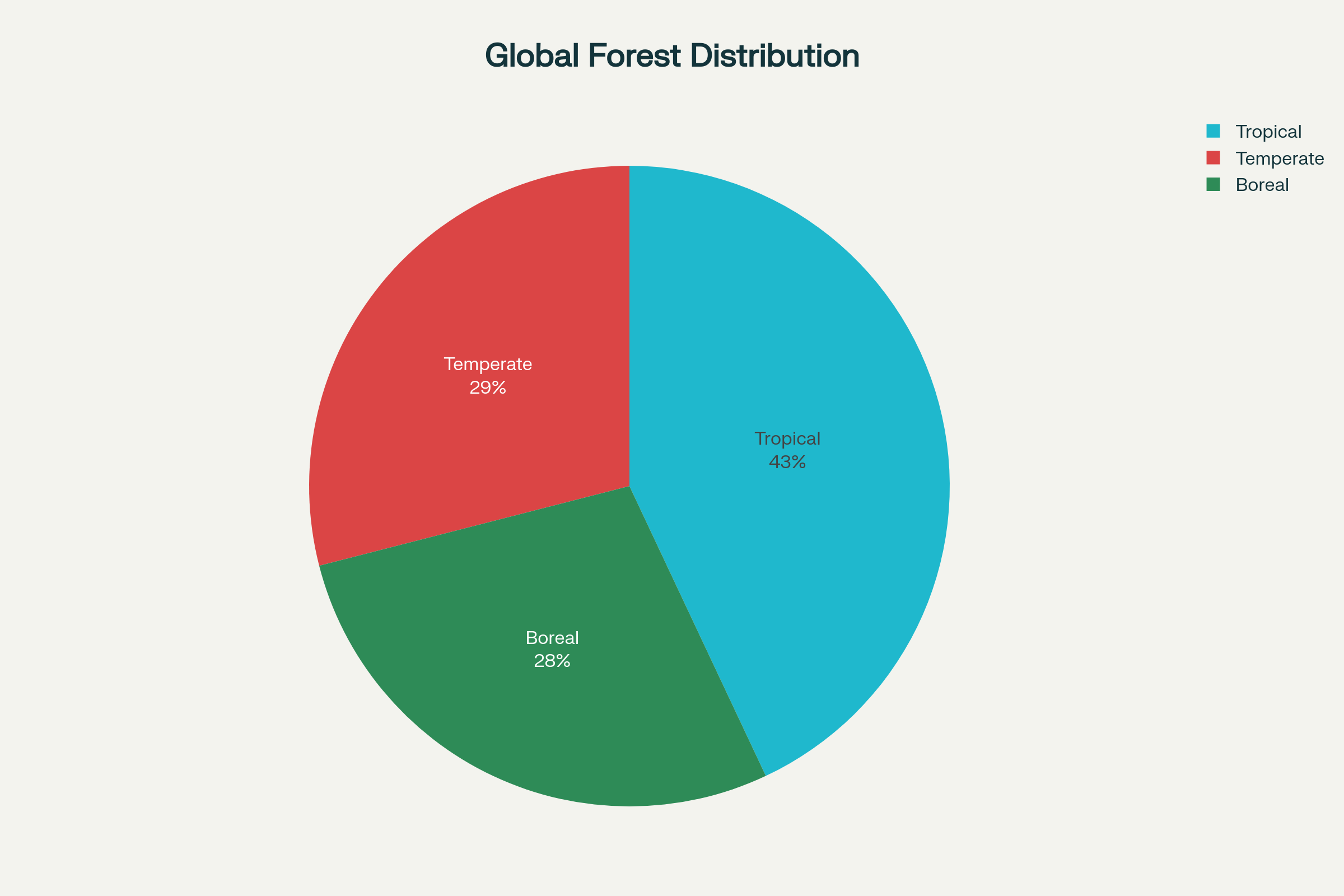
Global Forest Distribution by Type (Billion Hectares and Percentage)
- Tropical forests support 80% of terrestrial biodiversity across 60,082 documented tree species
- Agricultural expansion drives 73% of tropical deforestation through cattle ranching and crop cultivation
- Over 8,056 tree species are globally threatened with extinction according to IUCN assessments
Current financial flows actively work against forest conservation, with $6 invested in deforestation-driving activities for every $1 spent on protection. Governments worldwide provide $500 billion annually in subsidies encouraging environmental destruction rather than conservation, creating the funding imbalance that this initiative seeks to address. This perverse incentive structure forces developing nations, collectively owing $11 trillion in debt, to exploit forests for short-term economic survival without alternatives like the Global Tropical Forest Fund.
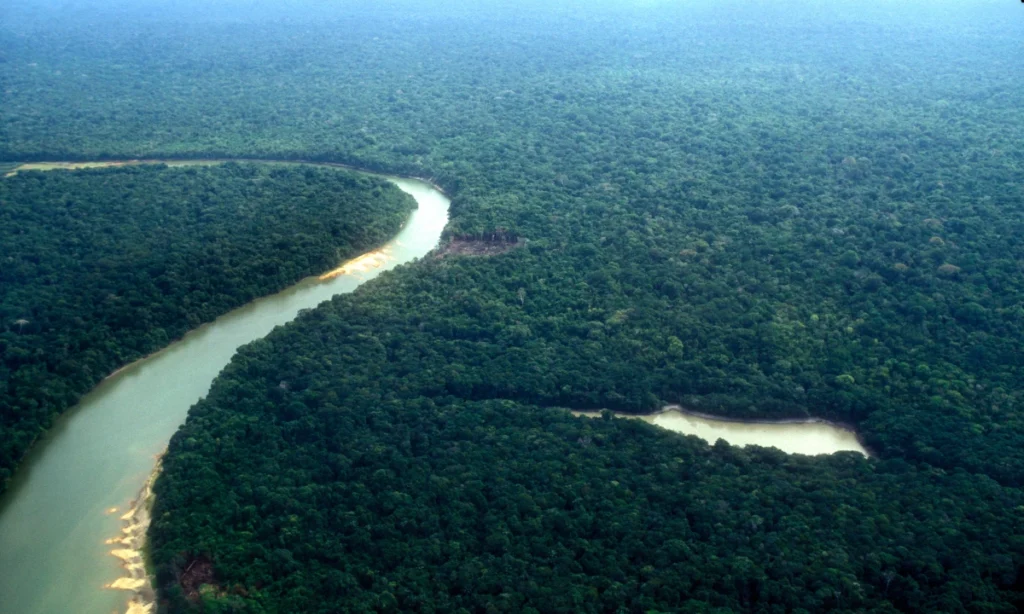
Brazil’s Leadership Strategy and Global Participation
Brazil’s $1 billion commitment strategically positions the nation as a global conservation leader while directly addressing its own environmental challenges. The country houses 12.2% of the world’s forest area and has achieved significant deforestation reductions under President Lula’s renewed environmental policies aligned with sustainable forest management principles. Amazon deforestation dropped 30.6% in 2024, reaching the lowest destruction levels in nine years through enhanced law enforcement and protected area expansion.
- Five tropical forest countries have joined Brazil’s initiative: Colombia, Ghana, Democratic Republic of Congo, Indonesia, and Malaysia
- Five potential investor nations are participating: Germany, United Arab Emirates, France, Norway, and United Kingdom
- China has signaled interest in contributing to the Brazilian forest conservation initiative
The Global Tropical Forest Fund ensures transparent resource allocation with mandatory 20% funding directed toward indigenous peoples and traditional communities who have historically protected forest ecosystems. This provision recognizes that areas managed by indigenous peoples contain some of the most ecologically intact forests and biodiversity hotspots globally. Brazil’s approach demonstrates that effective conservation requires combining technological monitoring with community-based stewardship.
Investment Structure and Implementation Timeline
The Global Tropical Forest Fund employs a sophisticated two-tier investment strategy designed to attract both sovereign and private capital. The initial phase seeks $25 billion in government and philanthropic contributions serving as junior capital that assumes slightly higher risk to encourage private sector participation. This foundation will leverage an additional $100 billion in senior private capital, creating a self-sustaining endowment model.
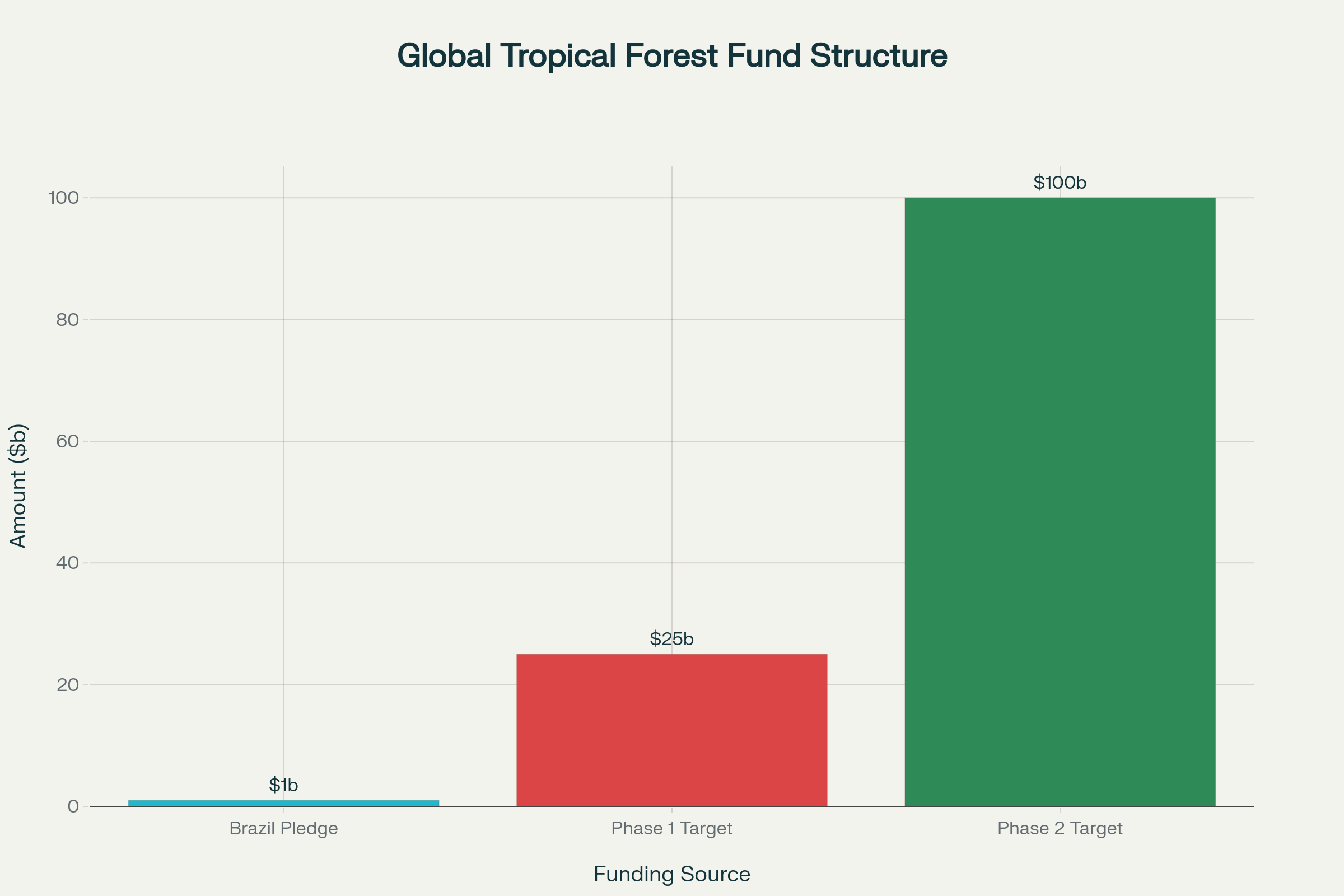
Global Tropical Forest Fund: Funding Structure and Targets (in billions USD)
- Annual dividend distribution between investors and forest-conserving countries based on verified results
- Green investment restrictions prohibiting fossil fuel projects while prioritizing emerging economy bonds
- Projected $4 billion annual generation for environmental conservation—triple current global tropical forest protection funding
The Global Tropical Forest Fund will formally launch at COP30 in Belém, Brazil, this November, where additional country pledges are expected. Environmental organizations including Campaign for Nature and WWF have endorsed the initiative as potentially “the world’s last, best chance to develop a financial solution at the necessary scale to conserve tropical forests”. Success depends on achieving critical mass through comparable commitments from other developed and developing nations.
Final Perspective
Brazil’s historic $1 billion pledge to the Global Tropical Forest Fund marks a pivotal moment in global environmental financing, potentially catalyzing the largest forest conservation effort in history. The initiative addresses the fundamental economic paradox where forests hold greater value when destroyed than when protected, offering developing nations a viable alternative to exploitation. With COP30 approaching, the international community faces a critical opportunity to match Brazil’s ambition and fully capitalize this mechanism to create the financial structures necessary to preserve tropical forests for future generations. The success of this revolutionary approach could determine whether the global community meets its climate targets while protecting Earth’s most biodiverse ecosystems.