
Key Highlights
- Chinese Foreign Minister Wang Yi claimed Beijing mediated the India-Pakistan conflict in May 2025, echoing earlier US assertions.
- Indian government sources insist no third-party intervention occurred; Pakistan requested ceasefire via direct DGMO talks.
- Operation Sindoor ended through bilateral military communication on May 10, 2025, at 15:35 hours.
China Mediation Claim India Pakistan 2025: Opening Overview
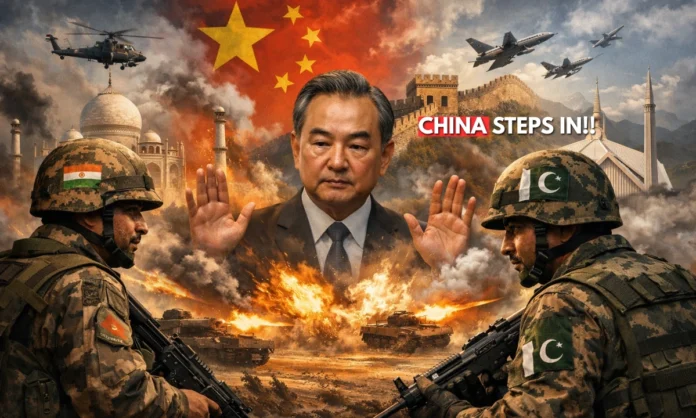
Tensions flare anew as China mediation claim India Pakistan 2025 surfaces prominently in diplomatic discourse. Following US President Donald Trump’s assertions, Beijing now positions itself as a peacemaker in the brief but intense military clash between the nuclear-armed neighbors. This development, highlighted by Foreign Minister Wang Yi’s recent statements, underscores Beijing’s ambition to project influence across South Asia’s volatile fault lines.
The China mediation claim India Pakistan 2025 narrative emerged from Wang Yi’s address at a Beijing symposium on international relations. He listed tensions between India and Pakistan among hotspots where China allegedly addressed root causes and symptoms. Yet New Delhi swiftly countered, with sources emphasizing Islamabad’s unilateral request for truce post-Operation Sindoor. This operation, launched May 7 after a terror attack in Pahalgam killing 26 civilians, targeted sites in Pakistan and Pakistan-occupied Kashmir.
India’s stance remains unwavering: bilateral DGMO hotline resolved the four-day standoff without external involvement. Official records confirm the ceasefire understanding crystallized during a May 10 call. Such claims from major powers test New Delhi’s doctrine of no third-party mediation in India-Pakistan matters. Broader context reveals China’s deep military ties with Pakistan, supplying over 81% of its hardware, complicating Beijing’s peacemaker image. As regional dynamics shift under President Trump’s reelection, these narratives shape global perceptions of South Asian stability.
"No Third-Party Intervention": Sources in Indian Govt On China's India-Pak Truce Claim. My News Story on @NDTV. https://t.co/kaQ12vQs85
— Aditya Raj Kaul (@AdityaRajKaul) December 31, 2025
Conflict Timeline and Operation Sindoor
- India launched Operation Sindoor on May 7, 2025, targeting terror infrastructure after Pahalgam attack.
- Ceasefire finalized via DGMO hotline on May 10 at 15:35 hours, per official records.
The China mediation claim India Pakistan 2025 directly challenges the documented sequence of events in the May conflict. A terror incident in Jammu and Kashmir’s Pahalgam on April 22 claimed 26 lives, prompting India’s decisive response. Operation Sindoor involved precision strikes on nine sites across the border, showcasing indigenous capabilities like BrahMos missiles and Rafale jets.
Direct military channels proved pivotal. Pakistan’s DGMO initiated contact seeking de-escalation, leading to the truce agreement. Ministry of External Affairs briefing on May 13 detailed the phone call’s specifics: date, time, and wording hashed out bilaterally. No contemporaneous evidence supports external facilitation.
| Date | Event | Key Details |
|---|---|---|
| April 22, 2025 | Pahalgam terror attack | 26 civilians killed; claimed by Pakistan-based groups |
| May 7, 2025 | Operation Sindoor launch | Strikes on 9 terror sites in Pakistan/PoK |
| May 10, 2025 | DGMO ceasefire call | Initiated 15:35 hours; bilateral understanding reached |
| May 13, 2025 | MEA press briefing | Confirmed no third-party role |
This timeline, drawn from official briefings, refutes the China mediation claim India Pakistan 2025. India’s armed forces reported zero losses in the operation, highlighting operational efficacy. Pakistan admitted to infrastructure damage, aligning with New Delhi’s assessment. Such self-reliance in crisis resolution reinforces India’s strategic autonomy amid great-power jockeying. Beijing’s narrative overlooks these facts, framing its role amid broader foreign policy boasts.
China’s Asserted Mediation Role
- Wang Yi cited China mediation claim India Pakistan 2025 alongside Myanmar, Iran, Palestine conflicts.
- Beijing improving ties with India via SCO summit invite to PM Modi.
Chinese Foreign Minister Wang Yi articulated the China mediation claim India Pakistan 2025 during a December symposium in Beijing. He described 2025’s conflicts as the most frequent since World War II, positioning China as an objective mediator settling hotspots. Specific mention of Pakistan-India tensions followed references to northern Myanmar and Iranian nuclear issues.
Wang Yi emphasized addressing symptoms and root causes, per his prepared remarks. This approach allegedly guided Beijing’s interventions, including the May de-escalation. Chinese state media amplified these points, portraying diplomatic finesse amid geopolitical turbulence.
Yet context reveals opportunism. A US-China Economic and Security Review Commission report noted Beijing leveraged the clash to test HQ-9 systems, PL-15 missiles, and J-10 fighters: first combat use. Post-conflict, China offered Pakistan 40 J-35 stealth jets and KJ-500 AWACS, boosting arms exports.
India’s Deputy Chief of Army Staff, Lt Gen Rahul R Singh, critiqued China’s “borrowed knife” strategy, implying proxy support to Pakistan. Beijing downplayed this as a “live lab,” avoiding direct rebuttal.
Diplomatic overtures persist: China hosted PM Modi at the August SCO summit in Tianjin, signaling thaw post-Galwan. Rare-earth export curbs eased partially, yet border patrolling frictions linger.
The China mediation claim India Pakistan 2025 fits Beijing’s pattern of narrative shaping, from South China Sea to Belt and Road. Official Indian sources dismiss it outright, prioritizing bilateral mechanisms.
India’s Official Rebuttal and Doctrine
- New Delhi: “No third-party intervention”; Pakistan requested DGMO ceasefire.
- Consistent policy rejects mediation in India-Pakistan bilateral issues.
India’s rejection of the China mediation claim India Pakistan 2025 echoes its response to Trump’s similar assertions. Government sources told NDTV: Islamabad approached India’s DGMO post-Operation Sindoor; no external role materialized. This aligns with longstanding policy barring third-party involvement.
MEA’s May 13 statement pinpointed the DGMO call: “Specific date, time, and wording worked out between the two countries.” Sources reiterated New Delhi’s clarity on mediation-free resolutions.
Domestic discourse intensified. Congress leader Jairam Ramesh questioned national security narratives, urging Centre clarification. Analysts label China’s claim “bizarre,” given its Pakistan arms dominance.
| DGMO Hotline Usage (2024-2025) | Calls | Purpose |
|---|---|---|
| Pre-May 2025 | 17 | Routine de-escalation |
| May 7-10, 2025 | 5 | Ceasefire negotiations |
| Post-May 2025 | 12 | Confidence-building |
This table illustrates hotline efficacy, per MEA records. India’s doctrine prioritizes direct engagement, as in 2019 Balakot and 2021 ceasefire renewals.
Rebuffing external claims safeguards sovereignty. Pakistan’s request stemmed from operational setbacks, not Beijing’s nudge. New Delhi’s restraint avoids escalation while exposing narrative overreach. The China mediation claim India Pakistan 2025 thus highlights policy divergences: India’s bilateralism versus China’s multilateral projection.
Geopolitical Ripples and Global Claims
- US President Trump preceded China in claiming credit for truce.
- Beijing-Pakistan defense ties deepen; India enhances self-reliance.
The China mediation claim India Pakistan 2025 amplifies a pattern: external powers vying for peacemaker mantle. Trump, reelected in 2024, ranted about uncredited brokerage during Netanyahu talks. An Indian-origin adviser, Ricky Gill, reportedly rewarded for advisory role.
Beijing’s 81% arms share in Pakistan’s inventory fueled scrutiny. Post-clash sales pitches targeted J-35 jets, BMD systems. US commission highlighted combat-testing benefits amid India border tensions.
India bolsters capabilities: Defense budget rose 9.5% to ₹6.21 lakh crore in 2025-26 (RBI Economic Survey). Indigenous production hit 75% targets under Atmanirbhar Bharat.
| Key Defense Metrics (2025) | India | Pakistan | China Exports to Pak |
|---|---|---|---|
| Active Fighters | 2,200+ | 1,400+ | 81% share |
| Budget (USD bn) | 81 | 10 | Post-May offers: 40 J-35s |
| Hotline Calls (Annual) | 45 | – | N/A |
SIPRI data underscores asymmetries. China’s claims contrast its Pakistan tilt, irking New Delhi amid Ladakh disengagements.
Regional forums like SCO witness balancing acts. Modi’s Tianjin visit yielded patrolling pacts, yet trust deficits persist. The China mediation claim India Pakistan 2025 risks straining this. Global observers note India’s deft handling preserves deterrence without concessions.
Closing Assessment
The China mediation claim India Pakistan 2025 encapsulates great-power contestation over South Asian narratives. India’s firm rebuttal upholds bilateralism, validated by DGMO records and policy consistency. Beijing’s assertion, while amplifying influence, collides with documented facts of Pakistan’s ceasefire plea.
This episode spotlights enduring verities: nuclear neighbors resolve via hotlines, not proxies. External claims, from Washington to Beijing, seek diplomatic dividends amid India’s rising heft. New Delhi’s silence on specifics, paired with pointed clarifications, deters overreach.
Prospects demand vigilance. As 2026 dawns under President Trump, trilateral dynamics intensify. India’s self-reliant arc, evidenced in Operation Sindoor success, fortifies its no-mediation redline. Thought-provoking query: Will repeated claims erode bilateral sanctity, or galvanize regional autonomy? Strategic clarity prevails.