
Key Highlights
- Delhi air quality AQI surged from 202 (poor) to 311 (very poor) within 24 hours between November 5-6, 2025
- Seven major monitoring stations recorded “very poor” Delhi air quality Plunges with Wazirpur reporting the highest AQI of 385
- Stubble burning contributions escalating rapidly from 1.2% to 36.9% over four days, becoming the dominant Delhi air quality pollutants3.amazonaws

Delhi air quality AQI fluctuations from November 1-6, 2025, showing volatile pollution patterns
Current Delhi Air Quality Crisis Unfolds
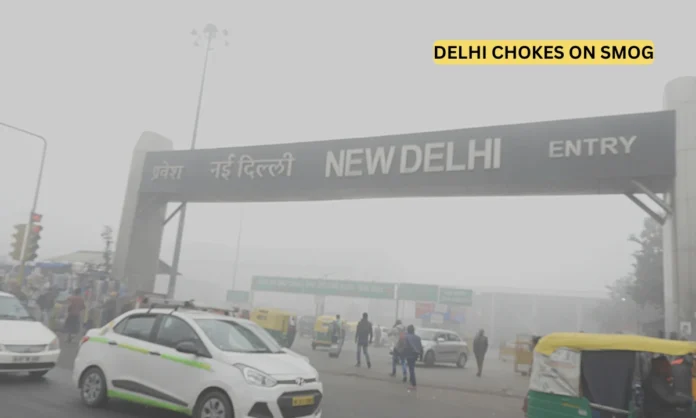
Delhi air quality Plunges conditions reached alarming levels on November 6, 2025, with the citywide average AQI climbing to 311, firmly placing the capital in the “very poor” category according to Central Pollution Control Board (CPCB) monitoring data. This represents a dramatic deterioration from Wednesday’s temporary relief when Delhi air quality Plunges had improved to 202, marking the cleanest November air in five years.
Multiple monitoring stations across the capital recorded dangerous Delhi air quality levels, with 28 out of 38 stations reporting readings above 300 in the “very poor” range. The worst-affected areas include Wazirpur (385), Anand Vihar (371), Rohini (368), and Jahangirpuri (355), while relatively better Delhi air quality Plunges was observed at RK Puram (298) and Lodhi Road (289).

Delhi air quality monitoring stations showing widespread Very Poor conditions across the capital on November 6, 2025
The Air Quality Early Warning System has issued continuous alerts for Delhi air quality, predicting that pollution levels will remain in the “very poor” category from November 6 through November 8 with no immediate meteorological relief anticipated. PM2.5 particles continue to dominate as the primary pollutant across all Delhi air quality monitoring stations, with concentrations exceeding safe limits by significant margins.
Weather conditions are exacerbating Delhi air quality deterioration, with wind speeds dropping below 10 kmph during evening hours, severely limiting pollutant dispersion capacity. The ventilation index, a critical measure for Delhi air quality assessment, remains between 7,800-9,100 m²/s, with readings below 6,000 m²/s considered unfavorable for pollution clearance.
Stubble Burning Emerges as Primary Delhi Air Quality Threat
Agricultural fires have become the predominant factor degrading Delhi air quality Plunges, with the Decision Support System tracking a dramatic surge in stubble burning contributions from just 1.2% on November 5 to an anticipated peak of 36.9% on November 7, 2025. This exponential increase directly correlates with worsening Delhi air quality across the National Capital Region.
Satellite monitoring reveals extensive agricultural burning activity across northern India, with Punjab reporting 94 fire incidents, Haryana 13, and Uttar Pradesh 74 on a single day, collectively impacting Delhi air quality Plunges through long-range pollutant transport. Historical data indicates that stubble burning typically accounts for 35-48% of Delhi air quality deterioration during peak winter months, with some days recording contributions as high as 58%.

Stubble burning’s escalating contribution to Delhi’s PM2.5 pollution levels from November 4-8, 2025
The delayed harvest season due to late monsoon and flooding in Punjab has shifted the traditional burning window from November 4-8 to November 6-12, prolonging the period of stubble-burning-induced Delhi air quality Plunges degradation. Transportation remains the second-largest contributor to poor Delhi air quality, accounting for 16.2% of pollution on November 6, while industrial emissions and dust sources continue adding to the complex pollutant mix affecting Delhi air quality.
Regional meteorological patterns are amplifying the impact of stubble burning on Delhi air quality, with northwest winds carrying agricultural smoke directly toward the capital during periods of reduced wind speed. This seasonal phenomenon creates a perfect storm for Delhi air quality deterioration, combining local urban pollution with massive agricultural emissions from neighboring states.
GRAP Implementation and Delhi Air Quality Management Response
Authorities have activated Stage II of the Graded Response Action Plan (GRAP) specifically targeting Delhi air quality Plunges improvement through enhanced pollution control measures. The Commission for Air Quality Management (CAQM) has mandated strict dust control protocols, including daily mechanical sweeping and water sprinkling on identified Delhi air quality hotspot corridors.
Under GRAP Stage II protocols, designed to address Delhi air quality Plunges levels in the 301-400 AQI range, officials have intensified construction site inspections and restricted inter-state bus entry to only CNG, electric, or BS-VI diesel vehicles. Public transport augmentation includes additional CNG and electric buses with increased metro frequency to encourage reduced private vehicle usage for Delhi air quality improvement.
Since October 19, 2025, enforcement agencies have issued over 20,000 challans targeting vehicles without valid Pollution Under Control Certificates (PUCC), directly supporting Delhi air quality management efforts with ₹10,000 fines per violation. Commercial vehicles running on diesel or petrol below BS-3 standards face entry restrictions as part of comprehensive Delhi air quality protection measures.
The Delhi government has deployed 200 specialized maintenance vans for intensive road cleaning operations while conducting comprehensive industrial unit inspections to ensure emission norm compliance for Delhi air quality preservation. Teams are actively working to “normalize hotspots” across the city as thick smog continues impacting Delhi air quality.
Health Impact Assessment and Delhi Air Quality Standards
Current Delhi air quality Plunges conditions in the “very poor” category (AQI 301-400) indicate “respiratory illness on prolonged exposure” according to CPCB health classification standards. The All India Institute of Medical Sciences (AIIMS) has issued specific health advisories warning that these Delhi air quality levels “affect healthy people and seriously impact those with existing diseases”.
Independent monitoring investigations have revealed concerning discrepancies between official Delhi air quality readings and ground-level measurements at pollution hotspots. Portable monitors recorded AQI levels between 400-500 (severe category) at Anand Vihar and ITO, while official Delhi air quality stations reported significantly lower readings in the 215-350 range.
| AQI Range | Category | Health Impact | Population Affected |
|---|---|---|---|
| 0-50 | Good | Minimal Impact | All populations |
| 51-100 | Satisfactory | Minor breathing discomfort | Sensitive individuals |
| 101-200 | Moderate | Breathing issues for heart/lung patients | Vulnerable groups |
| 201-300 | Poor | Breathing discomfort on prolonged exposure | General population |
| 301-400 | Very Poor | Respiratory illness on extended exposure | All residents |
| 401-500 | Severe | Affects healthy people severely | Entire population |
Medical experts emphasize that current Delhi air quality conditions necessitate immediate protective measures, particularly for vulnerable populations including children, elderly individuals, and those with pre-existing respiratory conditions. Health advisories recommend limiting outdoor activities, using N95 masks, and installing air purifiers to mitigate Delhi air quality health impacts.
Regional Comparison and NCR Delhi Air Quality Plunges Impact
Delhi air quality deterioration is part of a broader regional crisis affecting the entire National Capital Region, with neighboring cities recording varying pollution levels but all experiencing poor to very poor conditions. Current regional Delhi air quality data shows Ghaziabad at AQI 274, Greater Noida at 228, Gurugram at 229, and Faridabad at 187, all categorized as poor Delhi air quality Plunges conditions.
Several Haryana cities have entered the “very poor” range similar to Delhi air quality Plunges levels, including Charkhi Dadri (337), Jind (324), and Rohtak (348), indicating widespread regional pollution challenges. Comparative analysis reveals that Delhi air quality, while severe, ranks fourth among 254 monitored cities with the worst air pollution nationally.
The Air Quality Early Warning System indicates that unfavorable meteorological conditions will persist across the NCR region, maintaining compromised Delhi air qualityPlunges and surrounding area pollution levels. This regional pattern suggests that coordinated multi-state action will be necessary to achieve sustainable Delhi air quality improvement beyond temporary meteorological relief.
Southern and northeastern Indian cities demonstrate stark contrast to Delhi air quality Plunges conditions, with locations like Shillong, Madurai, and Nashik reporting AQI values below 35, highlighting the regional disparity in national air quality management.
Meteorological Forecast and Delhi Air Quality Plunges Outlook
Weather conditions over the next 72 hours are expected to remain unfavorable for Delhi air quality improvement, with the India Meteorological Department forecasting persistent mist and haze during morning and evening hours. Minimum temperatures are settling 2-4°C below seasonal averages at 12.7°C, while maximum temperatures hover around 26-29°C, creating conditions conducive to Delhi air quality degradation.
Wind pattern analysis reveals problematic diurnal variations affecting Delhi air quality, with speeds reaching 15 kmph during afternoon hours before dropping below 10 kmph during evening and night periods. This creates accumulation phases where Delhi air quality deteriorates during low-wind periods coinciding with peak traffic and industrial emissions.
The Air Quality Early Warning System’s extended forecast indicates that Delhi air quality Plunges will likely remain in the “very poor” category throughout the six-day outlook period, with no immediate meteorological relief anticipated. Visibility has been significantly reduced to 500-600 meters at Palam Airport during morning hours, directly correlating with poor Delhi air quality conditions.
Seasonal meteorological patterns suggest that Delhi air quality improvement will require both reduced emission sources and favorable wind conditions, neither of which are forecast for the immediate future.
Final Assessment
Delhi air quality conditions represent a convergence of seasonal agricultural practices, adverse meteorological factors, and persistent urban pollution sources creating a perfect storm for public health concerns. The rapid transition from temporary improvement on November 5 to severe deterioration within 24 hours demonstrates the volatile nature of Delhi air quality Plunges during peak winter months. With stubble burning contributions expected to dominate Delhi air quality degradation at nearly 37% over the coming days, sustained implementation of GRAP measures and coordinated regional action will be critical for preventing escalation into the “severe” category.
Residents must prepare for extended periods of hazardous Delhi air quality and implement appropriate health protection strategies as meteorological forecasts indicate no immediate natural improvement in Delhi air quality conditions through atmospheric dispersion of accumulated pollutants.