
Key Highlights
- GRAP Stage IV activated in Delhi-NCR on December 13, 2025, due to AQI exceeding 450, enforcing strict bans on construction, non-BS-VI vehicles, and coal tandoors under Delhi GRAP IV.
- Schools shift to hybrid or online modes for most classes; offices limited to 50% on-site staff with work-from-home mandates in Delhi GRAP IV.
- Public transport, essential services, and BS-VI compliant vehicles remain operational to balance emergency measures with daily needs during Delhi GRAP IV.
Pollution Emergency Grips Delhi-NCR
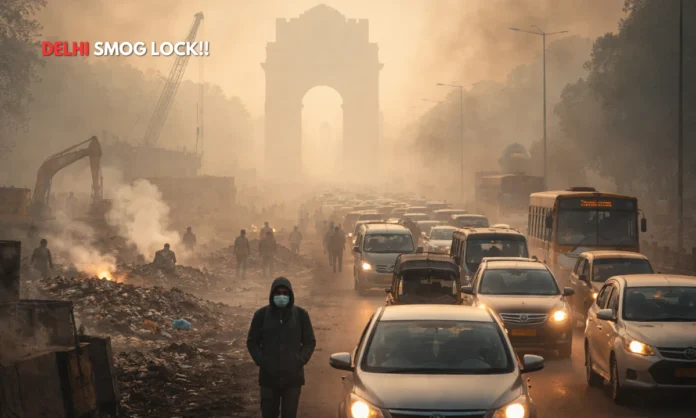
Delhi GRAP IV restrictions dominate headlines as winter smog chokes the national capital. Triggered by stagnant weather and emissions, GRAP IV measures address a severe air quality crisis. The Commission for Air Quality Management invoked these steps after AQI levels hit severe-plus categories.
This seasonal pollution spike, common in Delhi winters, stems from vehicle exhaust, crop residue burning, and low wind speeds trapping pollutants. GRAP IV, the strictest tier, builds on prior stages to curb further deterioration. Residents face immediate lifestyle shifts under Delhi GRAP IV rules.
Official data from the Central Pollution Control Board shows AQI thresholds: 401-500 signals severe pollution, prompting emergency actions like Delhi GRAP IV implementation. Last week’s activation followed consistent readings above 450, prioritizing public health. Broader NCR regions, including parts of Haryana and Uttar Pradesh, align with these mandates.
दिल्ली का प्रदूषण लगातार बढ़ता जा रहा है, इसके बचाव के लिए GRAP-4 लागू किया गया है,
— Madan Mohan Soni (@madanjournalist) December 17, 2025
नीचे की तस्वीर दिल्ली की दादरी क्षेत्र की है। pic.twitter.com/4USNYCvCqd
School Closures and Hybrid Shift
- Primary classes up to Grade 5 move fully online; Grades 6-9 and 11 adopt hybrid attendance under Delhi GRAP IV.
- Classes 10 and 12 continue physical sessions to support board exam preparations amid Delhi GRAP IV.
- Parents receive no opt-out choice for younger students amid Delhi GRAP IV enforcement.
Delhi GRAP IV restrictions hit education hardest, with the Directorate of Education mandating closures for nursery to Class 5 physical classes. Announced via official circular, this eliminates parental choice for in-person attendance. Hybrid mode now applies to Classes 6-9 and 11, blending online and physical options where feasible.
Government, aided, and private schools under NDMC, MCD, and Cantonment Boards comply immediately. This protects young lungs from hazardous air, as per CPCB advisories linking high AQI to respiratory risks in children. GRAP IV measures reflect last-minute shifts from optional online classes.
Exemptions cover board classes to avoid exam disruptions. Enforcement teams monitor compliance, with penalties for violations. As GRAP IV continues, educators pivot to digital platforms, ensuring continuity despite the pollution lockdown.
| GRAP Stage | AQI Range | School Measures |
|---|---|---|
| I (Poor-Moderate) | 101-300 | Normal operations |
| II-III (Very Poor) | 301-400 | Hybrid for primary |
| IV (Severe+) | 401+ | Online/hybrid up to Class 11 |
Office and Work Mandates
- Public and private offices cap on-site staff at 50%, pushing work-from-home for balance in GRAP IV.
- Flexible hours encouraged for private sectors to stagger commutes under GRAP IV.
- Essential government functions exempt from GRAP IV staff limits.
Under GRAP IV restrictions, offices across Delhi-NCR operate at half capacity. Government orders require 50% staff presence, with the rest remote. This slashes commuter traffic, a major pollution contributor.
Private entities receive strong urgings for similar adoption, including staggered timings. Compliance falls under CAQM oversight, with spot checks ensuring adherence. GRAP IV aims to cut emissions from daily office rushes.
Economic impacts surface, yet health takes precedence. Official guidelines from the Ministry of Environment stress reduced mobility. As GRAP IV persists, productivity adapts through virtual tools.
Vehicle Entry and Fuel Controls
- Only BS-VI diesel, CNG, LNG, or electric vehicles enter Delhi from December 18 under GRAP IV.
- No fuel for vehicles lacking valid PUC certificates at pumps in Delhi GRAP IV.
- Interstate trucks banned except essentials; petrol/diesel light vehicles from outside restricted during GRAP IV.
GRAP IV restrictions tighten on mobility, banning non-BS-VI vehicles outright. Environment Minister announcements confirm entry halts for BS-III petrol and BS-IV diesel from tomorrow. PUC-less vehicles face fuel denial via pump cameras.
This targets 30% of pollution from tails, per CPCB data. Exemptions cover electric fleets and essentials. Delhi GRAP IV vehicle bans extend to non-compliant interstate buses.
Public campaigns push Metro and DTC use. Enforcement at borders ramps up. GRAP IV measures promise AQI relief if winds cooperate.
| Vehicle Type | Allowed Entry | PUC Requirement |
|---|---|---|
| BS-VI Petrol/Diesel | Yes | Mandatory |
| BS-III/IV Petrol/Diesel | No | Irrelevant |
| CNG/Electric | Yes | Mandatory |
Construction and Commercial Bans
- All demolition, construction halted, including highways and metro projects in Delhi GRAP IV.
- Coal/firewood tandoors prohibited; only gas/electric permitted under GRAP IV.
- Waste burning, generators banned without exceptions during GRAP IV.
GRAP IV restrictions shutter construction sites region-wide. Linear projects like roads and pipelines, spared in lower stages, now pause. Dust control becomes paramount.
DPCC directs eateries to ditch polluting tandoors, enforcing gas alternatives. Violations draw fines. Delhi GRAP IV tackles industrial sources head-on.
Monitoring squads intensify patrols. Official CAQM updates track compliance. GRAP IV construction bans address stubble-season spikes.
Essential Services Unaffected
- Metro, DTC buses, airports, railways operational barring visibility issues in Delhi GRAP IV.
- Hospitals, fire, water, electricity services exempt from GRAP IV.
- Pollution control teams and emergencies continue fully under Delhi GRAP IV.
Delhi GRAP IV restrictions spare lifelines. Public transport urges fill private vehicle gaps. Airports handle flights unless smog grounds them.
Health facilities run at capacity for pollution-related cases. Delhi GRAP IV balances curbs with necessities.
Final Perspective
Delhi GRAP IV restrictions mark a critical stand against recurring winter smog. With AQI forecasts grim, sustained enforcement offers hope for cleaner air. Official sources like CAQM project improvements if compliance holds.
Long-term, beyond Delhi GRAP IV, systemic fixes like cleaner fuels loom essential. Residents adapt, but nature’s role remains key. Vigilance ensures this crisis spurs lasting change. Delhi GRAP IV underscores urgency for regional cooperation.