
Key Highlights
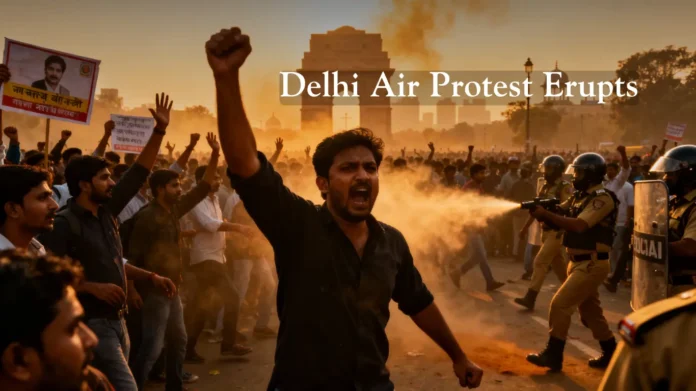
- Delhi Toxic Air Protester at Delhi’s India Gate against worsening air pollution raised pro-Maoist slogans supporting slain Maoist leader Madvi Hidma.
- Delhi Police assured strict legal action against those who raised Maoist slogans and attacked police personnel with pepper spray.
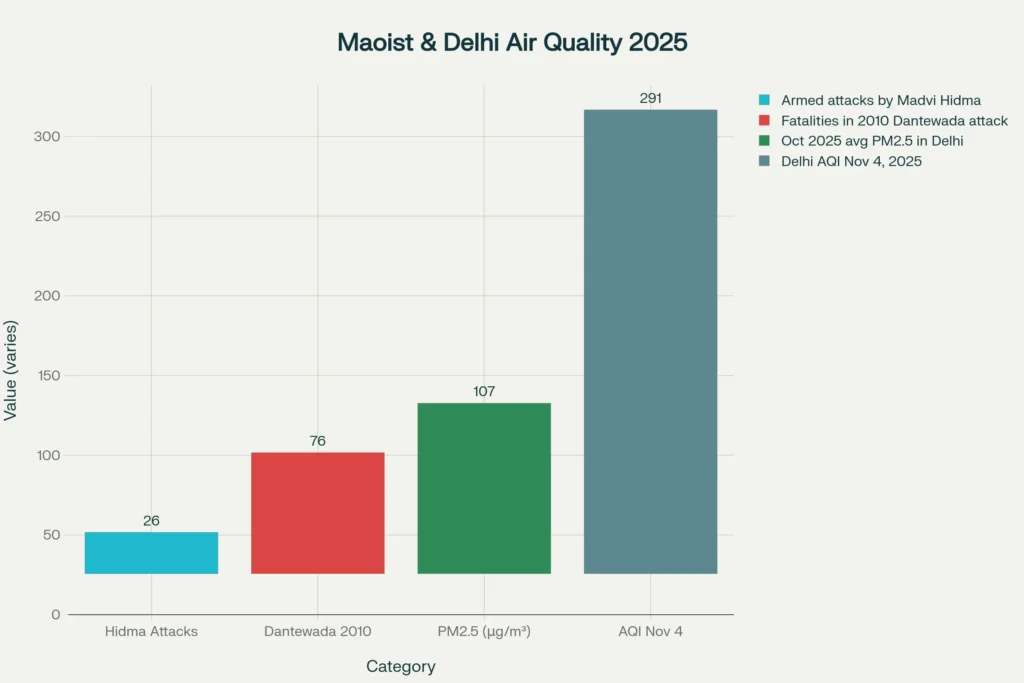
- Madvi Hidma, a top Maoist commander responsible for over 26 attacks on security forces, was killed in an encounter on November 18, 2025.
Opening Overview: Rising Tensions Amid Delhi Toxic Air Protest
The Delhi toxic air protest recently escalated into violence as slogans praising Maoist leader मद्वी हिंदमा अमर रहे were raised, highlighting the mix of environmental activism and political tensions. Amid worsening air quality—the worst Delhi has seen in years—a large demonstration was held at India Gate. The Delhi Toxic Air Protest turned confrontational when some demonstrators openly honored Madvi Hidma, a Maoist commander killed earlier in November 2025. The police used pepper spray and made arrests, raising national conversations on pollution and security. Delhi toxic air protest prominently in slogans, reflecting the socio-political complexities behind the unrest.
Maoist Influence and the Legacy of Madvi Hidma
- Madvi Hidma led the People’s Liberation Guerrilla Army Battalion 1 and was youngest on the CPI (Maoist) Central Committee.
- He was responsible for at least 26 armed attacks on security forces and civilians across Indian states.
- His death is considered a major setback to Maoist insurgency efforts.
Born in 1981 in Sukma, Madvi Hidma rose rapidly within Maoist ranks to become the only tribal member on the Central Committee. He orchestrated deadly attacks, including the 2010 Dantewada massacre killing 76 CRPF personnel and the 2013 Jhiram Ghati ambush targeting political leaders. His killing by Andhra Pradesh police on November 18, 2025, was a key security success. The pro-Hidma slogans at the Delhi protest reignited debates on Maoist legacies amid demands for clean air and governance reforms.
#pollution issue is getting polluted Raising voice against pollution is essential.
— Anu Lall (@anulall) November 24, 2025
The issue is getting hijacked by supporters of extremist violence.
Protestors are chanting in favour of terrorists like #Madvi #Hidma, responsible for multiple killings
This is not activism.… pic.twitter.com/a6LbUObKtp
Delhi’s Air Pollution Crisis Driving Public Outrage
- Official data shows Delhi’s PM2.5 levels remained hazardous throughout October and November 2025.
- Delhi recorded its worst Air Quality Index in three years during this period.
- Chronic exposure to toxic air severely impacts vulnerable groups’ health.
Factors like regional crop burning, vehicle emissions, and unfavorable weather have pushed pollutants to hazardous levels. Rising health risks triggered large-scale protests demanding government accountability and stronger pollution control measures.
Police Response and Legal Actions Amid Protest Violence
- Delhi Police arrested 15-22 protesters after confrontations involving chili spray against officers.
- Police promised legal consequences for raising Maoist slogans during the protest.
- The incident revealed challenges in balancing environmental protest rights with controlling extremist political symbolism.
During the Delhi Toxic Air Protest, some demonstrators broke barricades, sat on roads blocking emergency vehicles, and sprayed chili spray on police personnel, causing injuries treated at Ram Manohar Lohia Hospital. Police acted to disperse crowds and registered FIRs on charges including assault and obstruction of government work. The pro-Madvi Hidma slogans drew condemnation from authorities emphasizing law and order while the protests highlighted the complex interplay of environmental and political activism.
"Long live Comrade Hidma"😡
— Bhakt Prahlad🚩 (@RakeshKishore_l) November 23, 2025
These fake environmentalists protesting against Delhi Air Pollution are actually shouting slogans in support of Naxalites❗️
Dear Amit Shah ji @AmitShah @DelhiPolice Please take strict actions against anyone supporting Naxalites openly 🙏 https://t.co/meSBOCMP9z pic.twitter.com/Ql6hBMMiUB
Final Perspective: Navigating Delhi’s Toxic Air Protest and Political Complexity
The Delhi toxic air protest epitomizes the intersection of urgent environmental concerns and deep-rooted political conflicts. Slogans of मद्वी हिंदमा अमर रहे entwine Maoist militant heritage with pressing demands for clean air, posing dilemmas for authorities. As the capital battles unprecedented pollution levels, policymakers face urgent pressure to improve air quality while managing the delicate balance between upholding democratic freedoms and preventing extremist disruptions. This incident underscores the nuanced dynamics fueling protests in India’s populous capital and the critical need for comprehensive responses addressing both environmental and security challenges.