

Key Highlights:
- F-1 visa rejection rates reached 41% in 2024, the highest in a decade, affecting thousands of Indian professionals
- An Amazon senior specialist’s MBA application denial showcased how career success can paradoxically hurt visa prospects
- University choice and clear career progression plans prove critical factors in F-1 visa approval decisions
Opening Overview
An Indian professional’s F-1 visa rejection has ignited widespread discussion online, highlighting the mounting challenges facing student visa applicants amid record-high denial rates. The Amazon employee, with over four years of experience as a senior investigation and risk specialist, saw his MBA application for City University of Seattle denied with the officer’s blunt assessment: “You’re already successful”. This F-1 visa rejection case exemplifies a broader crisis where 41% of student visa applications were denied in 2024, representing the highest F-1 visa rejection rate in a decade.
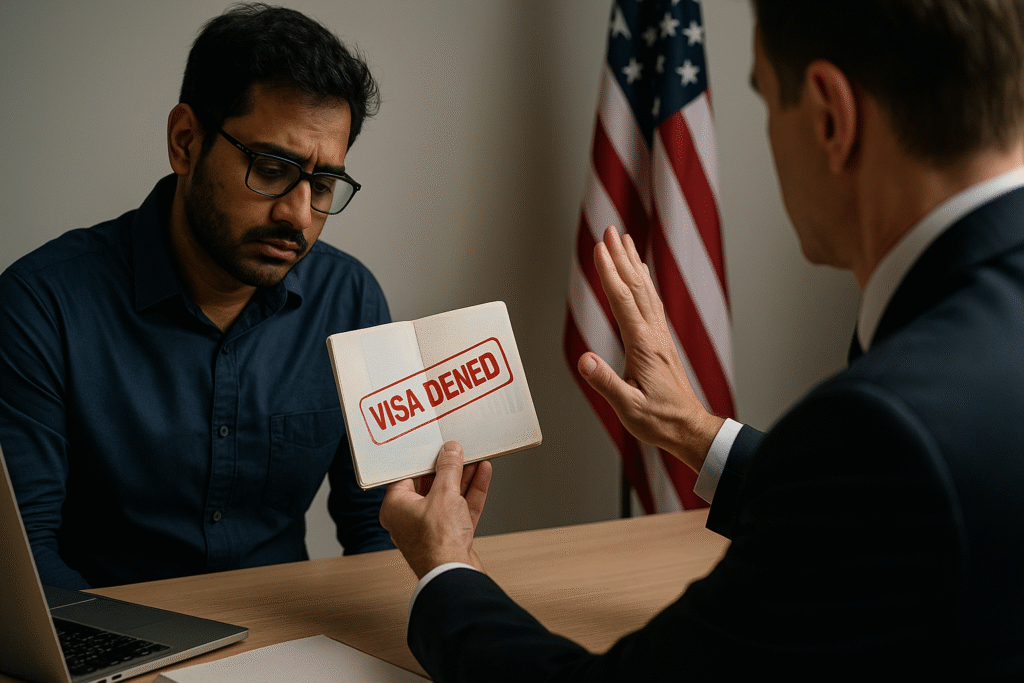
The incident underscores how established career achievements can sometimes work against applicants in F-1 visa interviews, creating an unexpected barrier for professionals seeking educational advancement. Student visa experts note that this F-1 visa rejection trend reflects increasingly stringent evaluation criteria, where officers scrutinize applicants’ genuine intent to return home after studies.
Escalating F-1 Visa Rejection Crisis Reaches Decade Highs
- Current F-1 visa rejection rates hit 41% in fiscal year 2024, nearly doubling from 22% in 2014
- Indian student applications to the US dropped 13% in 2024, with consultants reporting 50-70% declines for 2025 admissions
The F-1 visa rejection landscape has transformed dramatically over the past decade, with denial rates reaching unprecedented levels that concern educators and policymakers alike. Official State Department data reveals that 279,000 F-1 visa applications were rejected in fiscal year 2024, representing a 41% F-1 visa rejection rate compared to just 22% a decade earlier. This sharp increase in F-1 visa rejections has particularly impacted Indian students, who traditionally form one of the largest international student populations in American universities.
The escalating F-1 visa rejection trend has coincided with decreased application volumes, as total applications dropped from 699,000 in 2023 to 679,000 in 2024, suggesting that potential students are becoming increasingly discouraged by the challenging approval environment. Immigration consultants report that many qualified applicants are now avoiding F-1 visa applications altogether, with some noting 50-70% declines in Indian students choosing US institutions for upcoming admissions cycles.
University Selection Impact on F-1 Visa Approval Success
- City University of Seattle’s lower ranking status contributed to visa officer skepticism about genuine academic intent
- Top-tier MBA programs demonstrate significantly higher visa approval rates due to enhanced credibility with consular officials
The choice of educational institution plays a crucial role in F-1 visa rejection decisions, as demonstrated by the Amazon professional’s experience with City University of Seattle. Reddit users responding to the case highlighted how the university’s ranking significantly influenced the visa officer’s perception, with one commenter noting that “City University of Seattle ranks VERY low, and the visa officer can smell BS if you insist that enrolling in such low-ranking school can help you upskill when you have already worked at Amazon”.
While City University of Seattle maintains accreditation from the Northwest Commission on Colleges and Universities and has received recognition for its online programs, its lower profile compared to elite business schools creates additional scrutiny for F-1 visa applications. The F-1 visa rejection pattern suggests that officers view applications to lower-ranked institutions with suspicion, particularly when applicants have established careers at prestigious companies like Amazon. Research indicates that students applying to top-ranked MBA programs with acceptance rates below 20% face substantially lower F-1 visa rejection rates, as consular officers perceive genuine academic merit in such admissions.
Career Success Paradox in F-1 Visa Evaluations
- Established professionals face unique F-1 visa rejection challenges when officers question their motivation for further education
- Amazon’s status as the top MBA recruiter for seven consecutive years creates additional scrutiny for current employees seeking academic advancement
The Amazon professional’s F-1 visa rejection illustrates a growing paradox where career achievements can inadvertently harm student visa applications. Consular officers increasingly view successful professionals’ educational pursuits with skepticism, particularly when applicants cannot clearly articulate how advanced degrees will enhance their existing career trajectory. Amazon’s position as the leading MBA recruiter, hiring approximately 1,000 MBA graduates annually, creates additional complexity for current employees seeking F-1 visa approvals.
The company’s emphasis on hiring MBAs for leadership roles and strategic thinking positions should theoretically support visa applications, yet officers often interpret existing employment at such prestigious firms as evidence of sufficient career success. F-1 visa rejection cases like this highlight the critical importance of demonstrating genuine educational need and clear plans for utilizing advanced degrees in one’s home country upon completion.
Strategic Approaches to Overcome F-1 Visa Rejection Challenges
- Successful reapplication requires comprehensive demonstration of genuine intent and strong ties to home country
- Clear articulation of specific career advancement goals and program relevance proves essential for approval
Overcoming F-1 visa rejection requires strategic planning and comprehensive documentation of genuine educational intent and strong homeland connections. The Amazon professional’s plan to reapply demonstrates the importance of learning from initial F-1 visa rejection experiences, particularly in better articulating how MBA education will facilitate transition into senior leadership roles upon returning to India. Visa experts emphasize that successful appeals against F-1 visa rejection decisions must address the specific concerns raised in the initial denial, whether related to financial capacity, genuine intent, or ties to the home country.
Students facing F-1 visa rejection should consider upgrading to higher-ranked institutions, as this significantly improves approval prospects by addressing officers’ concerns about academic credibility and genuine educational motivation. The key to avoiding F-1 visa rejection lies in presenting a compelling narrative that positions current success as merely a foundation for greater achievements requiring specific educational advancement available only through US academic programs.
Closing Assessment
The F-1 visa rejection case involving the Amazon professional represents more than an individual setback; it reflects systemic challenges in US student visa processing that threaten America’s position as a global education destination. With F-1 visa rejection rates reaching 41% and Indian student applications declining by 13% in 2024, the current trajectory suggests significant long-term implications for both US universities and international students. The paradoxical situation where career success becomes a liability in F-1 visa applications highlights the need for clearer guidelines and more nuanced evaluation criteria that recognize legitimate educational aspirations among established professionals.
As universities face declining international enrollment and revenue concerns, addressing the F-1 visa rejection crisis becomes critical for maintaining America’s competitive advantage in global higher education. The Amazon professional’s experience serves as a valuable lesson for future applicants: success alone is insufficient for F-1 visa approval; demonstrating genuine educational need and clear post-graduation plans remains essential for overcoming increasingly stringent evaluation standards.