
Key Highlights:
- Hypertension brain damage occurs within three days of onset, well before measurable blood pressure elevation, according to Weill Cornell Medicine research published in Neuron on November 14, 2025.
- The study found that 1.4 billion adults globally suffer from hypertension, with patients facing a 1.2 to 1.5-fold higher risk of cognitive disorders compared to those without the condition.
- Three critical brain cell types (endothelial cells, interneurons, and oligodendrocytes) show premature aging and gene expression changes that may drive cognitive decline independently of elevated blood pressure.
Opening Overview
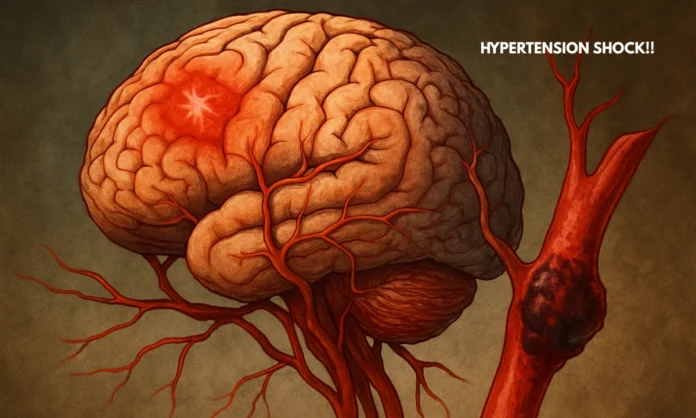
Hypertension brain damage begins silently, attacking neurons and blood vessels long before conventional blood pressure readings signal danger, according to revolutionary preclinical findings from Weill Cornell Medicine investigators. The research, published November 14 in the peer-reviewed journal Neuron, fundamentally challenges the medical understanding of how hypertension brain damage develops and progresses. Scientists discovered that hypertension brain damage manifests at the cellular level within just three days of disease onset, a timeline that precedes any measurable increase in blood pressure readings.
This discovery carries profound implications for the 1.4 billion adults aged 30 to 79 years worldwide living with hypertension, representing 33% of the global population in this age range, according to the World Health Organization’s 2024 data. The timing of hypertension brain damage suggests that current treatment protocols, which focus primarily on lowering elevated blood pressure readings, may miss a critical early intervention window. Dr. Costantino Iadecola, director of the Feil Family Brain and Mind Research Institute at Weill Cornell Medicine, emphasized that hypertension brain damage involves mechanisms beyond simple blood pressure dysregulation, opening new pathways for therapeutic development.
The study’s revelation about early hypertension brain damage helps explain why patients with the condition face 1.2 to 1.5 times higher risk of developing vascular cognitive impairment and Alzheimer’s disease compared to normotensive individuals. Current antihypertensive medications successfully reduce blood pressure in most patients, yet frequently demonstrate little to no protective effect against cognitive decline, suggesting hypertension brain damage operates through independent pathological mechanisms.
This is worse than you think:
— Dr. Biohacker (@Dr_Biohacker) September 7, 2025
1 in 2 adults over 30 suffers from hypertension.
When blood pressure is too high, it destroys your brain, heart, arteries, and energy without symptoms.
Here's how you can lower it naturally (& not be stuck on lifelong meds): 🧵 pic.twitter.com/sVJNLn8v7T
Cellular Mechanisms of Early Damage
- Hypertension brain damage triggers rapid gene expression changes in three critical cell types: endothelial cells lining blood vessels, interneurons regulating neural signals, and oligodendrocytes maintaining myelin sheaths.
- These cellular alterations occur within 72 hours of hypertension onset, before blood pressure elevation becomes measurable through standard clinical assessment.
The Weill Cornell research team utilized advanced single-cell technologies to map hypertension brain damage at the molecular level, revealing unprecedented detail about disease progression. Investigators administered angiotensin, a hormone that raises blood pressure in humans, to induce hypertension in mouse models, then analyzed brain cell responses at two critical timepoints: day three (pre-hypertensive phase) and day 42 (established hypertension with cognitive impairment).
At the three-day mark, before blood pressure readings increased, hypertension brain damage had already devastated endothelial cells, causing premature aging characterized by reduced energy metabolism and cellular senescence, the state where cells stop dividing. These endothelial cells, which form the critical blood-brain barrier regulating nutrient influx and preventing harmful molecule entry, showed early signs of barrier weakening. The blood-brain barrier dysfunction represents a cornerstone of hypertension brain damage pathophysiology, as it compromises the brain’s protective mechanisms against toxic substances and inflammatory molecules.
Interneurons suffered equally severe hypertension brain damage, developing imbalances between inhibitory and excitatory neural signals mirroring those observed in Alzheimer’s disease patients. Oligodendrocytes, the specialized cells responsible for producing and maintaining myelin sheaths that insulate nerve fibers, failed to properly express genes essential for their maintenance and replacement. Without adequate oligodendrocyte function, hypertension brain damage progressively destroys the myelin coating that enables rapid neuronal communication, ultimately impairing cognitive function.
By day 42, when blood pressure elevation was established and cognitive decline measurable, the extent of hypertension brain damage had expanded dramatically, with substantially more gene expression abnormalities across all three cell types. Dr. Anthony Pacholko, postdoctoral associate in neuroscience at Weill Cornell who co-led the investigation, noted that the extent of early alterations induced by hypertension brain damage was “quite surprising.”
Global Burden and Cognitive Impact
- Nearly half of U.S. adults (48.1%, approximately 119.9 million people) have hypertension, yet only 22.5% (27 million) maintain adequate blood pressure control, according to CDC data from 2017-2020.
- Hypertension brain damage contributed to 691,095 deaths in the United States during 2021 as a primary or contributing cause, underscoring the condition’s devastating health impact.
The relationship between hypertension brain damage and cognitive decline manifests most powerfully during midlife, when elevated blood pressure inflicts lasting neurological harm. Research tracking thousands of participants over decades demonstrates that midlife hypertension brain damage substantially increases late-life dementia risk, with the Honolulu-Asia Aging Study following 3,703 Japanese-American men for 25 years and documenting robust associations between midlife hypertension (defined as blood pressure ≥160/95 mmHg) and subsequent vascular dementia and Alzheimer’s disease.
Hypertension brain damage reduces cerebral blood flow, causes microvasculature rarefaction, disrupts the blood-brain barrier, generates oxidative stress, and impairs neurovascular coupling, according to pathophysiological analyses published in peer-reviewed medical literature. The World Health Organization estimates that approximately two-thirds of cerebrovascular disease burden stems from elevated blood pressure, with hypertension brain damage recognized as a primary driver of cognitive impairment, vascular dementia, and Alzheimer’s disease.
Community studies reveal that mild to severe cognitive dysfunction affects 17% to 34% of elderly populations, with hypertension brain damage representing a major modifiable risk factor. Data from multiple countries document that uncontrolled hypertension brain damage produces significantly worse cognitive outcomes than controlled hypertension, with attention and fluency domains particularly vulnerable to deterioration. Patients with second-degree hypertension (≥140/90 mmHg) experience severe cognitive impairment at rates exceeding 80%, compared to first-degree hypertension patients where severe impairment affects approximately 43%, illustrating the dose-dependent relationship between blood pressure severity and hypertension brain damage.
The duration of exposure to hypertension brain damage independently predicts cognitive decline, with individuals suffering hypertension for more than five years demonstrating cognitive impairment rates of 83.9%, compared to 46.2% among those with less than five years of disease duration. This temporal relationship reinforces the critical importance of early detection and aggressive treatment to minimize cumulative hypertension brain damage.
Therapeutic Implications and Treatment Gaps
- WHO data reveals that only 23% of adults with hypertension worldwide (approximately 320 million people) have their condition adequately controlled, leaving hundreds of millions vulnerable to progressive hypertension brain damage.
- Losartan, an angiotensin receptor blocker, reversed early effects of hypertension brain damage on endothelial cells and interneurons in the Weill Cornell mouse model, suggesting potential neuroprotective benefits beyond blood pressure reduction.
Current antihypertensive medications, while effective at lowering blood pressure readings, often fail to prevent hypertension brain damage and associated cognitive decline, indicating that blood vessel changes may cause neurological harm independently of pressure elevation. The Weill Cornell findings suggest that targeting the angiotensin pathway specifically may offer advantages for preventing hypertension brain damage, as losartan administration in mouse models reversed early cellular damage to both endothelial cells and interneurons.
Human clinical evidence regarding angiotensin receptor blockers and hypertension brain damage presents a complex picture. A randomized, double-blind, placebo-controlled phase 2 trial investigated whether losartan could reduce brain volume loss in patients with mild-to-moderate Alzheimer’s disease, finding that 12 months of treatment with losartan was well-tolerated but ineffective in reducing brain atrophy rates (mean brain volume reduction of 19.1 mL in the losartan group versus 20.0 mL in placebo, with difference of 2.29 mL not reaching statistical significance, p=0.14). However, researchers noted that earlier intervention in patients with milder cognitive impairment, or longer treatment duration, might yield different outcomes for preventing hypertension brain damage.
Some observational human studies suggest angiotensin receptor inhibitors may confer greater cognitive health benefits than other blood pressure-lowering medications, though definitive proof remains elusive. Dr. Iadecola emphasized that regardless of cognitive effects, treating hypertension brain damage through blood pressure control remains a medical priority, as hypertension causes preventable damage to the heart and kidneys independent of neurological consequences.
The CDC reports that high blood pressure costs the United States approximately $131 billion annually when averaged over the 2003-2014 period, reflecting direct medical expenses and lost productivity from hypertension brain damage and associated complications. With 34 million U.S. adults recommended to initiate medication therapy for hypertension, and 19 million of this group having blood pressure readings of 140/90 mmHg or higher, substantial opportunities exist to prevent future hypertension brain damage through improved treatment access and adherence.
| Hypertension Control Metrics | Global (WHO 2024) | United States (CDC 2017-2020) |
|---|---|---|
| Adults with hypertension | 1.4 billion (33% of ages 30-79) | 119.9 million (48.1% of adults) |
| Hypertension adequately controlled | 320 million (23%) | 27.0 million (22.5%) |
| Unaware of hypertension diagnosis | 600 million (44%) | Data varies by subpopulation |
| Deaths with hypertension as primary/contributing cause | Major cause of premature death globally | 691,095 (2021) |
Closing Assessment
The Weill Cornell discovery that hypertension brain damage begins days before measurable blood pressure elevation fundamentally reshapes the medical understanding of how this silent condition devastates neurological health. With 1.4 billion adults globally living with hypertension and fewer than one in four achieving adequate control, the potential for preventing hypertension brain damage through early, aggressive intervention remains largely unrealized. The identification of specific cellular targets (endothelial cells, interneurons, and oligodendrocytes) vulnerable to early hypertension brain damage opens promising avenues for developing neuroprotective therapies that extend beyond simple blood pressure reduction.
Dr. Iadecola and his research team continue investigating how premature aging of small blood vessels induced by hypertension brain damage triggers interneuron and oligodendrocyte dysfunction, seeking to uncover optimal strategies for preventing or reversing cognitive decline. The angiotensin pathway represents a particularly compelling therapeutic target, as losartan reversed early hypertension brain damage in preclinical models, though human clinical trials have yet to demonstrate definitive cognitive benefits.
For the 630 million adults worldwide diagnosed and treated for hypertension, this research underscores that medication adherence serves not only to prevent cardiovascular and renal complications but also to protect against insidious hypertension brain damage that may silently erode cognitive function years before symptoms emerge. The findings suggest that current treatment paradigms, which often delay medication initiation until blood pressure readings substantially exceed normal ranges, may permit irreversible hypertension brain damage to accumulate during critical early disease phases.
As healthcare systems worldwide struggle with the dual epidemics of hypertension and dementia, understanding the molecular mechanisms linking elevated blood pressure to cognitive decline becomes increasingly urgent. The Weill Cornell study illuminates how hypertension brain damage operates at the cellular level, potentially enabling development of precision medicine approaches that target specific pathological pathways rather than relying solely on blood pressure reduction.