
Key Highlights
- Civil Aviation Minister Ram Mohan Naidu announces stabilisation of IndiGo flight schedules by Saturday, with complete restoration within three days.
- DGCA forms four-member committee to probe IndiGo crisis, focusing on accountability and preventive measures.
- FDTL provisions suspended temporarily to prioritise passenger convenience without compromising safety.
Opening Overview
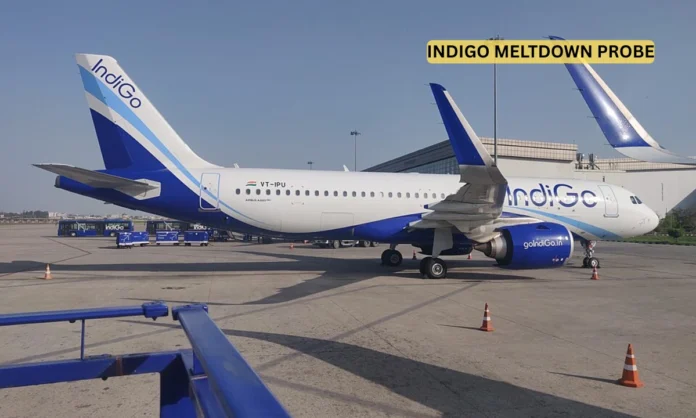
IndiGo crisis escalates as cancellations surpass 500 flights for the second consecutive day, prompting swift government intervention. Civil Aviation Minister Ram Mohan Naidu assures passengers of IndiGo crisis resolution, with flight schedules stabilising by Saturday and normalcy returning within three days. This high-level probe into IndiGo crisis underscores regulatory resolve amid widespread disruptions affecting thousands.
The IndiGo crisis stems from crew shortages exacerbated by new Flight Duty Time Limitations (FDTL) rules, leading to operational chaos across major airports like Delhi, Mumbai, and Bengaluru. DGCA data reveals 1,232 IndiGo flights cancelled in November 2025 alone, with 755 linked directly to FDTL constraints and crew issues. Minister Naidu’s statement emphasises automatic refunds, hotel accommodations for stranded flyers, and priority assistance for seniors and differently-abled passengers. This IndiGo crisis highlights vulnerabilities in India’s aviation sector, where IndiGo holds nearly two-thirds market share, amplifying impacts on domestic travel.
#IndiGo CEO Pieter Elbers: We have taken 3 steps: improving customer communication, helping stranded passengers travel today & resetting our crew & aircraft rotations for a fresh start. Cancellations will drop on Dec 6, we anticipate normalcy between Dec 10-15#IndigoDelay pic.twitter.com/QNb2Llo03m
— Siddharth Kumar Singh (@The_SidSingh) December 5, 2025
As winter schedules compound challenges with weather and congestion, the government’s 24/7 control room monitors progress closely. Naidu justifies FDTL suspension as a passenger-centric move, insisting safety remains paramount. The IndiGo crisis now tests regulatory oversight, with expectations pinned on quick recovery to avert further economic ripple effects on tourism and business travel.
Roots of the IndiGo Crisis
- November 2025 saw 1,232 IndiGo cancellations, 61% due to crew/FDTL issues.
- On-time performance dropped to 67.7% from 84.1% prior month.
The IndiGo crisis traces back to implementation gaps in revised FDTL norms, fully enforced by November 1, 2025. These DGCA-mandated rules cap pilot flight time at 8-10 hours daily, extend weekly rest to 48 hours, and restrict night duties (0000-0600 hours) to curb fatigue. IndiGo, anticipating fewer crew needs, faced shortages as actual requirements exceeded projections, triggering a cascade of 170-200 daily cancellations by early December.
Official figures confirm the scale: 755 cancellations from FDTL/crew constraints, 258 from airport restrictions, and 92 from ATC failures. DGCA summoned IndiGo leadership for explanations, noting planning deficiencies despite prior warnings. The IndiGo crisis intensified with full domestic halts from Delhi on December 5 until midnight, stranding passengers amid peak season demand.
| Cancellation Reasons (November 2025) | Number of Flights |
|---|---|
| Crew/FDTL Constraints | 755 |
| Airport/Airspace Restrictions | 258 |
| ATC System Failures | 92 |
| Total | 1,232 |
This table illustrates core triggers of the IndiGo crisis, with FDTL compliance demanding 20% more pilots than forecasted. IndiGo admitted “misjudgment in crew planning,” blending with winter fog and tech glitches. Regulatory scrutiny now probes if advance directives on FDTL were ignored, setting stage for accountability.
Government Response to IndiGo Disruptions
- High-level four-member DGCA panel to submit report in 15 days.
- FDTL orders placed in abeyance immediately for operational relief.
Civil Aviation Minister Ram Mohan Naidu chairs emergency review, ordering high-level probe into IndiGo crisis origins. The DGCA committee, comprising Joint DG Sanjay K. Bramhane and others, examines oversight lapses and recommends safeguards. Naidu projects stabilisation by December 6, full normalcy by December 8, backed by operational directives like real-time status updates.
Key measures include automatic refunds for cancelled IndiGo flights, lounge access for vulnerable groups, and refreshments for delays. DGCA deploys inspectors to airports for on-ground audits, focusing on passenger handling. Suspension of FDTL caps pilot duty at 14 hours temporarily, easing crew strain without safety risks, per Naidu. This IndiGo crisis response prioritises recovery, with IndiGo scaling schedules from December 8 to match crew availability.
| Passenger Support Measures | Details |
|---|---|
| Refunds | Automatic, no follow-up |
| Accommodation | Hotels for long delays |
| Priority Groups | Lounge for seniors, disabled |
| Updates | Real-time via airlines |
The IndiGo crisis intervention reflects coordinated MoCA-DGCA action, aiming to restore trust amid 500+ daily impacts.
Operational Fixes and Passenger Relief
- IndiGo plans reduced schedules post-December 8.
- Full stability targeted by February 10, 2026.
IndiGo crisis mitigation hinges on roster recalibration and manpower boosts. The airline assures DGCA of corrective steps, including tech upgrades for crew allocation. Daily cancellations hit 550 on December 4, with on-time performance crashing to 8.5% at metros. Government mandates 24/7 oversight at IndiGo control rooms, ensuring compliance.
Passenger relief forms the IndiGo crisis centrepiece: airlines must provide essentials and alternatives swiftly. Naidu highlights measures for students, patients, and elders, amid viral stories of weddings disrupted online. DGCA’s FDTL waiver allows flexibility until crisis ebbs, countering pilot union concerns on fatigue. IndiGo’s apology pledges minimal disruption ahead, with check-in advisories urged.
This IndiGo crisis phase demands transparent communication, as refunds process automatically to ease claims backlog. Regional inspections at Delhi Terminal 1 reveal highest impacts, prompting enhanced support.
Long-Term Safeguards Post-IndiGo Crisis
- Probe to fix accountability and prevent recurrence.
- Enhanced oversight on FDTL compliance planning.
Beyond immediate IndiGo crisis fixes, the probe eyes systemic reforms. DGCA flags repeated non-compliance warnings ignored, vowing enforcement post-report. Revised FDTL, phased from July 2025, aims for safety via circadian-aligned rests, but rollout exposed airline preparedness gaps.
IndiGo crisis lessons include mandatory contingency drills and crew forecasting buffers. MoCA commits to monitoring until February stability, potentially reshaping duty norms. Official data underscores urgency: November’s 67.7% OTP signals broader sector strain. Future-proofing demands tech integration for predictive rostering.
Stakeholders anticipate recommendations like extended transition periods, balancing growth with safety. The IndiGo crisis ultimately spotlights aviation’s expansion challenges in India.
Closing Assessment
The IndiGo crisis marks a pivotal regulatory test, with Centre’s high-level probe promising accountability and swifter resolutions. Minister Naidu’s three-day restoration pledge, alongside FDTL relief, prioritises passengers amid 1,232 November cancellations. As DGCA’s panel delves into lapses, IndiGo must rebuild operational resilience to avert repeats.
This episode reveals FDTL’s safety intent clashing with execution realities, urging proactive planning across carriers. With automatic refunds and support rolling out, affected travellers gain interim solace. Ultimately, the IndiGo crisis reinforces government’s passenger-first stance, fostering a stabler aviation ecosystem long-term.