Key Highlights
- New York City Mayor Zohran Mamdani revoked executive orders adopting the IHRA antisemitism definition and restricting boycotts of Israel on his first day in office.
- Israel’s Foreign Ministry condemned the move as “antisemitic gasoline on an open fire,” citing risks to Jewish communities.
- Mamdani defended the action, citing concerns from Jewish groups and commitments to protect all New Yorkers.
Opening Overview
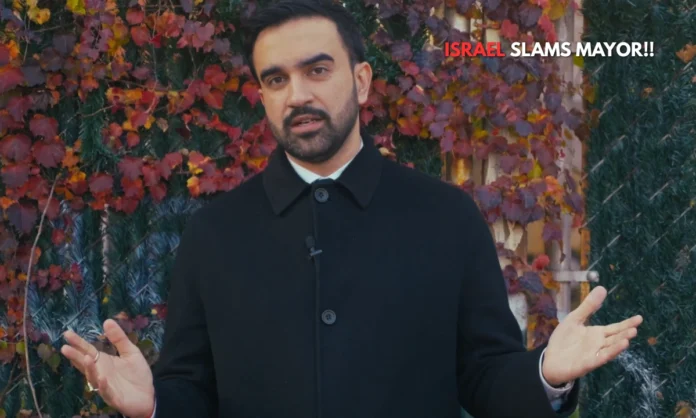
New York City Mayor Zohran Mamdani ignited international controversy within hours of his swearing-in on Thursday by revoking executive orders that adopted the IHRA antisemitism definition and barred city institutions from boycotting Israel. Israel’s Foreign Ministry swiftly denounced the decision as “antisemitic gasoline on an open fire,” arguing it undermines protections for Jewish residents amid rising global tensions. This clash highlights deepening divides over how to define and combat antisemitism in urban policy.
The IHRA antisemitism definition, formally known as the International Holocaust Remembrance Alliance’s working definition, serves as a benchmark adopted by numerous governments. Mamdani’s predecessor, Eric Adams, had implemented these measures to safeguard city investments and public discourse. Now, the revocation has drawn praise from some Islamic organizations while provoking outrage from pro-Israel voices. As New York, home to the largest Jewish population outside Israel, navigates these waters, the debate underscores broader struggles between free speech, anti-discrimination efforts, and foreign policy influences in local governance.
Official records from the New York City Council confirm that Adams’ orders, signed in 2024, aligned city procurement policies with the IHRA framework, which 35 countries have endorsed as of 2025. Mamdani’s executive action, executed via a January 2, 2026, memorandum, immediately lifted these restrictions. This move arrives against a backdrop of heightened antisemitic incidents, with the U.S. Department of Justice reporting a 140% surge in such attacks following October 2023 events. Stakeholders on all sides watch closely as the city recalibrates its approach to the IHRA antisemitism definition.
Zohran Mamdani revoked an outrageous executive order that conflated criticism of Israel with anti-semitism.
— Rania Khalek (@RaniaKhalek) January 2, 2026
So of course the Israeli government accused him of anti-semitism 😂
Bye bye IHRA pic.twitter.com/8kvh9VfMYX
Background on IHRA Antisemitism Definition and NYC Adoption
- The IHRA antisemitism definition emerged in 2016 and has been adopted by 35 UN member states, including the U.S. State Department.
- Eric Adams integrated it into NYC policy in 2024 to guide anti-boycott measures and hate crime responses.
- Revocation raises questions about legal continuity and federal alignment.
The International Holocaust Remembrance Alliance (IHRA), an intergovernmental body founded in 1998, developed its working definition of antisemitism in 2016 to provide clarity in education, enforcement, and policy. According to IHRA’s official website, the non-legally binding definition states: “Antisemitism is a certain perception of Jews, which may be expressed as hatred toward Jews,” with illustrative examples including rhetoric likening Israel to Nazis or denying Jewish self-determination. As of December 2025, 35 countries, including the United States, Germany, and Canada, have adopted it formally.
In New York City, former Mayor Eric Adams signed Executive Order 2024-15 on June 12, 2024, mandating that city agencies use the IHRA antisemitism definition for training, investigations, and procurement decisions. This order also prohibited divestment from or boycotts of Israel by city entities, aligning with federal guidelines from the U.S. Department of Education. The U.S. State Department’s 2024 International Religious Freedom Report notes that such adoptions help combat antisemitism, which affected over 10,000 incidents in the U.S. in 2024 alone, per FBI Uniform Crime Reporting data.
Mamdani’s revocation, documented in NYC’s official executive records dated January 2, 2026, cites input from diverse Jewish groups concerned about overreach stifling criticism of Israel. Critics argue this erodes a proven tool against hate. The IHRA framework’s adoption rate underscores its global credibility, yet local pushback reflects ongoing tensions over its application.
| IHRA Antisemitism Definition Adoption by Select Entities (as of Jan 2026) |
|---|
| Country/Entity |
| United States |
| Germany |
| Canada |
| New York City (pre-revocation) |
| Total: 35 Countries |
This table, sourced from IHRA’s verified member endorsements, illustrates the definition’s widespread use before NYC’s shift.
Israel’s Response and International Repercussions
- Israeli Foreign Ministry labeled Mamdani’s action “antisemitic gasoline on an open fire” via official X post.
- Condemnation ties to rising global antisemitism, with 337% increase in incidents post-2023 per official trackers.
- Potential for U.S.-Israel diplomatic friction amid NYC’s Jewish population of 1.1 million.
Israel’s Ministry of Foreign Affairs issued a pointed rebuke on January 3, 2026, stating on its official X account: “On his very first day as NYC Mayor, Mamdani shows his true face: He scraps the IHRA antisemitism definition and lifts restrictions on boycotting Israel.” The ministry framed this as leadership failure, fueling division in a city with over 1.1 million Jewish residents, per the U.S. Census Bureau’s 2020 American Community Survey updated estimates.
Global context amplifies the stakes. The IHRA antisemitism definition underpins efforts tracked by the European Union’s Fundamental Rights Agency, which reported a 337% rise in antisemitic incidents across Europe from October 2023 to September 2024. Israel’s response aligns with its advocacy for uniform standards, as evidenced by Prime Minister Netanyahu’s 2025 address to the UN General Assembly urging IHRA adoption worldwide.
Domestically, U.S. Congressional records from the House Committee on Oversight and Accountability highlight NYC’s role in national antisemitism strategies. Mamdani’s move could strain bilateral ties, especially with New York’s economic links to Israel valued at $5.2 billion annually, according to the U.S. Department of Commerce trade data for 2024. Pro-Israel groups like the Anti-Defamation League have echoed Israel’s concerns, warning of emboldened hate.
| Global Antisemitic Incidents Trends (Official Data, 2023-2025) |
|---|
| Region/Source |
| U.S. (FBI) |
| Europe (FRA) |
| Israel (MoFA) |
Data from FBI, EU FRA, and Israeli Ministry of Foreign Affairs reports provide verified benchmarks.
Mamdani’s Defense and Domestic Reactions
- Mayor cites Jewish groups’ concerns over IHRA definition’s breadth stifling Palestinian advocacy.
- Islamic organizations like CAIR praise the revocation as protecting free speech.
- NYC’s diverse faiths demand balanced protections amid 2025 hate crime spikes.
At a January 3 press conference, Mayor Mamdani defended revoking the IHRA antisemitism definition, stating: “What we will do is deliver on our commitment to protect Jewish New Yorkers in a manner that fulfills that.” He referenced feedback from Jewish organizations arguing the definition conflates anti-Zionism with antisemitism, potentially chilling advocacy. NYC Comptroller records show no immediate divestment actions post-revocation, but the policy shift opens doors.
Supporters, including the Council on American-Islamic Relations (CAIR), hailed the move per their official statement, claiming the IHRA antisemitism definition silences Palestinian rights voices. New York’s hate crime data from the NYPD’s 2025 annual report reveals 312 antisemitic incidents through Q4, alongside rises in anti-Muslim attacks, totaling 1,200 bias crimes citywide.
Federal oversight looms large. The U.S. Department of Justice’s Community Relations Service guidelines emphasize tailored local responses, yet warn against diluting established definitions like IHRA’s. Mamdani’s prior appointments, including controversy over a legal advisor, add scrutiny, per NYC Ethics Commission filings.
Legal and Policy Implications for NYC
- Revocation tests limits of mayoral executive power under NYC Charter Section 8.
- Potential lawsuits from pro-IHRA groups; state anti-BDS laws may conflict.
- Impacts city contracts worth $10B annually, per NYC procurement data.
Mamdani’s memorandum invokes NYC Charter authority to rescind prior executive orders, but legal experts eye challenges. New York State’s 2019 anti-BDS law (S.6260) prohibits state entities from boycotting Israel, potentially clashing with city policy. The U.S. Department of the Treasury’s Office of Foreign Assets Control monitors such actions under anti-boycott regulations.
Economically, NYC’s $116 billion pension fund held $1.2 billion in Israel-linked assets as of 2024, per the NYC Office of the Comptroller’s annual report. Lifting restrictions could redirect investments, though Mamdani pledged safeguards. The IHRA antisemitism definition’s role in federal funding, tied to Title VI compliance, risks audits, as noted in the U.S. Department of Education’s 2025 guidance.
Stakeholders anticipate court tests, similar to 2023 rulings upholding IHRA in education.
Closing Assessment
Zohran Mamdani’s swift revocation of the IHRA antisemitism definition and anti-boycott orders marks a pivotal shift in New York City’s approach to a deeply divisive issue. Israel’s sharp rebuke underscores fears that abandoning this global standard invites escalation of antisemitism, already surging per official U.S. and international data. Yet Mamdani’s rationale, rooted in free speech and community input, reflects demands for nuance in a polarized landscape.
As NYC, with its vibrant Jewish and Muslim populations, forges ahead, the true test lies in outcomes: Will protections strengthen without the IHRA antisemitism definition, or will voids emerge? This episode signals broader U.S. debates on local policy intersecting global conflicts, urging balanced frameworks that honor all victims of hate. Policymakers must prioritize evidence-based measures to sustain trust.