
Key Highlights
- Benjamin Netanyahu and Narendra Modi agreed to meet “very soon” after a warm phone call on December 10, 2025, focusing on strengthening ties.
- Leaders reaffirmed zero-tolerance for terrorism and discussed West Asia peace efforts, including the Gaza Peace Plan.
- Recent ministerial visits and agreements like the Bilateral Investment Treaty signal momentum toward a Free Trade Agreement.
Opening Overview
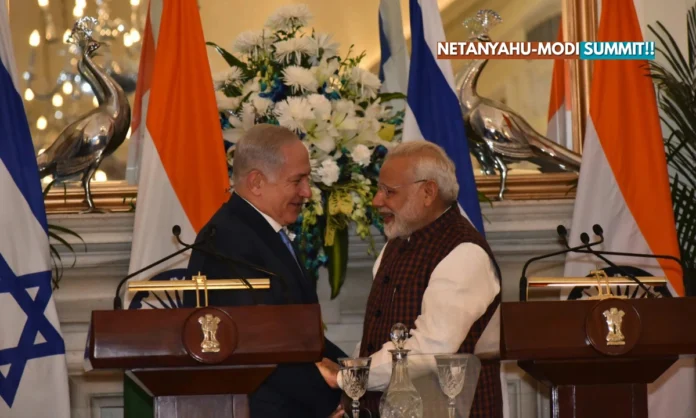
Benjamin Netanyahu and Narendra Modi have agreed to meet very soon, marking a pivotal moment in India-Israel relations. This development follows their December 10, 2025, phone conversation, where the leaders committed to deepening their strategic partnership. The Netanyahu Modi meeting anticipation builds on years of growing collaboration in defense, technology, and trade.
The call highlighted shared priorities, including counter-terrorism resolve and regional stability in West Asia. Israeli officials dismissed earlier reports of postponements due to Delhi security concerns, expressing full confidence in India’s capabilities. This Netanyahu Modi meeting comes amid high-level exchanges, such as visits by Israeli ministers Haim Katz, Nir Barkat, Avi Dichter, and Bezalel Smotrich earlier in 2025.
India’s Ministry of External Affairs noted satisfaction with the partnership’s momentum, reaffirming commitments for mutual benefit. PM Modi’s support for a just peace in the region underscores India’s balanced diplomacy. As bilateral trade nears key milestones, the upcoming Netanyahu Modi meeting could accelerate Free Trade Agreement negotiations, building on the Bilateral Investment Treaty signed during Smotrich’s visit and Terms of Reference finalized during Commerce Minister Piyush Goyal’s trip to Israel.
This engagement reflects broader geopolitical shifts, with India positioning itself as a key player in Indo-Pacific and Middle East dynamics. The leaders’ agreement to stay in touch signals sustained high-level dialogue.
Prime Minister Benjamin Netanyahu spoke a short while ago with Indian Prime Minister @NarendraModi.
— Prime Minister of Israel (@IsraeliPM) December 10, 2025
At the end of the warm and friendly conversation, the two leaders agreed to meet very soon.
Historical Evolution of Ties
- India-Israel relations formalized in 1992, evolving from defense cooperation to comprehensive partnership.
- Key milestones include Modi’s 2017 Israel visit and Netanyahu’s 2018 India trip.
India-Israel strategic partnership traces back to January 1992, when full diplomatic relations were established. Early focus centered on defense, with Israel emerging as a major supplier of military equipment. By 2025, this has expanded into agriculture, water management, and innovation hubs.
The Netanyahu Modi meeting builds on personal rapport developed since Modi’s 2017 visit to Israel, the first by an Indian PM. Netanyahu reciprocated in 2018, signing memoranda on cybersecurity and agriculture. These exchanges elevated ties to strategic levels, with annual bilateral trade reaching $10.7 billion in FY 2023-24 per India’s Ministry of Commerce data.
| Bilateral Trade (USD Billion) | Exports from India | Imports to India | Total |
|---|---|---|---|
| FY 2022-23 | 5.6 | 4.5 | 10.1 |
| FY 2023-24 | 6.0 | 4.7 | 10.7 |
| Projected FY 2024-25 | 6.5 | 5.2 | 11.7 |
Defense cooperation forms the backbone, with India accounting for over 40% of Israel’s defense exports, per Israel’s Ministry of Defense 2024 report. Joint ventures in missile systems like Barak-8 and drones have bolstered India’s capabilities. Recent years saw innovation in cybersecurity, with Israeli firms establishing R&D centers in Hyderabad and Bengaluru.
Cultural and people-to-people links strengthen the foundation. Over 70,000 Indian students pursue higher education in Israel annually, per Israel’s Central Bureau of Statistics 2025 data. Agricultural initiatives, including drip irrigation projects, benefit millions of Indian farmers through Indo-Israel Centers of Excellence.
As the Netanyahu Modi meeting approaches, these historical ties provide a robust platform for expanded collaboration.
Recent Diplomatic Momentum
- Multiple 2025 ministerial visits pave way for Netanyahu Modi meeting.
- Bilateral Investment Treaty and FTA Terms of Reference signed recently.
High-level exchanges in 2025 have intensified ahead of the Netanyahu Modi meeting. Israeli Tourism Minister Haim Katz visited India to boost tourism ties, followed by Economy Minister Nir Barkat focusing on industrial collaboration. Agriculture Minister Avi Dichter and Finance Minister Bezalel Smotrich advanced sectoral partnerships.
During Smotrich’s trip, India and Israel inked a Bilateral Investment Treaty, protecting investments worth over $50 billion cumulatively, according to India’s Department for Promotion of Industry and Internal Trade 2025 figures. Commerce Minister Piyush Goyal’s subsequent Israel visit finalized Terms of Reference for a Free Trade Agreement, targeting $20 billion trade by 2030.
| Key 2025 Agreements | Focus Area | Value/Impact |
|---|---|---|
| Bilateral Investment Treaty | Investment Protection | $50B cumulative investments |
| FTA Terms of Reference | Trade Liberalization | Targets $20B by 2030 |
| Cybersecurity MOU | Digital Security | Joint R&D centers |
These steps align with India’s Atmanirbhar Bharat and Israel’s innovation economy. Defense deals, including Spice bomb kits, continue amid global tensions. PM Modi’s phone call with Netanyahu emphasized zero-tolerance for terrorism, echoing shared threats.
Regional dynamics in West Asia prompted discussions on Gaza peace. India’s support for early implementation of plans reflects balanced diplomacy. The Netanyahu Modi meeting will likely address supply chain resilience, given Israel’s tech prowess and India’s manufacturing scale.
This momentum positions both nations for enhanced strategic autonomy.
Strategic Priorities Ahead
- Defense, tech, and energy top agenda for Netanyahu Modi meeting.
- Counter-terrorism and regional peace key discussion points.
The Netanyahu Modi meeting will prioritize defense innovation, where Israel supplies 15% of India’s military imports annually, per Stockholm International Peace Research Institute 2025 data. Collaborations in AI-driven drones and missile defense systems aim to counter evolving threats.
Technology transfer remains central. Israel’s Startup Nation status complements India’s digital ambitions, with joint ventures in semiconductors projected to create 50,000 jobs by 2028, according to NITI Aayog’s 2025 innovation report. Renewable energy partnerships focus on solar tech, aligning with India’s 500 GW non-fossil target by 2030 per Ministry of New and Renewable Energy.
| Priority Sectors | India-Israel Collaboration Examples | Projected Outcomes by 2030 |
|---|---|---|
| Defense | Barak-8 missiles, Heron drones | $15B in deals |
| Technology | Cyber centers in Bengaluru | 100+ startups |
| Agriculture/Water | 30 Centers of Excellence | 2M farmers benefited |
| Energy | Solar desalination projects | 10 GW capacity addition |
Counter-terrorism features prominently, with intelligence sharing via mechanisms established post-26/11 Mumbai attacks. Both leaders reiterated zero-tolerance stances. On West Asia, Modi’s endorsement of Gaza plans signals India’s peace advocacy.
Economic corridors like IMEEC gain traction, enhancing connectivity. The Netanyahu Modi meeting could launch new initiatives in space and health tech.
Economic and Innovation Synergies
- Trade targets and innovation hubs drive Netanyahu Modi meeting focus.
- Agriculture and health sectors see tangible gains.
Bilateral trade growth underpins the Netanyahu Modi meeting agenda. India’s exports to Israel rose 12% in 2024, driven by gems, textiles, and organics, per Ministry of Commerce 2025 statistics. Israel’s imports of Indian pharmaceuticals support its healthcare needs.
Innovation ecosystems thrive through Israel Innovation Authority partnerships. Over 300 Israeli firms operate in India, investing $2.5 billion since 2017. Health tech collaborations, including vaccine production during COVID-19, exemplify synergies.
Agriculture transforms via Indo-Israel initiatives. Thirty Centers of Excellence have increased yields by 30-50% for crops like mangoes and potatoes, impacting 2 million farmers, as reported by Indian Council of Agricultural Research 2025.
| Innovation Metrics | 2020 Baseline | 2025 Achievement | Growth % |
|---|---|---|---|
| Joint Patents | 150 | 450 | 200% |
| R&D Investments (USD M) | 500 | 1,200 | 140% |
| Startup Collaborations | 50 | 150 | 200% |
Space cooperation advances with ISRO-Elbit systems for satellites. The Netanyahu Modi meeting may announce FTA timelines, unlocking market access.
These synergies foster mutual prosperity.
Closing Assessment
The Netanyahu Modi meeting signals a new chapter in India-Israel strategic partnership, blending historical ties with future-oriented collaboration. Leaders’ commitment to counter-terrorism, peace in West Asia, and economic growth promises tangible outcomes.
From defense deals to tech hubs, synergies position both nations as global leaders. Official data underscores potential: trade eyeing $20 billion, defense exports surging. As dates firm up, this engagement counters geopolitical headwinds.
Expect accelerated FTA progress and innovation pacts. The Netanyahu Modi meeting exemplifies pragmatic diplomacy, benefiting citizens on both sides. In a multipolar world, such alliances drive stability and progress.