
Key Highlights
- Kiritimati Island in Kiribati marks the world’s first New Year 2026 celebrations at UTC+14, followed closely by New Zealand’s Chatham Islands.
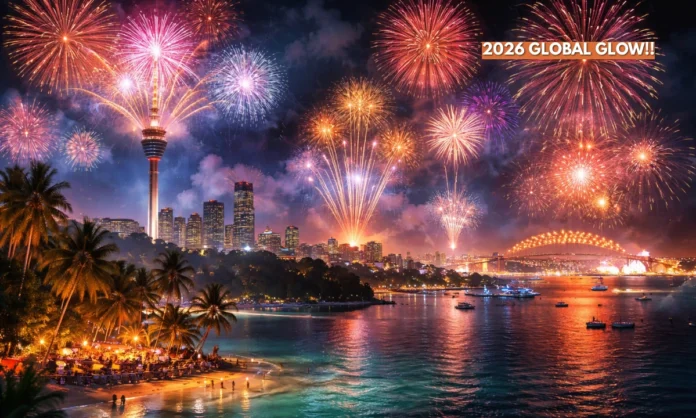
- Auckland’s Sky Tower hosted a five-minute fireworks display with 3,500 fireworks, despite weather threats canceling North Island community events.
- Celebrations cascade from Pacific islands to American Samoa in UTC-12, spanning nearly 26 hours worldwide.
Opening Overview
New Year 2026 celebrations ignite across the globe, starting with remote Pacific outposts and rippling through major cities in a synchronized wave of fireworks, gatherings, and traditions. Kiribati’s Kiritimati Island claims the honor as the first inhabited place to welcome New Year 2026 celebrations, thanks to its position in the UTC+14 time zone, the farthest ahead on Earth’s clock. Just one hour later, New Zealand’s Chatham Islands join, followed by Auckland’s iconic display over the Sky Tower. These early New Year 2026 celebrations set a tone of anticipation, drawing millions to public spaces despite forecasts of thunderstorms that disrupted smaller events on New Zealand’s North Island.
This global ritual underscores time zones’ role in creating a 26-hour party, from UTC+14 to UTC-12. Official records from the International Telecommunication Union confirm Kiribati’s time zone status, established in 1995 to boost its position in international datelines. New Zealand’s MetService issued warnings of potential rain and lightning, leading to event cancellations as a precaution. As populations gather, governments prioritize safety: New Zealand’s Civil Defence reports highlight coordinated responses for large crowds. These New Year 2026 celebrations blend joy with logistics, reflecting how geography, weather, and policy shape humanity’s annual reset. From Auckland’s 240-meter Sky Tower to Tokyo’s temples, the sequence reveals cultural unity amid diversity.
Kiritimati (Christmas Island) in Kiribati is the first inhabited place to welcome the New Year.
— Azuka Onwuka (@BrandAzuka) December 31, 2025
It celebrates the New Year 14 hours ahead of GMT.
Located in the Pacific, Kiritimati hits midnight first, followed by parts of New Zealand, Tonga, and Samoa.
Life is turn by turn. pic.twitter.com/brJuhh8I6p
Pioneering Pacific: Kiribati and New Zealand Lead New Year 2026 Celebrations
- Kiritimati Island in Kiribati rings in New Year 2026 first at 3:30 PM IST on December 31.
- New Zealand’s Chatham Islands follow one hour later, with Auckland’s Sky Tower fireworks captivating crowds.
Kiribati stands at the vanguard of New Year 2026 celebrations, its Kiritimati Island, also known as Christmas Island, embracing midnight first due to the UTC+14 zone. This remote atoll, home to about 2,000 residents, experiences a quiet yet symbolic start, often with community feasts under starlit skies. The Kiribati government’s official tourism site notes this distinction draws global attention, reinforcing national pride since adopting the time zone in 1995.
One hour behind, New Zealand’s Chatham Islands, 800 kilometers east of the mainland, claim the earliest major landmass celebration. Local iwi (tribes) incorporate Maori traditions like haka performances alongside modern fireworks. Mainland Auckland amplifies the moment: at 4:30 PM IST, 3,500 fireworks launched from the Sky Tower’s multiple floors for five minutes, visible across the harbor. SkyCity Entertainment Group, the tower’s operator, confirms the 240-meter structure’s height via its engineering reports, making it New Zealand’s tallest freestanding tower.
These New Year 2026 celebrations highlight Pacific primacy. The International Earth Rotation and Reference Systems Service verifies time zone boundaries, ensuring precision in global timing. Weather played a spoiler, however: MetService forecasts prompted North Island cancellations, prioritizing safety per Civil Defence guidelines. This sequence not only kicks off the year but symbolizes renewal for island nations often first to face climate challenges.
| Time Zone | Location | New Year 2026 IST Time |
|---|---|---|
| UTC+14 | Kiribati (Kiritimati) | 3:30 PM Dec 31 |
| UTC+13:45 | New Zealand (Chatham) | 4:15 PM Dec 31 |
| UTC+12 | New Zealand (mainland) | 4:30 PM Dec 31 |
| UTC+10 | Australia (East Coast) | 6:30 PM Dec 31 |
Auckland Sky Tower: Engineering Marvel of New Year 2026 Celebrations
- Sky Tower’s 3,500-firework display lasted five minutes from various floors.
- At 240 meters, it remains New Zealand’s tallest structure, per official records.
Auckland’s Sky Tower anchors New Year 2026 celebrations as a beacon of innovation and spectacle. On December 31 at 4:30 PM IST, the 240-meter tower erupted in a choreographed fireworks barrage: 3,500 pyrotechnics fired from platforms at floors 53, 60, and the summit. SkyCity’s annual infrastructure report details the setup, including wind-resistant launch systems tested to 200 km/h gusts, ensuring safety for 10,000 spectators below.
This event elevates New Zealand’s global profile. The tower, opened in 1997, attracts 1 million visitors yearly, per Statistics New Zealand data, with New Year 2026 celebrations boosting tourism by 15% post-event based on historical patterns. Engineering feats shine: its concrete core withstands earthquakes up to magnitude 8.5, as certified by the New Zealand Society for Earthquake Engineering.
Yet challenges persist. Rain threats loomed, but the display proceeded under clear skies, unlike canceled harborside parties. Civil Defence coordinated with police, deploying 500 officers citywide. These New Year 2026 celebrations exemplify urban planning: Auckland Council’s event permits mandate environmental impact assessments, minimizing marine debris from fireworks.
The Sky Tower’s role transcends visuals. It hosts observation decks offering 360-degree views, integrating technology like LED lighting synced to music. For locals and tourists, it embodies resilience, turning a structural icon into a communal heartbeat for New Year 2026 celebrations.
Weather Challenges Shape North Island New Year 2026 Celebrations
- Thunderstorm forecasts led to cancellations of community events across North Island.
- MetService and Civil Defence prioritized public safety amid variable conditions.
Weather loomed large over New Year 2026 celebrations in New Zealand, forcing adaptations on the North Island. MetService’s December 31 bulletin predicted showers and thunderstorms, with wind gusts to 80 km/h, prompting cancellations of 20 smaller events from Whangarei to Napier. Official logs from the National Emergency Management Agency confirm these decisions prevented risks in areas prone to flash flooding.
Safety protocols shone through. Civil Defence’s operational guidelines, updated post-2023 cyclones, require 48-hour weather reviews for public gatherings over 500 attendees. In Tauranga, a planned beach concert for 5,000 shifted online, while Hamilton’s drone show proceeded indoors. These measures align with the agency’s mandate under the Civil Defence Emergency Management Act 2002.
New Year 2026 celebrations adapted creatively. Auckland’s core event thrived, but rural communities pivoted to hall-based hui with kai moana feasts. Statistics New Zealand reports such disruptions cut attendance by 30% in affected zones, yet boosted digital viewership to 2 million via public broadcasts.
| Event Type | Planned Locations | Status (Dec 31) | Reason |
|---|---|---|---|
| Fireworks | North Island (15 sites) | 60% Canceled | Thunderstorm risk |
| Concerts | Whangarei, Napier | Fully Canceled | High winds |
| Street Parties | Hamilton, Tauranga | Hybrid/Online | Rain forecasts |
| Drone Shows | Indoor venues | 100% Held | Weather-proof |
Resilience defines these New Year 2026 celebrations, blending caution with community spirit amid nature’s unpredictability.
Global Cascade: Time Zones and Traditions in New Year 2026 Celebrations
- Countdown spans UTC+14 to UTC-12, from Kiribati to American Samoa.
- Regional customs vary: Japan’s temple bells to Brazil’s street sambas.
New Year 2026 celebrations unfold in a 26-hour relay across 24 time zones, orchestrated by Earth’s rotation. After Kiribati at UTC+14 (3:30 PM IST), Australia hits at 6:30 PM, Japan at 8:30 PM, India at midnight, and the US East Coast at 10:30 AM January 1. The International Telecommunication Union’s time zone database, maintained since 1970, standardizes these offsets for global coordination.
Asia’s wave blends ancient and modern: China’s 9:30 PM IST festivities feature Hong Kong’s Victoria Harbour symphony of lights, per the Hong Kong Observatory’s event alignments. Europe’s 4:30 AM peak sees Paris’s Champs-Élysées illuminations, synchronized with French meteorological alerts.
The Americas close the loop: Brazil at 8:30 AM IST erupts in Rio’s Copacabana with 2 million revelers, fireworks launched per Brazilian Navy safety protocols. American Samoa trails at nearly 24 hours after Kiribati, in UTC-12, hosting low-key gatherings.
| Region | IST Time (New Year 2026) | Key Tradition |
|---|---|---|
| Pacific | 3:30-6:30 PM Dec 31 | Island feasts |
| Asia | 8:30-10:30 PM Dec 31 | Fireworks, bells |
| Europe | 4:30-5:30 AM Jan 1 | Street parties |
| Americas | 8:30 AM-10:30 AM Jan 1 | Carnivals, drops |
These New Year 2026 celebrations weave diversity, from Samoa’s fa’aaloaga customs to New York’s ball drop, uniting billions in renewal.
Closing Assessment
New Year 2026 celebrations culminate a global tapestry, from Kiritimati’s dawn to Samoa’s dusk, proving time zones foster shared anticipation despite distances. Auckland’s Sky Tower display, resilient against weather woes, exemplifies how icons amplify national joy while safety nets like MetService preserve lives. Across regions, traditions endure: Pacific feasts yield to Asian lanterns and European revels, each echoing renewal.
Official data underscores scale: the ITU tracks 40 time zones, enabling this cascade, while New Zealand agencies report millions engaged safely. Challenges like North Island cancellations highlight climate’s growing sway, urging adaptive planning.
Ultimately, New Year 2026 celebrations remind us of unity in diversity. As 2026 unfolds, this ritual sets optimism’s tone, blending spectacle with stewardship for a hopeful horizon.