
Key Highlights:
- Government set to introduce Health Security to National Security Cess Bill, 2025, targeting pan masala and gutkha industries.
- New cess imposed on machinery production capacity, with compulsory monthly payments and strict registration and inspection compliance.
- Penalties include up to five years imprisonment, fines, and government power to double cess for stronger industry control.
Opening Overview: Urgent Reform in Pan Masala Gutkha Sector
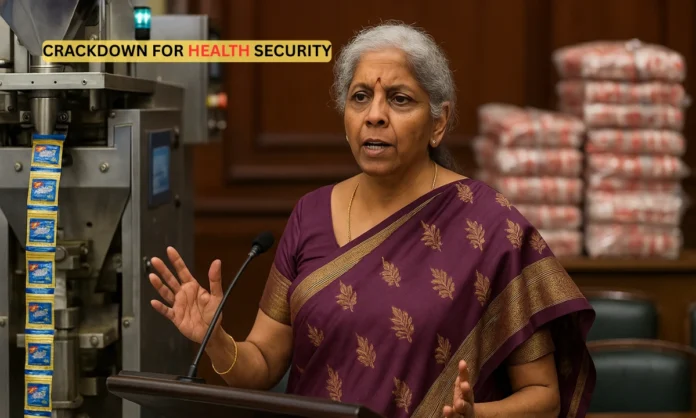
India’s government is poised to enact transformative reforms through the Pan Masala Gutkha Crackdown under the Health Security to National Security Cess Bill, 2025. This bill, set to be introduced by Finance Minister Nirmala Sitharaman in the Winter Session, targets the pan masala and gutkha industries by imposing a new cess based on the production capacity of manufacturing machinery rather than output.
The Pan Masala Gutkha Crackdown aims to bolster health security and national security by creating dedicated revenue streams to manage tobacco’s health burden and illicit trade challenges. Manufacturers will face strict new regulations demanding registration, monthly cess payments, and compliance with audits and inspections. Penalties for violations could lead to up to five years in prison and significant fines, signaling the government’s commitment to strict enforcement.
#wintersession2025
— SansadTV (@sansad_tv) December 1, 2025
FM @nsitharaman introduces The Health Security se National Security Cess Bill, 2025 in Lok Sabha.
The bill to augment the resources for meeting expenditure on national security and for public health, and to levy a cess for the said purposes on… pic.twitter.com/qTYQH4H70s
The Pan Masala Gutkha Crackdown reflects a strategic shift in tobacco policy, recognizing the high consumption of these products across India and the significant social and economic costs they impose. India’s smokeless tobacco prevalence, dominated by pan masala and gutkha use, presents alarming public health challenges. The bill is designed not only to secure revenues but also to curtail unregulated and illicit manufacturing that has long undermined health policies and tax collections.
Overhauling Taxation: Production Capacity-Based Cess
- Tax focus shifts from product output to production machine capacity under the Pan Masala Gutkha Crackdown.
- Fixed monthly cess applies to all manufacturers, including small and hand-made producers, minimizing tax evasion.
The hallmark of the Pan Masala Gutkha Crackdown is the unprecedented taxation mechanism shifting cess calculation from finished product output to the production capacity of manufacturing machinery. This ensures consistent cess collection even if factories reduce output or temporarily cease production. The monthly payments are mandatory with minimal exceptions, including relief only if machinery is unused for more than 15 days. This overhaul targets transparency and compliance within the sector, including the large informal segment producing hand-made pan masala and gutkha, which will be subject to fixed monthly cess payments.
Manufacturers must register with the government, regularly submit returns, and make facilities accessible for audit and inspection. The Pan Masala Gutkha Crackdown thereby aims to counteract widespread tax evasion and unregulated manufacturing practices by instituting a formal compliance structure, raising accountability across the industry.
Health and Economic Burden of Tobacco Use in India
- Smokeless tobacco, mainly pan masala and gutkha, contributes to significant health and economic costs.
- Economic losses from tobacco-related diseases in India exceed INR 1,773 billion annually, accounting for 1% of GDP.
- Current tax revenues insufficient to cover healthcare costs from tobacco-related illnesses.
Tobacco consumption, particularly through smokeless products like pan masala and gutkha, continues to contribute significantly to India’s health crisis and economic drain. According to the latest data, about 28.6% of Indian adults use tobacco, with 21% using smokeless forms—the focus of the Pan Masala Gutkha Crackdown. These products are linked to high incidences of oral cancers and other serious diseases, imposing massive medical costs and productivity losses. The overall economic burden of tobacco-related diseases in India was estimated at INR 1,773 billion (approximately US$27.5 billion), representing over 1% of the nation’s GDP. Healthcare costs directly attributable to tobacco usage account for 5.3% of total healthcare expenditure, revealing the gap between health system strain and tax revenue generated.
The Pan Masala Gutkha Crackdown aims to address this revenue-expenditure mismatch by ensuring the tobacco industry contributes more effectively to state health budgets, facilitating stronger public health interventions and tobacco control programs.
Legal and Compliance Framework Sustainability
- Violations under the Pan Masala Gutkha Crackdown may result in imprisonment for up to five years and significant fines.
- Manufacturers can appeal orders through an established judicial process up to the Supreme Court.
- Government retains the right to double the cess under specific conditions to regulate the industry economically.
The Pan Masala Gutkha Crackdown introduces some of the strictest punitive measures seen in tobacco product regulation. Non-compliance with cess payment, registration, and reporting can lead to imprisonment of up to five years and hefty fines, underscoring the government’s prioritization of enforcement. However, manufacturers are guaranteed extensive legal recourse, including appeals from appellate bodies to the Supreme Court, balancing enforcement rigor with due process protections.
The bill also empowers the government to double the cess, which serves as a powerful tool to dissuade illicit practices and adapt regulatory pressure according to evolving industry and public health dynamics. This mechanism ensures the Centre can steer the economic environment of the pan masala gutkha sector to maximize revenue and compliance, critical for funding health and security priorities.
Final Perspective: Strategic Integration of Health and Fiscal Policy
The Pan Masala Gutkha Crackdown marks a critical juncture in India’s tobacco control and taxation history. By leveraging a production capacity-based cess model and enforcing robust compliance and legal frameworks, the government is effectively targeting an industry long criticized for its regulatory gaps and health impacts. The bill’s novel approach ensures steady revenue for health and security funding while curbing the illicit market and informal manufacturing.
The reform aligns fiscal policy tightly with public health objectives, addressing one of India’s most pressing social and economic health challenges. Given the significant tobacco burden on India’s economy and healthcare system, the Pan Masala Gutkha Crackdown exemplifies a data-driven, economically sound, and health-conscious policy innovation with the potential to transform tobacco governance. This crackdown sets a precedent for future tobacco product regulations, blending health security with national security imperatives.