
Key Highlights:
- Prime Minister Narendra Modi inaugurated four new Vande Bharat Express trains from Varanasi on November 8, 2025, expanding India’s semi-high-speed rail network to 164 total services
- The new trains operate on Banaras-Khajuraho, Lucknow-Saharanpur, Firozpur-Delhi, and Ernakulam-Bengaluru routes, cutting travel time by up to 2 hours 40 minutes
- Vande Bharat trains maintain exceptional occupancy rates of 105.03% in FY 2025-26, reflecting strong passenger demand across India’s expanding premium rail network
Opening Overview
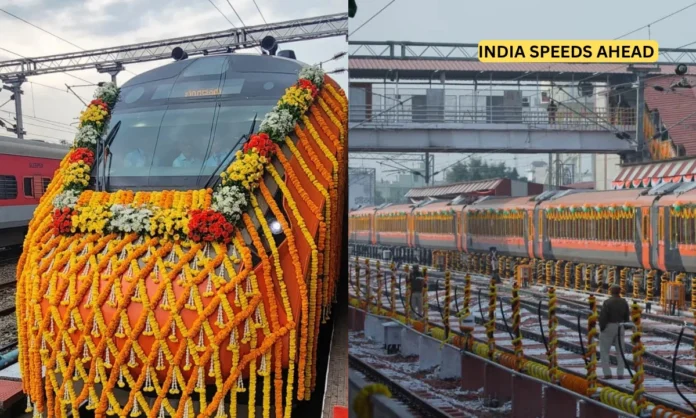
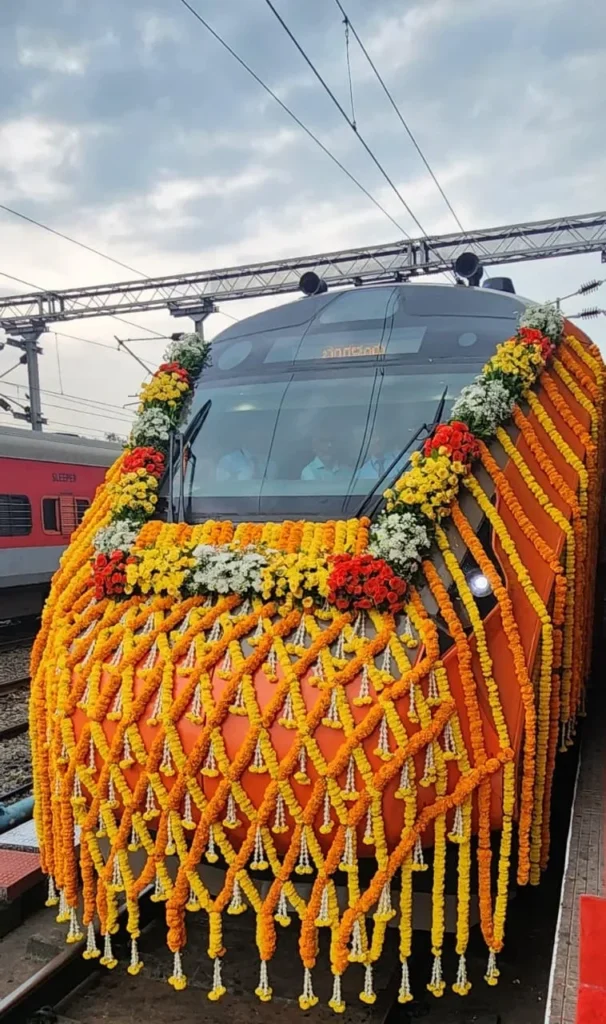
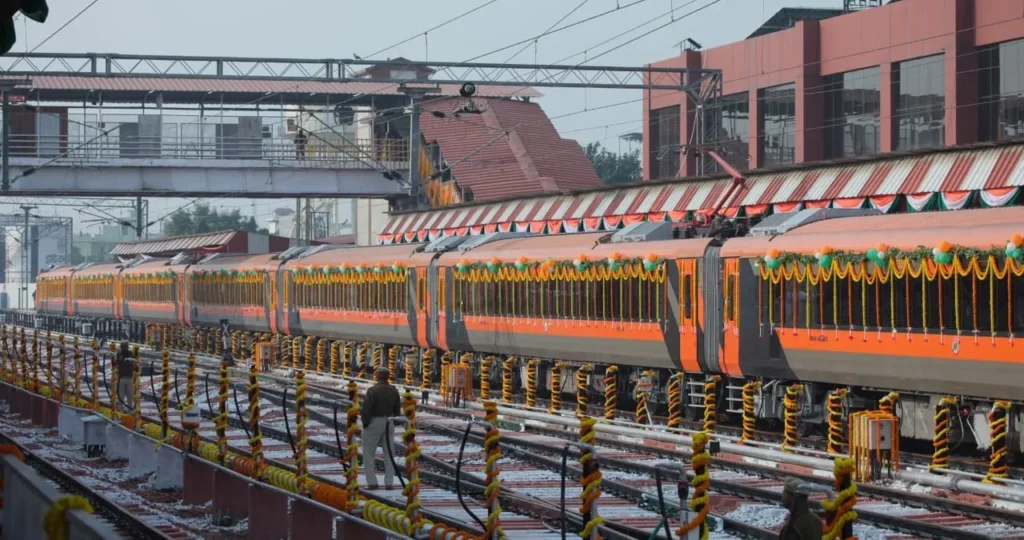
Prime Minister Narendra Modi flagged off four new Vande Bharat Express trains from his parliamentary constituency Varanasi on November 8, 2025, marking a significant milestone in India’s railway modernization efforts. The new trains will operate on strategically important routes connecting Banaras-Khajuraho, Lucknow-Saharanpur, Firozpur-Delhi, and Ernakulam-Bengaluru, bringing the total number of Vande Bharat services nationwide to 164. These semi-high-speed trains, manufactured at Chennai’s Integral Coach Factory, promise to dramatically reduce travel times while enhancing regional mobility and supporting economic development across northern and southern India.
Prime Minister @narendramodi flags off four new Vande Bharat Express trains from his parliamentary constituency Varanasi, connecting Banaras–Khajuraho, Lucknow–Saharanpur, Firozpur–Delhi, and Ernakulam–Bengaluru. These modern trains will reduce travel time and boost tourism and… pic.twitter.com/T232zoqgl2
— DD News (@DDNewslive) November 8, 2025
The launch comes at a time when Indian Railways is experiencing a passenger traffic resurgence, with total passenger volume crossing 7 billion in FY 2024-25, representing a 6% increase from the previous year. The new Vande Bharat trains are expected to significantly cut journey times on their respective routes, with the Banaras-Khajuraho service saving approximately 2 hours and 40 minutes compared to existing special trains. Developed under the government’s “Make in India” initiative with 87% indigenous components, these trains represent India’s growing capabilities in manufacturing world-class rail infrastructure.
Uttar Pradesh Chief Minister Yogi Adityanath reviewed preparations at Varanasi railway station ahead of the prime minister’s visit, directing officials to ensure seamless coordination for the inauguration event. The expansion of the Vande Bharat network aligns with the government’s broader vision of transforming Indian Railways into a modern, efficient, and passenger-friendly transportation system that serves as a catalyst for regional economic integration.
Strategic Route Expansion Connects Cultural and Economic Hubs
- The Banaras-Khajuraho route establishes India’s fastest direct connectivity between major religious and cultural destinations
- Northern routes enhance access to Punjab’s border regions and Uttarakhand’s pilgrimage centers
- Southern India receives its first inter-state Vande Bharat service linking Kerala, Tamil Nadu, and Karnataka
The Banaras-Khajuraho Vande Bharat Express creates a vital transportation corridor connecting some of India’s most revered religious and cultural destinations, including Varanasi, Prayagraj, Chitrakoot, and the UNESCO World Heritage Site of Khajuraho. This train covers a total distance of 443 kilometers in just 7 hours and 40 minutes, making it the fastest service on this route and cutting travel time by approximately 2 hours and 40 minutes compared to currently operating special trains. The enhanced connectivity is expected to strengthen religious and cultural tourism while providing pilgrims and travelers with a fast, modern, and comfortable journey through Uttar Pradesh and Madhya Pradesh.
The Lucknow-Saharanpur Vande Bharat Express completes its journey in approximately 7 hours and 45 minutes, saving nearly one hour of travel time on this important northern corridor. This service benefits passengers from seven major cities including Lucknow, Sitapur, Shahjahanpur, Bareilly, Moradabad, Bijnor, and Saharanpur, while also improving access to the holy city of Haridwar via Roorkee. The train strengthens intercity connectivity across central and western Uttar Pradesh, making travel smoother and faster for both business commuters and religious tourists.
The Firozpur-Delhi Vande Bharat Express emerges as the fastest train on this route, completing the journey in just 6 hours and 40 minutes. This service significantly enhances connectivity between the national capital and key cities in Punjab, including Firozpur, Bathinda, and Patiala, while contributing to the development of India’s border regions and fostering greater integration with national markets. The Ernakulam-Bengaluru Vande Bharat Express represents a landmark achievement as the first inter-state semi-high-speed premium train service linking Kerala, Tamil Nadu, and Karnataka. This southern route reduces travel time by over two hours, completing the journey in 8 hours and 40 minutes, while connecting major IT hubs, commercial centers, and educational institutions across three states.
Record Passenger Demand Drives Network Growth
- Vande Bharat trains achieved 105.03% occupancy in FY 2025-26, surpassing the 102.01% recorded in FY 2024-25
- Total Vande Bharat ridership reached 2.14 crore passengers by December 2024 in the ongoing financial year
- Indian Railways transported over 7 billion passengers in FY 2024-25, marking first time in five years crossing this milestone
The exceptional performance of Vande Bharat Express trains continues to demonstrate overwhelming passenger acceptance, with occupancy rates reaching 105.03% in the financial year 2025-26 up to June 2025, compared to 102.01% in the previous financial year 2024-25. Railway Minister Ashwini Vaishnaw informed the Lok Sabha that these consistently high occupancy figures, exceeding 100% capacity, reflect strong public demand and the success of India’s semi-high-speed rail initiative. The sustained demand has prompted Indian Railways to consider augmenting existing 8-coach trains to 16-coach configurations and expanding 16-coach services to 20-coach formations on popular routes.
Total ridership on Vande Bharat Express trains reached 2.14 crore passengers by December 2024 in the ongoing financial year, demonstrating the growing preference for premium rail travel among Indian passengers. This impressive utilization occurs against the backdrop of Indian Railways experiencing a broader passenger traffic resurgence, with total passenger volume reaching 715 crore in FY 2024-25, representing a 5.07% increase from 680.54 crore passengers in FY 2024. The railway network crossed the 7 billion passenger mark for the first time in five years, though volumes remain below the pre-COVID period of 2019-20, when passenger count stood at 808.57 crore.
Passenger revenue on Indian Railways increased by nearly 50% to Rs. 75,215 crore (approximately USD 8.7 billion) in FY 2025, driven by a 5% rise in reserved ticket categories and 6.2% growth in unreserved passenger volume. The success of Vande Bharat services, maintaining average occupancy above 100% across all routes, validates the railways’ strategy of investing in modern, comfortable, and time-efficient train services that appeal to contemporary travelers. As of November 2025, the railway network operates 156 Vande Bharat services before the addition of the four new trains, with plans to introduce 200 new services during 2025-26 and targeting 800 trains in the long term.
Advanced Features and Manufacturing Excellence
- Integral Coach Factory Chennai produces Vande Bharat trains with 87% indigenous content under Make in India initiative
- Third-generation Vande Bharat 3.0 trains currently operational, with Vande Bharat 4.0 expected within 18 months
- ICF rolled out 3,007 coaches in FY 2024-25, including 1,169 distributed power rolling stock coaches
The Vande Bharat Express trains manufactured at Chennai’s Integral Coach Factory represent India’s technological advancement in rail coach production, featuring 87% indigenous inputs developed under the “Make in India” initiative. These semi-high-speed trains are designed for a maximum operating speed of 160 kilometers per hour, equipped with quicker acceleration and deceleration capabilities, vacuum-assisted bio toilet systems, automatic plug doors, and a maximum axle load of 17 tonnes with fully suspended traction motors and bolsterless bogies. The modern coaches incorporate improved fire-safety systems, CCTV surveillance in all compartments, emergency alarm push-buttons, talk-back communication units, and special lavatories for differently-abled passengers located in the driving coaches.
ICF achieved a remarkable production milestone in FY 2024-25, successfully rolling out 3,007 coaches compared to 2,829 coaches in the previous year, demonstrating enhanced manufacturing capacity. Of these 3,007 coaches produced, 1,169 are Distributed Power Rolling Stock coaches, which include Vande Bharat Sleeper variants, Vande Bharat Chair Car configurations, and EMU and MEMU train sets.
The factory is currently producing third-generation Vande Bharat 3.0 trains while working on the development of Vande Bharat 4.0, which Railway Minister Ashwini Vaishnaw announced is expected to be launched within the next 18 months. The upcoming Vande Bharat 4.0 aims to set global benchmarks in every aspect of performance and passenger experience, with the goal of establishing it as the global standard for semi-high-speed trains that countries worldwide would aspire to adopt.
ICF General Manager U Subba Rao confirmed in an exclusive interview that the factory has fulfilled the complete order for Vande Bharat chair cars over the past two years and is now focusing on developing Vande Bharat sleeper trains, alongside new ventures such as Vande Bharat freight trains and high-speed trains. The factory expects to have high-speed train prototypes operational within two years, while the Rae Bareli-based Modern Coach Factory joined the manufacturing network by rolling out its first Vande Bharat rake in early 2025.
Economic Impact and Future Expansion Plans
- Total Vande Bharat network spans 284 districts across 24 states and union territories, operating across 16 railway zones
- Current fleet includes 46 mini variants with 8 coaches, 17 regular trains with 16 coaches, and 17 extended versions with 20 coaches
- Indian Railways plans dedicated passenger corridors spanning 7,000 kilometers by 2047
The expansion of the Vande Bharat Express network significantly contributes to regional economic development by enhancing connectivity between major commercial centers, IT hubs, educational institutions, and tourism destinations across India. As of November 2025, the Vande Bharat network covers 284 districts across 24 states and union territories, operating across 16 railway zones and serving over 100 different routes. The enhanced connectivity promotes faster movement of professionals, students, and tourists while supporting business growth, employment opportunities, and inter-state commerce, particularly in previously underserved corridors.
The current operational fleet comprises a diverse composition including 46 mini Vande Bharat trains with 8 coaches designed specifically for shorter routes and regional connectivity, 17 regular trains with 16 coaches, and 17 extended versions with 20 coaches to meet higher passenger demand on popular routes. This strategic mix allows Indian Railways to optimize service offerings based on route characteristics, passenger volume, and regional requirements while maintaining the premium travel experience that defines the Vande Bharat brand. The first Vande Bharat Express was flagged off on February 15, 2019, on the New Delhi-Kanpur-Allahabad-Varanasi route, marking the beginning of India’s journey toward world-class semi-high-speed rail travel.
Indian Railways has ambitious plans for long-term infrastructure development, including dedicated passenger corridors spanning 7,000 kilometers by 2047. The railway network currently operates 156 Vande Bharat trains, 30 Amrit Bharat trains, and four Namo Bharat trains as of October 2025, with plans to design and manufacture Amrit Bharat 4.0 trains featuring next-generation trainsets and locomotives expected to be ready for testing by October 2028. The government targets introducing 200 new Vande Bharat trains during 2025-26, with a long-term goal of operating 800 such trains across the country, transforming intercity travel and establishing Indian Railways as a modern, efficient transportation backbone for the nation’s economic growth.
Closing Assessment
The inauguration of four new Vande Bharat Express trains from Varanasi represents more than just an expansion of India’s semi-high-speed rail network to 164 services. These trains symbolize the nation’s commitment to modernizing transportation infrastructure while preserving accessibility and affordability for millions of passengers. The consistent occupancy rates exceeding 105% demonstrate that Indian travelers increasingly value time-efficient, comfortable travel options that the Vande Bharat platform delivers. As manufacturing capabilities strengthen through facilities like Integral Coach Factory Chennai and Modern Coach Factory Rae Bareli, India moves closer to becoming a global leader in railway technology and innovation.
The strategic route selection for these four new trains, connecting cultural heritage sites, pilgrimage centers, border regions, and economic hubs, reflects thoughtful planning that balances tourism promotion, regional development, and commercial viability. The Banaras-Khajuraho route strengthens India’s spiritual tourism circuit, while the Ernakulam-Bengaluru service integrates southern India’s technology and commercial centers. With ambitious targets of 200 new trains in 2025-26 and 800 trains in the long term, combined with development of advanced Vande Bharat 4.0 and dedicated passenger corridors by 2047, Indian Railways is positioning itself as a catalyst for transforming India’s connectivity landscape and supporting the vision of a developed nation.