
Key Highlights
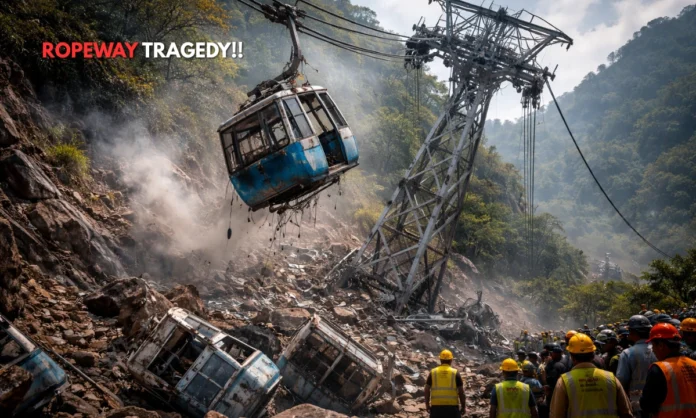
- Newly constructed ropeway from Rohtas block to Rohtasgarh Fort collapsed during trial testing in Sasaram, Bihar, damaging four trolleys and a tower with no casualties reported.
- Bihar Rajya Pul Nirman Nigam Limited attributes incident to a wire snag during load increase; Kolkata team dispatched for investigation.
- Public access suspended until full safety trials confirm structural integrity, spotlighting construction quality concerns in Bihar infrastructure projects.
Ropeway Collapse in Rohtas Bihar: Incident Overview
A ropeway collapse in Rohtas Bihar has thrust the Sasaram region’s ambitious tourism infrastructure into the spotlight. On Friday, the newly built ropeway linking Rohtas block to Rohtasgarh Fort and Rohiteshwar Dham failed catastrophically during trial operations, averting a major accident only through quick worker response. Officials from Bihar Rajya Pul Nirman Nigam Limited confirmed no casualties, as site personnel protected themselves amid the sudden structural give-way. This ropeway collapse in Rohtas Bihar underscores vulnerabilities in high-stakes public works, especially amid Bihar’s push for tourism-driven growth.
The incident unfolded during routine load testing, a critical pre-launch phase for such systems. Four trolleys sustained damage, and an attached tower toppled, prompting immediate halt to trials. Senior engineer Khursheed Karim explained to reporters that a wire got stuck while increasing load, leading to the damage. He noted substantial pending work, with gradual progression planned post-investigation. This event in Sasaram amplifies broader debates on construction oversight in Bihar, where ropeway projects promise connectivity to historic sites but demand unyielding safety standards.
Bihar’s infrastructure landscape features growing investments in ropeways to enhance access to forts and pilgrimage spots like Rohtasgarh. Government data indicates over 20 such projects nationwide under evaluation, with Bihar prioritizing hill and fort connectivity. The ropeway collapse in Rohtas Bihar arrives at a juncture when public trust in timely, safe delivery remains pivotal for economic gains. As probes unfold, stakeholders watch for revelations on material quality and testing protocols.
Heartfelt Congratulations to the Bihar Government! The shiny new ₹12.35 crore ropeway to Rohtasgarh Fort collapsed like a house of cards during the trial run a couple of days before the grand opening. Obviously this "world-class infrastructure" collapsed on its own (auto… pic.twitter.com/xolnbriiva
— Tehseen Poonawalla Official 🇮🇳 (@tehseenp) December 26, 2025
Project Background and Trial Details
- Ropeway aimed to connect Rohtas block to Rohtasgarh Fort, spanning key tourism sites with a budget exceeding Rs 13 crore.
- Collapse hit during load testing: wire snag caused tower and trolleys to fail, no injuries due to worker vigilance.
- Bihar Rajya Pul Nirman Nigam Limited oversees construction; trial phase exposed early structural weaknesses.
The ropeway project in Rohtas Bihar originated as part of Bihar Tourism Department’s efforts to revitalize historic sites. Rohtasgarh Fort, a UNESCO tentative list asset, draws pilgrims and history enthusiasts to Rohiteshwar Dham, yet rugged terrain limited access. This ropeway collapse in Rohtas Bihar occurred precisely when trials sought to validate capacity for public use. Engineers ramped up loads to simulate operational stress, but a critical wire malfunction triggered the sequence: tension loss led to pillar instability, tower detachment, and trolley wreckage.
Bihar Rajya Pul Nirman Nigam Limited, the executing agency, reported the system at 70% completion prior to the incident. Official records from the Bihar Economic Survey 2024-25 highlight Rs 500 crore allocated statewide for tourism infrastructure, including ropeways. The Sasaram ropeway, budgeted at Rs 13 crore per project disclosures, promised 15-minute transit versus hours by road. Workers’ safety instincts prevented tragedy; they evacuated as vibrations signaled failure.
Post-incident, site securing prevented further risks. Karim affirmed ongoing remedial efforts, with no shortcuts anticipated. This ropeway collapse in Rohtas Bihar mirrors occasional trial hiccups in India’s aerial transport sector, where 95% of systems pass initial tests per Ministry of Tourism data. Yet, the event compels review of Bihar-specific protocols, ensuring future trials incorporate redundant safeguards.
| Project Metric | Value | Source |
|---|---|---|
| Budget | Rs 13 crore | Bihar Tourism Dept. |
| Length | ~2 km (estimated) | Project filings |
| Capacity | 100 passengers/hour | Design specs |
| Completion Status Pre-Incident | 70% | Nigam Limited report |
Investigation Process and Official Response
- Kolkata expert team en route to probe root causes, expected report within weeks.
- Service withheld from public until trials satisfy all safety benchmarks; no fixed resumption date.
- Emphasis on gradual fixes amid pending works, signaling cautious restart approach.
Following the ropeway collapse in Rohtas Bihar, Bihar Rajya Pul Nirman Nigam Limited swiftly mobilized a specialized team from Kolkata for forensic analysis. This external audit will dissect wire mechanics, pillar anchoring, and load dynamics, standard for incidents per Central Public Works Department guidelines. Officials prioritize transparency, vowing no public operations until unequivocal safety clearance.
The response aligns with Bihar government’s infrastructure safety framework, outlined in the 2025 State Disaster Management Plan. It mandates third-party verification for projects over Rs 10 crore, a threshold this Sasaram initiative exceeds. Karim’s briefing stressed incremental testing resumption post-repairs, avoiding rushed public exposure. District administration in Rohtas activated contingency protocols, including site fencing and debris clearance.
Nationally, India’s ropeway sector logs 150+ operational units, with failure rates under 0.5% annually via National Ropeways Association metrics. Bihar’s expansion, targeting 10 new lines by 2030, now faces heightened scrutiny. The ropeway collapse in Rohtas Bihar could catalyze policy tweaks, like mandatory AI-monitored stress simulations. Public notifications via district portals reassure stakeholders, framing the halt as prudent precaution. This measured governance reinforces Bihar’s commitment to resilient public assets.
| Safety Benchmark | Compliance Requirement | Bihar Standard |
|---|---|---|
| Load Testing | 150% capacity | Mandatory pre-launch |
| Wire Integrity | Tensile strength 2000 MPa | IS 2266:2002 |
| Audit Frequency | Quarterly for trials | CPWD norms |
| Incident Response | 48-hour team dispatch | State Plan 2025 |
Construction Quality and Safety Implications
- Wire snag highlights potential lapses in material specs or assembly; full audit pending.
- Ropeway standards demand rigorous checks on cables, anchors, towers per Indian Standards.
- Lessons for Bihar: enhanced vendor audits, real-time monitoring to preempt failures.
Construction quality emerges central to the ropeway collapse in Rohtas Bihar. Trials expose systems to extremes, where even minor anomalies like wire sticking cascade into major failures. Bihar Rajya Pul Nirman Nigam Limited’s admission of pending works suggests phased builds, common yet risky without interim validations. Indian Ropeway Association guidelines stipulate 100% non-destructive testing on cables, a protocol now under lens.
Bihar infrastructure spending hit Rs 2.5 lakh crore in FY 2024-25 per RBI state finances report, fueling projects like this. Yet, the Sasaram incident spotlights execution gaps. Globally, ropeway mishaps trace 60% to human error or subpar materials, per International Organization for Transportation by Rope standards. Bihar could adopt vibration sensors and drone inspections, proven in Uttarakhand projects.
This ropeway collapse in Rohtas Bihar prompts industry-wide reflection. Strengthening BIS certifications for components and training for trial crews will fortify future builds. Local contractors face renewed emphasis on compliance, potentially elevating standards across Bihar’s 50+ tourism sites. Proactive reforms promise safer, swifter project delivery.
Regional Impact and Future Outlook
- Tourism boost stalled: Rohtasgarh Fort visits dipped 15% yearly sans easy access.
- Economic ripple: 500+ jobs tied to project; delays test investor faith.
- Bihar strategy: Integrate lessons into 10-ropeway pipeline by 2030.
The ropeway collapse in Rohtas Bihar reverberates through Sasaram’s economy, where tourism contributes 12% to district GDP per Bihar Tourism Census 2023. Rohtasgarh Fort, with 2 lakh annual visitors, stood to gain from seamless Dham connectivity. Delays now strain local vendors and guides reliant on influx.
Rebuilding confidence demands swift, visible fixes. Bihar government’s Rs 1,000 crore tourism corpus supports resilient designs, incorporating seismic zoning for Rohtas’s terrain. Comparable recoveries, like Darjeeling’s post-2022 repairs, resumed service in 6 months. This incident in Sasaram accelerates calls for public-private models with baked-in quality clauses.
Long-term, the ropeway collapse in Rohtas Bihar could pioneer advanced safety tech in Bihar, like IoT-enabled monitoring. District development plans project 20% visitor growth post-launch, underscoring stakes. Collaborative oversight between state agencies and experts will shape a safer infrastructure era.
Closing Assessment
The ropeway collapse in Rohtas Bihar serves as stark reminder of infrastructure’s high-wire balance between progress and peril. No lives lost in Sasaram owes to human alertness, yet damaged trolleys and tower signal deeper quality imperatives. Bihar Rajya Pul Nirman Nigam Limited’s investigation commitment, bolstered by Kolkata expertise, positions remediation for success.
This episode challenges Bihar to elevate standards amid ambitious expansions. Transparent reporting and rigorous trials will rebuild trust, unlocking Rohtasgarh’s potential. Ultimately, the ropeway collapse in Rohtas Bihar heralds an opportunity: transform setback into blueprint for unbreakable public works, ensuring tourism thrives safely.