
Key Highlights
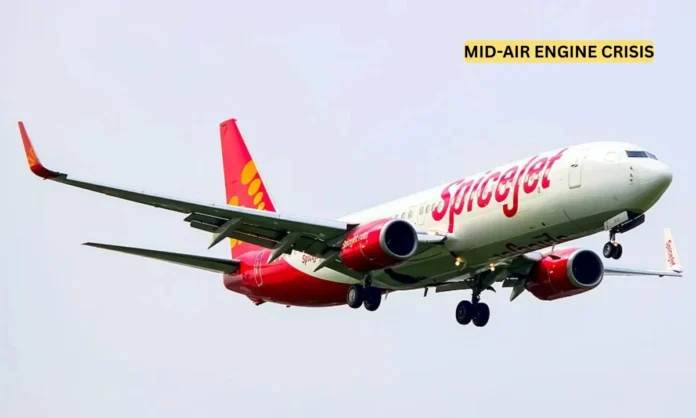
- SpiceJet flight SG 670 from Mumbai to Kolkata made an emergency landing on November 9, 2025, after engine technical snag during descent
- All 188 passengers and crew members safely disembarked at Netaji Subhas Chandra Bose International Airport at 11:38 PM
- Indian airlines reported 183 technical defects to DGCA until July 2025, with domestic passenger traffic growing 4.99% year-on-year
Opening Overview: Mid-Air Engine Crisis Triggers Emergency Protocol
A SpiceJet flight emergency landing at Kolkata’s Netaji Subhas Chandra Bose International Airport late Sunday night highlighted ongoing aviation safety concerns as the aircraft experienced engine failure during descent. The SpiceJet flight emergency landing involving flight SG 670, carrying more than 188 passengers and crew from Mumbai, concluded safely at 11:38 PM after the pilot detected abnormal engine behavior and immediately alerted air traffic control. Emergency services, including fire and rescue teams, were placed on high alert until the aircraft touched down without incident, with airport authorities confirming the full emergency status was withdrawn immediately after the safe landing.
The SpiceJet flight emergency landing comes at a critical juncture for India’s aviation sector, which has witnessed significant growth alongside persistent technical challenges. According to the Directorate General of Civil Aviation (DGCA), Indian airlines reported 183 technical defects in aircraft until July 21, 2025, down from 421 defects in 2024 and 448 in 2023. The incident underscores the importance of crew training and standard operating procedures that enabled the safe resolution of what could have been a catastrophic situation, particularly as domestic air passenger traffic reached 110.726 million between January and August 2025, representing a 4.99% year-on-year increase.
The SpiceJet flight emergency landing occurred despite the aircraft departing nearly two hours behind schedule, having taken off from Mumbai at 9:07 PM instead of its scheduled 7:10 PM departure time. This latest technical incident adds to the aviation industry’s mounting scrutiny over safety protocols and maintenance standards, especially as India’s aviation sector expands rapidly to accommodate growing passenger demand across domestic and international routes.
Critical Moments: Engine Malfunction Detection and Emergency Response
Flight Crew Actions During Engine Failure
The SpiceJet flight emergency landing sequence began when the flight crew noticed the engine behaving abnormally just before starting the descent into Kolkata. According to Kolkata airport officials, the aircraft’s crew immediately alerted air traffic control after detecting a failure in one of the engines while approaching the destination, following established Standard Operating Procedures (SOP) for requesting an emergency landing. The pilot declared a full emergency as a precautionary measure, triggering the airport’s comprehensive emergency response protocol that includes coordination between air traffic controllers, ground services, and medical teams.
Emergency services at Kolkata airport were put on high alert until the plane landed without incident, demonstrating the effectiveness of coordinated safety procedures. Airport authorities confirmed that fire and rescue teams were immediately placed on standby before the SpiceJet flight emergency landing, ensuring rapid response capability in case of any complications during touchdown. The professional handling of the situation by the flight crew prevented potential injuries and demonstrated the critical importance of pilot training in managing in-flight technical emergencies.
SpiceJet issued a statement early Monday confirming that flight SG 670 “experienced a technical issue during descent at Kolkata airport” but clarified that “the aircraft landed safely and all passengers and crew deplaned normally”. The airline did not elaborate on the specific nature of the technical problem but confirmed that the aircraft is being examined by engineering teams to determine the root cause of the engine malfunction. The SpiceJet flight emergency landing highlights the ongoing challenges facing Indian carriers, particularly as SpiceJet reported eight technical defects to DGCA until July 2025, significantly lower than Air India’s 85 defects and IndiGo’s 62 defects during the same period.
Air Traffic Control Coordination and Ground Response
- Air traffic control received immediate notification from the flight crew about engine abnormalities during descent phase
- Full emergency status declared at Kolkata airport triggered comprehensive safety protocols across all airport departments
- Fire and rescue teams positioned strategically along potential landing paths to ensure rapid response capability
- Emergency medical services placed on standby with ambulances ready for immediate deployment if needed
The SpiceJet flight emergency landing response demonstrated the multi-layered safety infrastructure that Indian airports maintain for critical situations. According to DGCA regulations, airports must conduct regular emergency drills and maintain 24/7 readiness for aviation incidents, with specific protocols for engine failures, bird strikes, and other technical malfunctions. The successful coordination between the flight crew and ground personnel resulted in the emergency status being withdrawn at 23:38, allowing normal airport operations to resume shortly after the incident.
India’s Aviation Safety Landscape: Technical Defects and Regulatory Oversight
DGCA Data on Technical Faults Across Indian Airlines
The SpiceJet flight emergency landing reflects broader patterns in India’s aviation safety record, with the Directorate General of Civil Aviation reporting comprehensive technical fault data across all major carriers. According to information presented by India’s federal junior minister for civil aviation Murlidhar Mohol in the Lok Sabha, 183 technical defects were reported by five Indian airlines until July 21, 2025, marking a continued decline from previous years. The data shows that technical defects dropped from 528 in 2022 to 448 in 2023, then to 421 in 2024, indicating a nearly 6% year-on-year decline in reported safety incidents.
Out of the 183 technical snags reported to DGCA in 2025, Air India and Air India Express together accounted for 85 defects, while IndiGo and Akasa Air reported 62 and 28 technical defects respectively. SpiceJet reported only eight defects during this period, though the airline has faced enhanced regulatory scrutiny in recent years. The minister emphasized that “all defects reported by the airline to DGCA are required to be investigated for taking appropriate rectification action,” with major defects investigated by operators in association with DGCA to ensure preventive and corrective measures are implemented expeditiously.
| Airline | Technical Defects (Jan-July 2025) | Market Share (Aug 2025) | Passenger Load Factor |
|---|---|---|---|
| Air India Group | 85 | 27.3% | 81.8% |
| IndiGo | 62 | 64.2% | 84.6% |
| Akasa Air | 28 | 5.4% | 91% |
| SpiceJet | 8 | 2% | 87% |
The SpiceJet flight emergency landing occurred as the airline operates approximately 20-28 operational aircraft from its total fleet, significantly reduced from its peak of 100 aircraft in 2015. DGCA has maintained structured civil aviation regulations that are regularly updated to align with International Civil Aviation Organisation (ICAO) and European Union Aviation Safety Agency (EASA) standards, ensuring compliance with international safety benchmarks. Following the Air India crash on June 12, 2025, which resulted in 260 fatalities, DGCA enhanced checks and inspections of critical safety components to identify and rectify immediate systemic issues across the aviation sector.
SpiceJet’s Safety Record and Regulatory Challenges
The SpiceJet flight emergency landing adds to the airline’s complex safety history, which includes periods of enhanced regulatory surveillance by DGCA. In August 2024, DGCA placed SpiceJet under enhanced surveillance with immediate effect after a special audit revealed “certain deficiencies” in the airline’s engineering facilities. The surveillance resulted in increased frequency of spot inspections and nighttime oversight to ensure operational safety, though the specific issues identified during the audit were not publicly disclosed.
- DGCA removed SpiceJet from enhanced surveillance in October 2024 but continued random spot checks for ongoing safety monitoring
- Between 2020 and early 2025, SpiceJet reported 633 technical faults to DGCA, third-highest among Indian carriers after IndiGo’s 1,288 and Air India’s defects
- SpiceJet announced in August 2025 that it recorded zero Level 1 findings (most serious category) in DGCA’s recent safety audit covering all scheduled airlines
- A similar incident occurred on September 12, 2025, when a SpiceJet Q400 flight from Kandla to Mumbai made an emergency landing after an outer wheel was found on the runway following takeoff
The SpiceJet flight emergency landing comes as the airline pursues aggressive expansion plans, aiming to induct 20 new aircraft between October and November 2025 to more than double its operational fleet. SpiceJet has added ten aircraft on damp lease by early November, with plans to reach 250 daily flights once all 19 leased aircraft join operations. The expansion strategy aims to triple available seat kilometres (ASKM) by the end of November 2025, though the airline currently holds only a 2% market share of India’s domestic aviation sector compared to IndiGo’s dominant 64.2%.
Passenger Growth and Infrastructure Challenges in Indian Aviation
Domestic Traffic Surge and Operational Pressures
The SpiceJet flight emergency landing occurred against the backdrop of India’s rapidly expanding aviation market, which carried 110.726 million domestic passengers between January and August 2025, registering 4.99% year-on-year growth. This significant passenger increase places considerable pressure on airlines to maintain both operational efficiency and safety standards, particularly as the sector targets 300 million annual passengers by 2030. The DGCA monthly traffic report for August 2025 revealed that domestic air passenger traffic reached 131.7 lakh (13.17 million) passengers, representing 0.3% growth compared to August 2024.
IndiGo maintained market dominance by carrying 83.14 lakh (8.314 million) passengers in August 2025, accounting for 64.2% market share, while the Air India Group achieved its highest 2025 market share at 27.3%. Akasa Air, as a relatively new entrant, continued building momentum with 7.03 lakh (703,000) passengers and a 5.4% market share. SpiceJet carried only 2.60 lakh (260,000) passengers in August 2025, representing a 2% market share as the airline struggles to regain competitive ground amid financial constraints and fleet limitations.
The SpiceJet flight emergency landing highlights operational challenges facing carriers operating reduced fleets while trying to accommodate growing passenger demand. According to a parliamentary panel report, India’s rapidly expanding aviation sector has stretched infrastructure and regulation to their limits, with concerns about “unchecked fleet growth, workforce fatigue, and outdated infrastructure” creating conditions that could lead to catastrophic accidents. The committee warned that as of April 2025, 3,747 safety deficiencies remain unresolved across Indian airports, including 37 critical risks that require urgent attention.
Air Traffic Control Staffing and Safety Infrastructure
- Air Traffic Control Officers (ATCOs) at major airports including Delhi, Mumbai, Bengaluru, and Hyderabad face significant workload pressures due to increased flight operations
- Runway incursions rose to 14.12 per million movements in 2024, exceeding DGCA’s target of 9.78 per million movements
- DGCA operates with a concerning 53% vacancy rate, severely limiting regulatory oversight capabilities and resulting in “monitoring gaps”
- Parliamentary panel recommended time-bound closure of deficiencies within 72 hours for critical cases, with strict penalties for non-compliance
The SpiceJet flight emergency landing demonstrates both the effectiveness of existing emergency protocols and the need for continued investment in safety infrastructure. India’s National Aviation Safety Plan 2024-2028, developed by DGCA in partnership with aviation service providers, establishes five national goals including “no fatal accidents in Commercial Aircraft Operation” and “enhancement of Safety Oversight capability to achieve at least 90% effective implementation”. The plan identifies mid-air collision as a National High Risk Category (N-HRC 1), noting that even a single accident can cause huge loss of life and undermine confidence in Indian aviation.
Closing Assessment: Balancing Expansion with Safety Excellence
The SpiceJet flight emergency landing on November 9, 2025, concluded without injuries or casualties, demonstrating the critical importance of well-trained crews, robust emergency protocols, and coordinated ground response systems. While the incident adds to the 183 technical defects reported by Indian airlines in 2025, it also showcases the effectiveness of standard operating procedures that enabled safe resolution of a potentially dangerous situation involving engine failure during descent. The successful SpiceJet flight emergency landing reflects broader improvements in India’s aviation safety record, with technical defects declining from 528 in 2022 to 183 in the first seven months of 2025.
As India’s aviation sector pursues aggressive expansion to accommodate projected passenger growth reaching 300 million annually by 2030, maintaining safety standards becomes paramount. The SpiceJet flight emergency landing serves as a reminder that technical incidents remain an inherent risk in commercial aviation, requiring continuous investment in maintenance, crew training, and regulatory oversight to protect passenger safety. DGCA’s enhanced surveillance following the June 2025 Air India crash demonstrates regulatory commitment to identifying and rectifying systemic issues before they escalate into catastrophic failures.
Passenger testimonials from the SpiceJet flight emergency landing reveal the genuine fear experienced when the right engine failed with a loud bang and bright flash at approximately 11:05 PM, causing the aircraft to oscillate as the pilot struggled to maintain altitude. One passenger seated near the wing described witnessing flames from the engine and noted the pilot’s calm announcement approximately ten minutes later, requesting passengers to fasten seatbelts due to the engine issue. This firsthand account underscores the professionalism displayed during the SpiceJet flight emergency landing, with pilots maintaining control and crew members ensuring passenger compliance with safety procedures despite the terrifying circumstances.
The SpiceJet flight emergency landing ultimately reinforces that India’s aviation safety framework, while facing challenges from rapid growth and infrastructure constraints, continues to function effectively in critical situations. Emergency response teams including fire tenders, ambulances, and medical staff deployed at Kolkata airport remained on standby throughout the incident, exemplifying the multi-layered safety protocols that protect passengers during aviation emergencies. As SpiceJet and other carriers expand their fleets and route networks, the incident underscores the necessity of maintaining rigorous maintenance standards, comprehensive crew training programs, and responsive emergency protocols that can save lives when technical failures occur at critical flight phases.
The coming months will test whether India’s aviation sector can sustain its safety improvements while accommodating unprecedented passenger growth and fleet expansion across the domestic and international markets. The SpiceJet flight emergency landing highlights ongoing operational and financial pressures faced by Indian carriers, particularly those operating reduced fleets while competing with dominant players like IndiGo and Air India. Maintaining vigilant regulatory oversight, investing in modern aircraft maintenance facilities, and ensuring adequate staffing of air traffic control systems will prove essential to preventing future incidents from escalating beyond the successful outcome achieved during this SpiceJet flight emergency landing.
Passengers aboard flight SG 670 can be grateful for the skill and composure demonstrated by the flight crew, whose adherence to standard operating procedures transformed what could have been a catastrophic engine failure into a textbook SpiceJet flight emergency landing. This incident should serve as a catalyst for continued safety enhancements across India’s aviation ecosystem, ensuring that every commercial flight benefits from the same level of preparedness, training, and regulatory compliance that enabled all 188 passengers and crew members to walk away unharmed from the SpiceJet flight emergency landing at Kolkata’s Netaji Subhas Chandra Bose International Airport.