
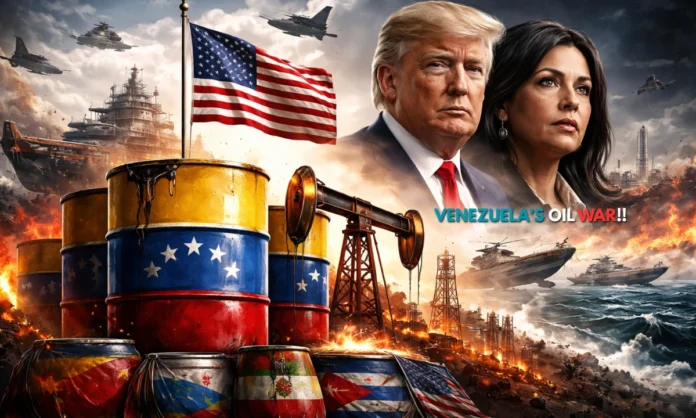
Key Highlights
- US President Donald Trump requires Venezuela’s interim leader Delcy Rodriguez to sever ties with China, Russia, Iran, and Cuba before resuming oil drilling.
- Exclusive US partnerships on oil production and sales priority to America form core conditions amid full oil tankers and economic pressure.
- Trump claims control over 30-50 million barrels of Venezuelan oil, with funds benefiting both nations after recent US strikes captured Nicolas Maduro.
Opening Overview
Venezuela oil conditions imposed by President Donald Trump dominate global energy discussions in January 2026. Following US strikes that captured President Nicolas Maduro and installed Delcy Rodriguez as interim leader, Trump demands strict terms for any resumed drilling from Venezuela’s vast reserves. These Venezuela oil conditions include expelling influences from China, Russia, Iran, and Cuba while prioritizing exclusive US partnerships.
The crisis escalated last week when US forces acted decisively, stranding production due to full tankers and storage shortages. Bloomberg reports highlight shut-ins since late December, pushing Caracas toward insolvency within weeks without oil sales. Senate Armed Services Committee Chairman Roger Wicker confirmed the strategy leverages this vulnerability, controlling ships to block shipments to Havana and force open-market compliance.
This move aligns with Trump’s broader energy dominance agenda, echoing past rhetoric on securing resources. White House sources indicate no troop deployments needed, relying instead on economic chokeholds. As China remains Venezuela’s top oil buyer, these conditions challenge longstanding ties. The stakes involve billions in potential revenue, with US firms like Chevron and ExxonMobil eyeing infrastructure repairs. Rodriguez’s hold on power hinges on navigating these Venezuela oil conditions amid political turmoil.
— JD Vance (@JDVance) January 6, 2026
US Strategic Demands Detailed
- Trump administration outlines two primary Venezuela oil conditions: sever adversarial ties and ensure US exclusivity in production and sales.
- Full tankers create leverage, per Secretary of State Marco Rubio’s briefing to lawmakers.
President Donald Trump’s Venezuela oil conditions represent a bold recalibration of South American energy dynamics. Sources familiar with White House plans detail that interim President Delcy Rodriguez must first expel personnel and contracts linked to China, Russia, Iran, and Cuba. Second, all future oil ventures require exclusive partnerships with American firms, favoring US buyers for heavy crude ideally suited to Gulf Coast refineries.
This approach exploits Venezuela’s immediate crisis: existing tankers sit full due to prior blockades, halting production. Rubio emphasized this bottleneck in private congressional sessions, predicting compliance within weeks to avoid financial collapse. Without new drilling under these Venezuela oil conditions, shut-ins deepen, as noted in industry analyses predicting billions needed for well workovers and rig deployments.
US Energy Secretary Chris Wright oversees tanker management, ensuring no diversions to prohibited destinations. Trump’s public statements reinforce control, claiming authority over Caracas until stability returns. This framework avoids Iraq-style pitfalls by prioritizing oil revenue from day one. Critics note risks if Rodriguez resists, but proponents argue it accelerates recovery. Official estimates peg insolvency at two weeks absent sales, amplifying pressure.
These figures underscore why US refineries covet Venezuelan output, optimized for heavy grades since the 1990s. Trump’s conditions position America to capture this flow exclusively.
Economic Leverage and Tanker Control
- Overflowing storage and tankers form the backbone of US enforcement for Venezuela oil conditions.
- No US troops planned; strategy focuses on asset control and market redirection.
The Trump administration’s Venezuela oil conditions gain teeth from Venezuela’s logistical bind. Late December well closures stemmed from storage exhaustion, stranding output amid sanctions. Full tankers prevent new pumping, creating a countdown to fiscal ruin estimated at weeks by US assessments.
Chairman Wicker articulated the plan publicly: seize ships, block Havana routes, and compel open-market sales compliant with US terms. This non-military tactic mirrors historical blockades but targets energy chokepoints. White House non-denial of reports signals confidence in execution.
Rodriguez faces stark choices under these Venezuela oil conditions. Compliance unlocks drilling, potentially via US firms investing billions in decayed infrastructure. Refusal risks deeper shut-ins, jeopardizing her interim rule. CSIS analyses describe short-term “workovers” as feasible with external rigs, though tariffs complicate material costs.
Global buyers like China, absorbing most exports historically, stand sidelined. US Gulf refineries, geared for heavy Venezuelan crude unavailable from Canada sans pipelines, stand ready. Trump’s Air Force One remarks tout major oil corporations mobilizing, countering skepticism on firm commitments.
| Key Venezuelan Oil Partners (Pre-2026) | Share of Exports | Official Data |
|---|---|---|
| China | 60%+ | EIA Country Analysis |
| United States (pre-sanctions) | 40% | IMF Venezuela Reports |
| India | 15% | OPEC Data |
| Russia/Iran/Cuba (combined services) | 10-15% | World Bank Estimates |
This table reveals disrupted alliances central to Trump’s demands. Funds from 30-50 million barrels Trump claims for market sale would, he asserts, aid Venezuelan people under US oversight.
Global Reactions and China’s Response
- China issues veiled criticisms of US “bullying” post-Maduro capture, defending Venezuela ties.
- US oil majors cautious despite Trump pledges, citing instability and prices.
Trump’s Venezuela oil conditions provoke international backlash, notably from Beijing. Xi Jinping’s remarks label such power plays as overreach, coinciding with NDTV ticker reports on the spat. As Venezuela’s largest oil purchaser, China views severance demands as direct threats to its energy security.
European and neutral observers like Switzerland impose Maduro-linked asset freezes, aligning indirectly but stopping short of endorsement. Oil executives per Reuters report no formal US company discussions pre-capture, tempering Trump’s investment hype. Yet, White House insists firms like ConocoPhillips prepare amid meetings.
These Venezuela oil conditions ripple through markets. Heavy crude prices could stabilize with added supply, benefiting US refiners. Rodriguez must balance domestic unrest against US pressure, where oil funds reconstruction. Trump’s differentiation from past interventions hinges on resource control yielding mutual gains.
Al Jazeera fact-checks highlight infrastructure repair needs dwarfing quick fixes, requiring sustained billions. Rubio anticipates Western interest, but execution tests the plan. Russia’s sidelining disrupts joint ventures, while Iran’s minimal role amplifies symbolic stakes. Cuba’s expulsion targets ideological foes.
Broader context includes OPEC dynamics: Venezuela’s 303.8 billion barrels (EIA data) make it pivotal. Restoring to 3 million bpd demands global cooperation, clashing with exclusivity. Trump’s vision prioritizes American revival, reshaping alliances.
Infrastructure Revival Prospects
- Billions in US investments promised for Venezuela’s dilapidated oil fields under compliance.
- Challenges include low prices, political risks, and specialized repairs.
Revitalizing Venezuela’s oil sector under Trump’s Venezuela oil conditions promises transformation but faces hurdles. Trump vows major corporations will deploy rigs for well workovers, addressing decades of neglect. PBS notes Gulf refineries’ heavy crude optimization positions US buyers ideally.
EIA data shows production plunged from 3.5 million bpd peaks due to mismanagement. Current ~700,000 bpd underscores urgency. OPEC bulletins confirm heavy dominance (80%+), matching US needs unmet by lighter domestic output.
Interim authorities eye 30-50 million barrels handover, per Trump’s claim, funding repairs. Wicker’s assurance of tanker oversight ensures compliance. Yet, firms hesitate amid volatility, as Fox reports high-stakes White House talks loom.
Venezuela oil conditions demand exclusivity, potentially barring others. World Bank assessments peg recovery costs high, needing specialists and materials. Trump’s tariff environment adds friction, per CSIS.
Prospects brighten with US control averting Iraq errors. Rodriguez’s calculus weighs power retention against economic reboot. Success hinges on swift implementation, turning stranded assets into revenue.
Closing Assessment
President Trump’s Venezuela oil conditions mark a pivotal shift, leveraging crisis for US energy primacy. Severing China-Russia-Iran-Cuba ties while mandating exclusive partnerships addresses security concerns and secures heavy crude flows. Full tankers enforce timelines, with insolvency looming absent action.
This strategy, unrefuted by the White House, promises billions in investments repairing shattered infrastructure. EIA’s reserve estimates and OPEC production stats highlight untapped potential, vital for global markets. Rodriguez navigates high-wire politics, where oil compliance stabilizes her rule.
Long-term, these Venezuela oil conditions could redefine hemispheric alliances, prioritizing American interests without boots on ground. Trump’s personal oversight of funds ensures benefits reach Venezuelans, fostering goodwill. Yet, execution risks persist amid global pushback. Ultimately, resource control emerges as modern leverage, compelling reform through economic reality rather than invasion.